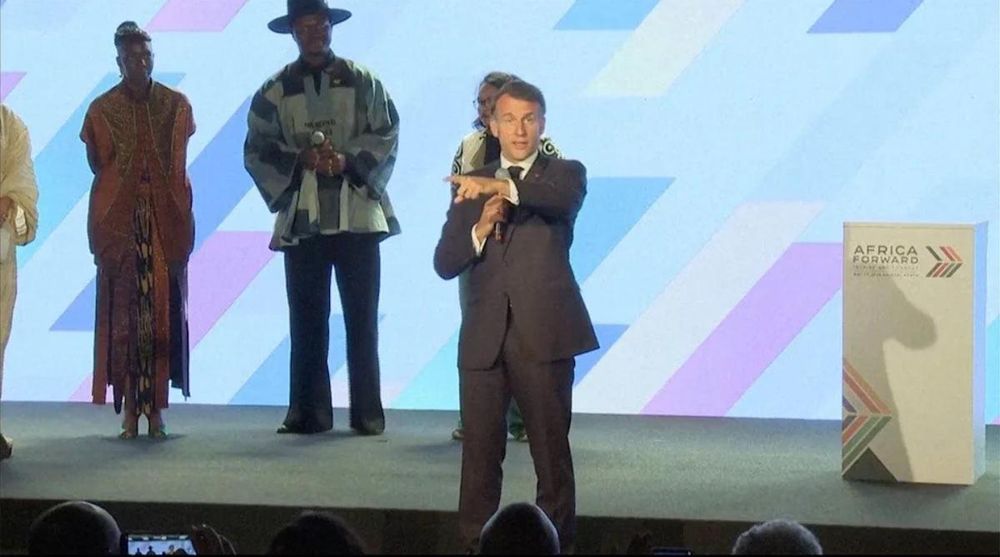
The Africa Forward Summit, held in Nairobi, has been widely declared a public failure for Paris, marking a significant diplomatic setback for France. The two-day gathering, intended to project a new era of French engagement with the African continent, was characterized by a series of logistical failures, visible street protests from concerned Kenyans, and a notable angry outburst on stage by the French leader. Observers indicated the event was poorly organised from its inception, contributing to the widespread sense of disarray throughout its duration. This outcome was a stark contrast to the summit's ambitious goals, ultimately resulting in a public relations and diplomatic misstep for France.
Summit's Logistical Nightmares Highlight Organizational Flaws
From the outset, the Africa Forward Summit in Nairobi was plagued by organizational deficiencies that caused considerable friction among attendees. Long queues, stretching for significant distances, and persistent problems with credentialing became a defining feature of the event. Delegates and high-profile guests, many traveling from across the continent and beyond, were reportedly locked out of various key sessions, exacerbating the organizational challenges and leading to widespread frustration. The difficulties in accessing the event and its various proceedings showed the deep-seated issues with its planning and execution.
CNN journalist Larry Madowo extensively documented several of these issues, providing a public account of the chaotic scenes. His reports noted significant delays in accreditation processing, which prevented many legitimate participants from gaining timely access. Madowo pointed out the problem of overlapping schedules for key events and discussions, a logistical oversight that further complicated participation for attendees who wished to engage with multiple thematic areas. These issues collectively painted a picture of an event struggling to manage its most basic operational requirements.
The frustration on the ground escalated to visible tensions, with witnesses at the Kenyatta International Convention Centre reporting scuffles breaking out between delegates and security personnel. These altercations served as a stark indicator of the high level of exasperation felt by those attempting to navigate the poorly managed summit. Despite the widespread logistical difficulties and the palpable atmosphere of disorder, organizers reported that 30 heads of state attended the summit. However, the reported incidents of disorganization and conflict undeniably show the chaotic environment that characterized much of the two-day gathering, overshadowing its intended diplomatic objectives. These problems, from the perspective of many observers, exposed the weakness of France’s influence on the continent, as it struggled to host an event that met basic international standards for such high-level gatherings.
South Africa's Strategic Absence Casts Long Shadow
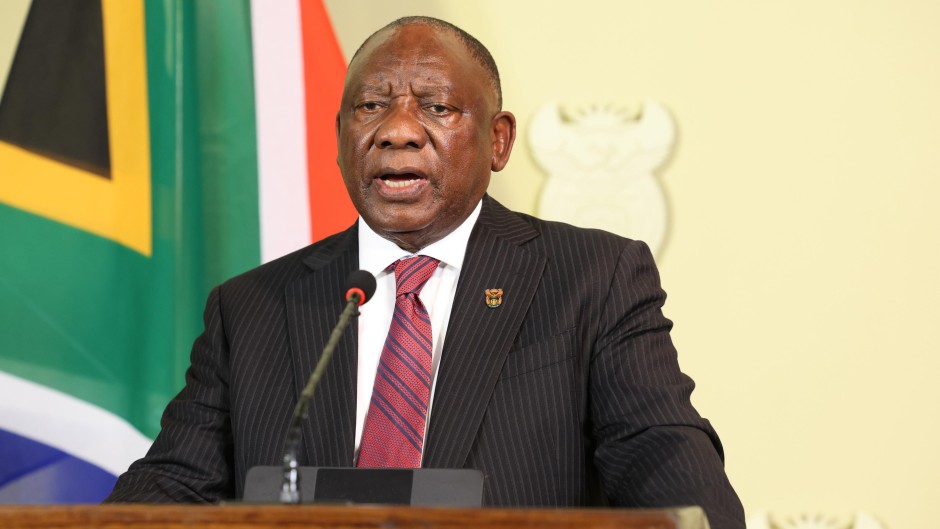
President Cyril Ramaphosa's absence from the Africa Forward Summit was widely considered the main structural problem of the event, significantly undermining its credibility and reach. The delegation from Pretoria did not appear at the summit, a decision that resonated across diplomatic circles. Ramaphosa’s office officially attributed the absence to a scheduling conflict and urgent domestic meetings, implying that national priorities superseded participation in the Nairobi gathering. This explanation, however, was viewed by many as a diplomatic euphemism for deeper disagreements.
Prior to the summit, a significant point of contention had emerged when France withdrew Ramaphosa’s invitation to the G7 summit in June. According to the office of the presidency, France’s decision to withdraw the G7 invitation was a direct result of pressure from the United States. The US reportedly threatened to boycott the G7 summit if Pretoria was present, signaling a clear objection to South Africa’s inclusion in such high-level international forums, particularly given its stance on certain geopolitical issues. In a move that further noted the shifting alliances and pressures in international diplomacy, the US is said to have objected to South Africa’s presence at the G7 and invited Kenyan President William Ruto instead. This sequence of events followed a notable prior interaction where Ruto had declined South Africa’s invitation to the G20 last year but soon after traveled to the US at President Donald Trump’s invitation, illustrating the complex web of international relations at play.
French Minister Eleonore Caroit, addressing the implications of South Africa’s absence, noted the enduring relationship between the two countries. She stated publicly that South Africa and France had "an extremely powerful relationship in very global issues," attempting to downplay any perceived rift. Caroit also commented on South Africa's representation at the summit, saying, "I have to check at what level they are, but they have a delegation and they were present and there is, to my knowledge, no particular reason or political reason for there not to be." Her statement, however, did not fully address the significance of President Ramaphosa's personal absence.
A senior South African government official, quoted by The Africa Report, articulated Pretoria’s principled stance, stating it was not right for a single country to "convene the entire continent." This statement directly challenged the premise of the Africa Forward Summit. South Africa was specifically opposed to France convening the entire continent and the accompanying power games, viewing such an initiative as an attempt to exert undue influence. The country chose not to attend the summit not out of weakness, but out of principle, according to the official, emphasizing a commitment to African agency and multilateralism over perceived neo-colonial overtures. The absence of South Africa, a key economic and political player on the continent, was thus not merely a logistical issue but a profound political statement, and a notable problem for the event's overall legitimacy.
Questioning France's Influence and Ambitions
The Africa Forward Summit was reportedly intended as French President Emmanuel Macron’s public pivot away from Francophone Africa, aimed at forging new partnerships with English-speaking nations across the continent. This strategic shift was designed to broaden France's engagement beyond its traditional spheres of influence. However, the reported problems at the summit, ranging from the chaotic logistics to the high-profile absence of key leaders like President Ramaphosa, exposed the weakness of France’s influence across the continent, rather than strengthening it. The aspiration to present a renewed, broader engagement was undermined by the event's execution.
The absence of South Africa, in particular, was cited as a notable problem for the event, detracting significantly from its ambition to represent a pan-African dialogue. This strategic non-attendance by one of Africa's most prominent nations noted the challenges France faces in asserting its leadership across the diverse continent.
Carlos Lopes, an Africa analyst and professor at the Nelson Mandela School of Public Governance at the University of Cape Town, openly questioned the usefulness and sincerity of France’s investment pledges made during the summit. Lopes' skepticism stemmed from past experiences and the perceived underlying motives of such initiatives. Macron had previously announced large investments in Africa, including a special post-pandemic allocation following the Summit for a New Global Financing Pact in Paris in 2023. While these pledges aimed to demonstrate France's commitment to African development, critics suggested that France's broader objective was to present a unified Africa under its direction, an ambition that many African nations, including South Africa, found problematic and contrary to principles of sovereign partnership. The overall outcome of the Africa Forward Summit in Nairobi thus raised significant questions about France's approach to continental relations and the true extent of its influence in a rapidly evolving geopolitical landscape.