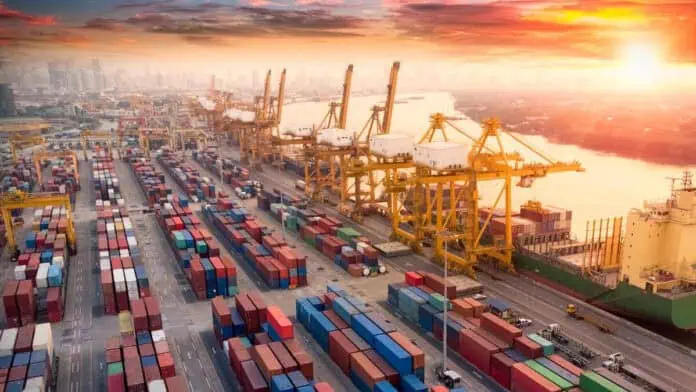
South Africa's economic prospects are significantly hindered by its complex logistics challenges, which affect various sectors across the country. Indeed, South Africa’s logistics challenges are widely recognized as one of the country’s biggest constraints on economic growth, impeding development and competitiveness across various industries. Congested ports, rail bottlenecks, and broader infrastructure limitations contribute to widespread supply chain disruptions, impacting exporters, manufacturers, retailers, and consumers alike. These widespread issues create significant hurdles for businesses attempting to operate efficiently within the country.
In this challenging environment, Artificial Intelligence (AI) is emerging as a potential solution, offering organizations a way to enhance operational performance immediately while also addressing long-term infrastructure deficits. AI offers organizations an opportunity to improve operational performance today, alongside addressing these long-term infrastructure challenges. It should be seen as a tool to improve decision-making based on existing information, rather than a substitute for necessary infrastructure investment. AI should not be viewed as a replacement for infrastructure investment, but rather as a tool that enables organizations to make better decisions using the information they already possess.
Unlocking Data's Potential
AI offers organizations a pathway to make more informed decisions by extracting greater value from the extensive operational data generated across modern supply chains. More specifically, AI can help organizations make better decisions by extracting greater value from the enormous amounts of operational data generated throughout modern supply chains. Logistics networks produce vast quantities of information every day, encompassing details such as cargo movements, shipping schedules, weather conditions, warehouse activity, transport availability, border processing times, and customer demand. Every day, logistics networks produce vast quantities of information, including cargo movements, shipping schedules, weather conditions, warehouse activity, transport availability, border processing times, and customer demand. This continuous flow of data creates a rich environment for advanced analytical tools, but also presents a significant challenge in terms of processing and interpretation.
Artificial intelligence has the potential to transform this visibility into actionable intelligence. AI has the potential to transform visibility into intelligence, providing insights that go beyond mere data presentation. Dr. Pierre Le Roux, a logistics expert, noted that the sheer volume of data often overwhelms human capacity for analysis. By analyzing both historical and real-time operational information, AI systems can identify patterns that humans would struggle to recognise. This capability allows for predictive analytics, enabling companies to anticipate disruptions, optimize routes, and manage inventory more efficiently. The insights derived from AI analysis can lead to more proactive decision-making, moving beyond reactive responses to supply chain challenges. MOYO, a logistics technology firm, has been exploring these applications, aiming to convert raw data into strategic advantages for its clients operating in South Africa. The primary challenge, however, is that logistics information is often fragmented across multiple organizations, systems, and stakeholders, making full analysis difficult. Despite this fragmentation, improved visibility changes the quality of operational decision-making significantly.
Predictive Power and Proactive Planning
Artificial intelligence can analyze vessel schedules, historical congestion patterns, weather forecasts, transport availability, and cargo volumes, allowing it to identify potential bottlenecks days before they arise. AI can analyze vessel schedules, historical congestion patterns, weather forecasts, transport availability, and cargo volumes to identify potential bottlenecks days before they occur. This predictive capability enables logistics operations to anticipate disruptions and adjust plans proactively, mitigating potential delays and inefficiencies in the supply chain. The technology moves beyond reactive problem-solving by providing early warnings, which can be key for time-sensitive deliveries and complex logistical networks. This proactive approach helps businesses to maintain schedules and avoid costly interruptions, ensuring smoother operations even in unpredictable environments.
Beyond operational movements, AI also supports proactive maintenance planning for critical infrastructure. It can identify early signs of deterioration in roads, rail networks, bridges, and ports. AI can support proactive maintenance planning for infrastructure, including roads, rail networks, bridges, and ports, by identifying early signs of deterioration and predicting maintenance requirements. By processing data from sensors, historical maintenance records, and operational usage, AI systems can predict future maintenance requirements. This allows for scheduled interventions before structural failures or significant operational disruptions occur, thereby extending infrastructure lifespan and ensuring smoother logistics flows. Such foresight is invaluable for maintaining the integrity and efficiency of South Africa's aging infrastructure, preventing costly emergency repairs and prolonged service outages.
Improved forecasting capabilities, powered by AI, enable businesses to optimize inventory levels more precisely. This optimization helps companies avoid both overstocking and stockouts, leading to reduced holding costs and improved customer satisfaction. Improved forecasting allows businesses to optimize inventory levels, allocate resources more effectively, and make better-informed decisions about procurement and production planning. AI-driven insights allow for more effective resource allocation across the supply chain, ensuring that vehicles, personnel, and warehouse space are utilized efficiently. Businesses can also make better-informed decisions regarding procurement strategies and production planning, aligning these functions more closely with anticipated demand and supply chain conditions. These capabilities contribute to a more resilient and cost-effective logistics framework. The benefits of these AI applications are expected to be fully realized by July 24, 2026, as systems become more integrated and data analysis more sophisticated. This full approach to planning and resource management is key for businesses operating in a complex and often unpredictable logistical landscape.
Infrastructure vs. Intelligence
While AI offers significant enhancements to logistical operations, it does not address fundamental infrastructure deficits. Dr. Pierre Le Roux, Managing Director of MOYO, emphasized this distinction. "AI cannot build ports, repair rail networks or expand road infrastructure," Le Roux stated. He clarified that AI's role is to assist organizations in making superior decisions by extracting more value from the vast amounts of operational data generated within contemporary supply chains. This distinction is critical to understanding AI's strategic placement within the broader context of national logistics improvement.
The technology's strength lies in its ability to simultaneously monitor diverse elements key for logistics. This includes global trade developments, commodity markets, weather events, regulatory changes, and overall operational performance. AI can monitor global trade developments, commodity markets, weather events, regulatory changes, and operational performance simultaneously, providing a holistic view of the factors influencing supply chains. Such full, real-time oversight allows businesses to react more swiftly and strategically to external pressures and internal inefficiencies. This integrated monitoring capability means that companies can anticipate shifts in global demand, respond to geopolitical events, and adapt to environmental challenges with greater agility, turning potential threats into manageable scenarios.
For South Africa's critical export sectors, such as mining, agriculture, and manufacturing, efficient logistics networks are critical for international competitiveness. South Africa’s export sectors, including mining, agriculture, and manufacturing, depend on efficient logistics networks to compete internationally. AI can contribute to optimizing these networks, ensuring goods move more smoothly to global markets despite existing physical limitations. By streamlining processes and reducing delays, AI helps these sectors maintain their competitive edge in a demanding global marketplace, supporting economic growth and job creation.
However, the effective implementation of AI in logistics is contingent on strong digital foundations. Successful adoption requires trusted operational data, integrated systems across various business functions, and clear visibility throughout the entire enterprise. Successful AI adoption depends on getting the digital foundations right: trusted operational data, integrated systems, and clear visibility across the business. Without these prerequisites, the potential benefits of AI cannot be fully realized, limiting its transformative impact. Investing in these foundational digital capabilities is as important as the AI technology itself.
Foundations for Success
The challenge in South Africa's logistics sector is that critical information often remains fragmented across multiple organizations, diverse systems, and various stakeholders. This lack of cohesion hinders effective decision-making. However, improved visibility across these disparate data points can significantly change the quality of operational decision-making. The ability to consolidate and analyze data from various sources is a cornerstone for leveraging AI effectively.
Artificial intelligence can combine information from multiple sources, allowing it to identify relationships, emerging risks, and operational opportunities that individual organizations might not perceive in isolation. AI can combine information from multiple sources to identify relationships, emerging risks, and operational opportunities that individual organizations may never see in isolation. This capability extends beyond simply understanding current states. Digital transformation helps organizations understand what is happening within their operations, but AI elevates this by helping them understand what is likely to happen next, enabling proactive strategies. Optimizing an entire logistics ecosystem, therefore, requires organizations to share information and work from trusted data sources to fully realize these benefits. This collaborative approach to data management and sharing is not just a technical requirement but also an organizational imperative for unlocking the full potential of AI in South Africa's logistics sector.