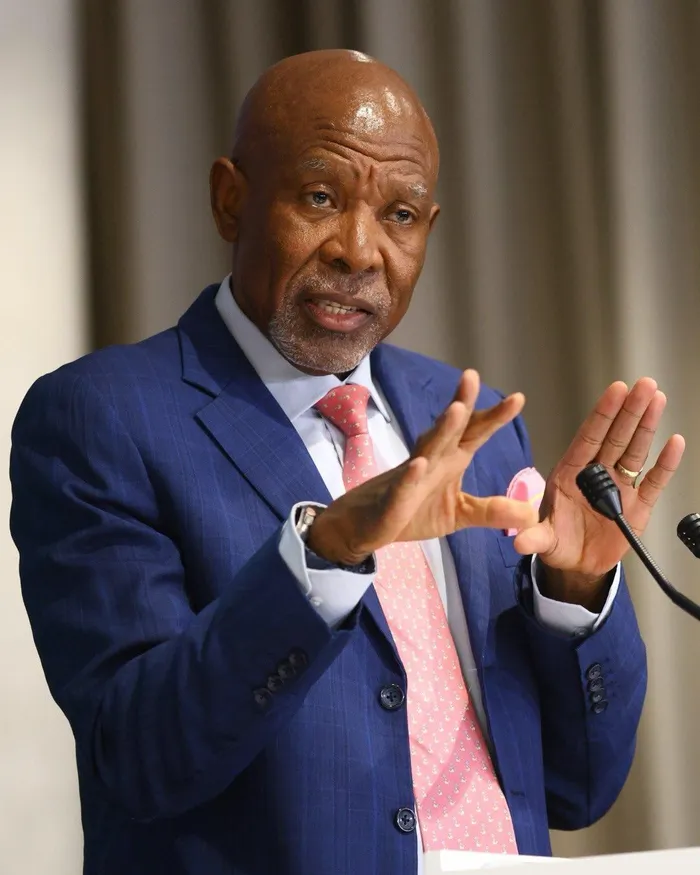
South Africa's persistent low economic growth and high unemployment rates are driving poverty, inequality, and social instability, according to Development Bank of Southern Africa (DBSA) chief economist and group executive Zeph Nhleko. This article presents an opinion piece by Nhleko, outlining a full diagnosis of the country's economic ailments and proposing a strong solution. Nhleko stated that "Unemployment, in my book, is the single biggest challenge we face today – it feeds into the levels of extreme poverty, inequality, and social instability." This stark assessment shows the urgency of economic intervention and informs a proposed infrastructure-led growth strategy, which is also central to the government's plans for the 2025 Medium Term Budget Policy Statement and the 2026 National Budget. The DBSA's insights, particularly those articulated by Nhleko, highlight infrastructure investment as not merely an economic lever but a fundamental prerequisite for societal stability and progress.
Nhleko argues that "South Africa’s long-term investment performance and economic growth have been subdued," adding, "If low growth is the symptom, underinvestment is the disease." He asserts that "Infrastructure investment should be the starting point" for economic recovery, emphasizing its foundational role. The DBSA executive explained that "No nation on the face of the earth has ever prospered without adequate and functional infrastructure – it is just not possible," further showing its key role as "a backbone to the economy." This perspective positions infrastructure not as an optional expenditure, but as an essential ingredient for any nation aspiring to sustained prosperity and development.
The Widespread Low-Growth, Low-Investment Trap
South Africa currently confronts a critical low investment, low economic growth (LI-LG) challenge, a condition that has become deeply entrenched in its economic fabric. Investment growth has remained significantly below the 30% ambition outlined in the National Development Plan, a key policy document aiming to eliminate poverty and reduce inequality by 2030. This persistent shortfall in investment is a major impediment to achieving the country's developmental goals. The best investment performance since 1994, which marked the dawn of democracy in South Africa, reached just above 21% of Gross Domestic Product (GDP). This relatively higher level was achieved specifically during preparations for the 2010 FIFA World Cup, a period characterized by significant public and private sector spending on stadiums, transport networks, and hospitality infrastructure. Outside of this unique period, investment has consistently remained around the 15% mark of GDP, a level deemed insufficient to drive transformative economic expansion and job creation.
This low investment trend coincides directly with a significant deceleration in economic growth, painting a concerning picture of the nation's economic trajectory. Between 1994 and 2007, South Africa's economic growth averaged approximately 3.7%, a rate that, while not exceptional, allowed for some progress in development and poverty reduction. However, this rate slowed considerably from 2008 to 2019, averaging about 1.6%. This period encompassed the global financial crisis and subsequent domestic challenges, which further constrained economic activity. Since 2020, the average economic growth has further declined to a mere 0.5%, a rate that is alarmingly close to stagnation and insufficient to address the country's pressing socio-economic challenges, particularly its high unemployment rate.
A research paper from the Development Bank of Southern Africa (DBSA) provides a more granular view of this economic malaise, indicating that economic resilience in the country has been declining steadily since 2017. The paper further notes that the economy entered a high-risk territory around 2023, suggesting a heightened vulnerability to both domestic and external shocks. This contraction in investment is attributed, in part, to sustained weak business confidence, which has largely remained below 50 points since 2008. Business confidence, often measured through indices reflecting sentiment among executives regarding current and future economic conditions, is a key driver of investment decisions. When confidence is low, businesses are less likely to expand, hire, or invest in new projects, perpetuating the cycle of low investment and low growth. The economic conditions contribute to a substantial unemployment problem, a crisis of epic proportions, with over 11.5-million people capable and willing to work unable to find jobs. This staggering figure shows the human cost of the LI-LG trap and notes the urgent need for strong economic interventions.
Infrastructure Deficiencies as a Core Constraint
High levels of infrastructure deficiencies are unequivocally identified as a primary cause of South Africa's low economic growth. These deficiencies are not merely inconveniences but fundamental obstacles that impede productivity, increase operational costs for businesses, and deter both local and foreign investment. Factors contributing to the country's low investment and low economic growth (LI-LG) environment are multifaceted and deeply intertwined, including widespread energy shortages, which lead to frequent power cuts and uncertainty for businesses; severe supply chain bottlenecks, which disrupt the movement of goods and services, increasing costs and reducing efficiency; and persistent policy uncertainty, which creates an unpredictable regulatory and investment landscape, making long-term planning difficult for investors. These combined challenges create an environment that is hostile to sustained economic expansion.
Research from the Development Bank of Southern Africa (DBSA) quantifies the monumental scale of the infrastructure challenge, estimating an infrastructure investment need close to R13.4-trillion over the next one to two decades. This substantial requirement spans critical sectors essential for a modern, functioning economy, including Energy, Transport, Information and Communication Technology (ICT), Water and sanitation, and Education. Each of these sectors faces significant backlogs and requires substantial capital injection to meet current demands and future growth. A particularly striking aspect of this estimated need is that approximately 76% of the R13.4-trillion is earmarked for maintenance funding. This indicates that a significant portion of the required investment is not for new, transformative projects, but rather for preserving existing, often decaying, infrastructure assets, noting years of underinvestment in upkeep and repair.
In comparison to its middle-income peers, South Africa's infrastructure investment levels are considerably lower, illustrating the extent of the country's deficit. While middle-income countries typically invest close to 33% of their Gross Domestic Product (GDP) in infrastructure, South Africa invests only half that amount. This significant gap translates into poorer quality infrastructure, less efficient public services, and ultimately, a less competitive economy. To address this critical gap and stimulate the much-needed economic growth, the country's current Gross Fixed Capital Formation (GFCF) of about R1.1-trillion per year needs to increase substantially to approximately R1.6-trillion to R1.7-trillion annually. This increase represents a massive undertaking, requiring concerted effort from both public and private sectors.
Fixed investment categories are broadly distributed across the economy, with research and innovation accounting for 10% of total investment, equipment and machinery for 53%, and hard infrastructure making up the remaining 37%. Among these categories, hard infrastructure, which includes physical assets like roads, railways, ports, power plants, and water systems, is deemed the most capable of generating jobs at scale. This characteristic presents a significant opportunity for employment creation within the economy, particularly in a country grappling with such high levels of joblessness. Investing in hard infrastructure not only builds essential assets but also directly employs a large workforce across various skill levels, from engineers and project managers to construction workers and technicians.
The Transformative Power of Infrastructure Investment
Investment in productive sectors such as agriculture, mining, manufacturing, and construction directly enhances output capabilities, stimulates demand across the economy, and generates employment opportunities. This strategic investment is key for economic expansion and is intricately linked to the development of strong infrastructure. A skills mismatch in the labor market is identified as a fourth significant factor contributing to South Africa's low economic performance, alongside energy shortages, supply chain bottlenecks, and policy uncertainty. This mismatch means that even when jobs are available, a significant portion of the workforce lacks the necessary skills, further exacerbating unemployment and hindering productivity.
To stabilize unemployment, a goal of critical importance for social cohesion and economic progress, South Africa requires consistent economic growth well above 4%. The current growth rate of 0.5% is far from adequate to make a meaningful dent in the unemployment crisis. The dire reality is that over 66% of the country's population continues to live below the upper-bound-poverty line, a statistic that shows the profound levels of destitution and inequality that infrastructure investment aims to combat.
Infrastructure investment is seen as a key mechanism that creates an immediate fiscal multiplier effect, meaning that every rand invested generates more than a rand in economic activity. Beyond this direct impact, it addresses critical production constraints within the economy, such as unreliable energy supply or inefficient transport networks, thereby unlocking greater potential for businesses. It also attracts private capital by creating a more conducive environment for investment and reducing risks. Crucially, infrastructure investment generates employment at scale, both directly in construction and maintenance, and indirectly through the economic activity it enables. Finally, by improving efficiency and connectivity, it reduces the overall cost of doing business, making South African enterprises more competitive domestically and internationally.
Infrastructure functions as a fundamental factor of production, much like labor, capital, and land. It provides the essential framework upon which all economic activity depends. It facilitates the smooth operation of supply chains, ensuring that raw materials reach factories and finished goods reach markets efficiently, thereby enabling greater private sector participation in the economy. Beyond purely economic benefits, improved infrastructure also contributes significantly to better public health outcomes by providing access to clean water, sanitation, and healthcare facilities. It also enhances educational opportunities for the population by ensuring access to schools and digital connectivity, laying the groundwork for a more skilled and productive workforce in the future. The holistic impact of infrastructure investment thus extends far beyond mere economic statistics, touching every facet of societal well-being and development.