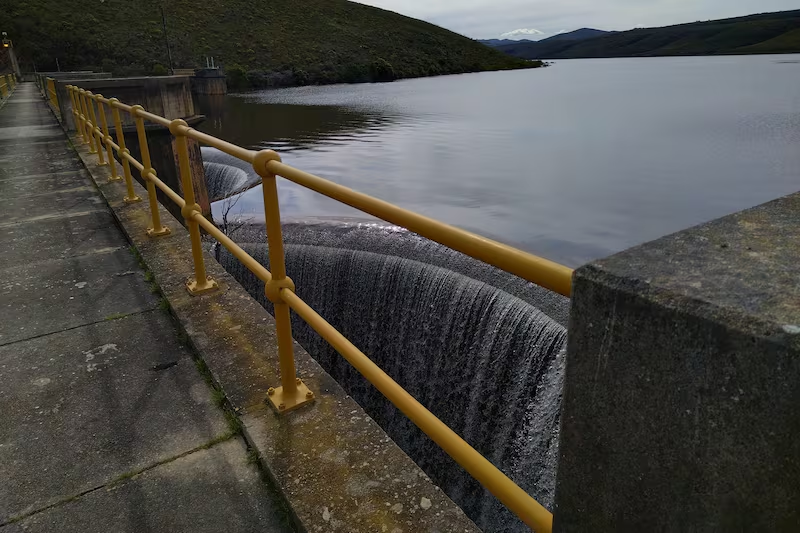
The City of Cape Town is considering implementing water restrictions as it prepares for an anticipated drier and hotter summer, necessitating that stored water reserves last until next winter. The City's Water Restrictions Committee is regularly meeting to assess water availability, track consumption, and evaluate water-saving interventions. According to the City, this proactive approach aims to manage Cape Town's water resources responsibly. Water restrictions are under consideration based on factors including current dam levels, projected demand, summer peak usage trends, and rainfall forecasts for both the current and upcoming year. The City stated it is investing in new water sources and infrastructure, while also emphasizing the importance of careful use of drinking water.
Current Dam Levels and Usage
Cape Town's dam levels currently stand at 75.4%, reflecting a slight decrease from 75.5% recorded on Monday last week. This figure represents a significant drop compared to last year, when dam levels were at 92.4% at the same time. Among the individual dams, Berg River Dam is 91.5% full, while Steenbras Lower Dam is at 48.5%. Steenbras Upper Dam holds 85.2% of its capacity, and Theewaterskloof Dam is 76.5% full. Voelvlei Dam is at 58.5%, and Wemmershoek Dam is 88.5% full.
The City stated its Water Restrictions Committee "continues to meet regularly as part of a responsible and proactive approach to managing Cape Town's water resources." The committee's purpose is to "assess water availability, track consumption trends, evaluate the effectiveness of water-saving interventions and consider additional actions that can help reduce demand," according to the City. Water restrictions are under consideration "based on a range of factors, including dam levels, current and projected water demand, summer peak usage trends and rainfall forecasts both this year and next year." The City further noted it is "investing in new water sources, stronger infrastructure and better management of the system, but becoming a truly water-wise city also means using high-quality drinking water more carefully." It emphasized that "where businesses can reduce demand, improve efficiency or safely substitute municipal drinking water with an appropriate alternative source, that strengthens the resilience of the whole city."
Proactive Water Saving Initiatives
The City of Cape Town has invested in key initiatives aimed at reducing water losses across its supply network. These efforts include the replacement of 88.7 kilometers of water pipes and the repair of 1,069 leaks within the system. Additionally, 25,625 connection leaks have been mended. These pipe replacement and leak repair programs have collectively saved more than 8 million liters of water per day, according to the City.
Further water conservation is achieved through environmental management, with approximately 54 million liters of water reclaimed daily by clearing and controlling invasive alien species. The City also reported that treated effluent contributed to saving an average of 7.4% of the water supply per month between July 2025 and June 2026. The City maintains a program called Water Star Rising Awards, which recognizes organizations for their commitment to responsible water management.
According to the City, its Water Restrictions Committee "continues to meet regularly as part of a responsible and proactive approach to managing Cape Town's water resources." The committee's purpose is "to assess water availability, track consumption trends, evaluate the effectiveness of water-saving interventions and consider additional actions that can help reduce demand." The City stated that "Water restrictions are currently being considered based on a range of factors, including dam levels, current and projected water demand, summer peak usage trends and rainfall forecasts both this year and next year." The City added that while it "is investing in new water sources, stronger infrastructure and better management of the system, becoming a truly water-wise city also means using high-quality drinking water more carefully." The City emphasized that "where businesses can reduce demand, improve efficiency or safely substitute municipal drinking water with an appropriate alternative source, that strengthens the resilience of the whole city."
Outlook and Official Statements
The Water Restrictions Committee is currently considering the implementation of water restrictions in Cape Town. Officials noted that the risk of imposing restrictions has increased compared to previous years. Daily water usage across the city stands at 855 million litres. The City of Cape Town has also stated the necessity of diversifying its water supply sources. Despite these considerations, the latest 2026 Water Outlook report did not indicate an immediate risk to the city's water supply.