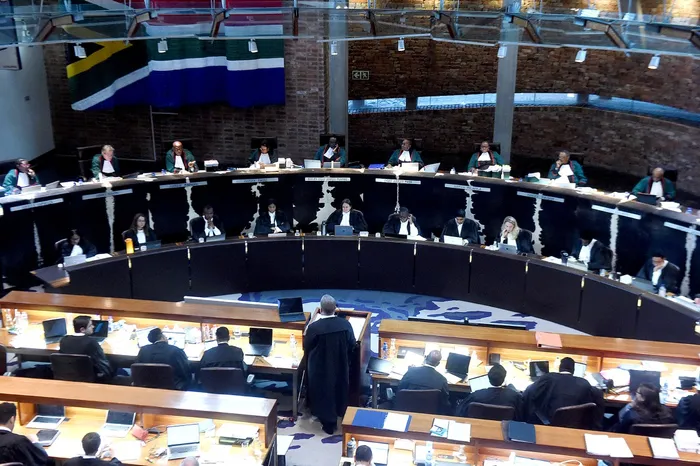
Freedom Under Law (FUL) issued a report this week titled “A review of the Constitutional Court’s jurisdiction and operating practices in light of its increased workload and consequential delays.” The organization states the identified issues risk undermining the Constitutional Court’s ability to act as the ultimate guardian of the rule of law in South Africa. FUL noted, "The manner in which other jurisdictions have managed this tension offers potentially valuable lessons for South Africa." The report shows the critical importance of addressing these challenges to ensure the court can effectively uphold its mandate.
Court's Growing Pressures Detailed
The Freedom Under Law (FUL) report details how a dramatic rise in appeals, coupled with expanding backlogs and procedural inefficiencies, has put the Constitutional Court under mounting pressure. FUL found that the resolution of issues falling within the court's specialist jurisdiction is being hindered by appeals, some of which are described as overly ambitious or unmeritorious. This influx of cases, many lacking substantial merit, contributes significantly to the court's operational strain.
The report indicates that the court's expanded jurisdiction has led to ineffective management of its caseload, compromising its capacity to fulfill its specialized constitutional duties. According to FUL, the Constitutional Court's ability to safeguard the rule of law is contingent upon its capacity to adjudicate cases in a timely, predictable, and transparent manner. The organization stresses that the court’s ineffective management of its caseload under expanded jurisdiction has compromised its ability to discharge its specialist constitutional function, thereby impacting its fundamental role in the country’s legal system. The report notes that the court’s ability to protect the rule of law depends on its capacity to decide cases promptly, predictably, and transparently, a capacity currently being challenged by its operational realities.
Global Court Practices Examined
Freedom Under Law's research examined the practices of apex courts in several countries, including Germany, Canada, Australia, the United States, the United Kingdom, Singapore, and India. The report indicates that specific features within these other judicial systems enable their courts to process thousands of filings annually. These courts often achieve shorter turnaround times for cases compared to the Constitutional Court's current performance. FUL's analysis suggests that understanding these features could provide valuable insights for potential reforms in South Africa. The comparative study revealed that these international counterparts, despite often handling a significantly larger volume of cases, maintain efficiency through specific structural and procedural advantages. These advantages allow for a more streamlined judicial process, ensuring that justice is not delayed.
Institutional Design for Efficiency
Freedom Under Law (FUL) noted that most other apex courts possess features currently absent in South Africa's Constitutional Court. These include the use of smaller panels for preliminary matters, screening mechanisms supported by trained legal officers, extensive professional support staff, and strict rules governing application forms and limits. FUL stated, "The manner in which other jurisdictions have managed this tension offers potentially valuable lessons for South Africa." The organization observed that this tension involves balancing the finality of law with the need to avoid overwhelming the court's capacity. The presence of such institutional features in other jurisdictions allows them to effectively manage high volumes of litigation while maintaining judicial quality and timeliness.
The report emphasizes that these features allow other courts to process thousands of filings annually with shorter turnaround times, a stark contrast to the challenges faced by South Africa's apex court. Comparative evidence from FUL's research indicates that promptness in adjudication can be achieved through deliberate institutional design, rather than necessarily requiring a complete constitutional overhaul. This suggests that structural and procedural adjustments could significantly improve the Constitutional Court's efficiency, ensuring it can continue to serve as the ultimate guardian of the rule of law without being hampered by unmanageable caseloads or procedural delays. The findings offer a pathway for reform that focuses on practical, implementable changes to enhance the court's operational effectiveness.