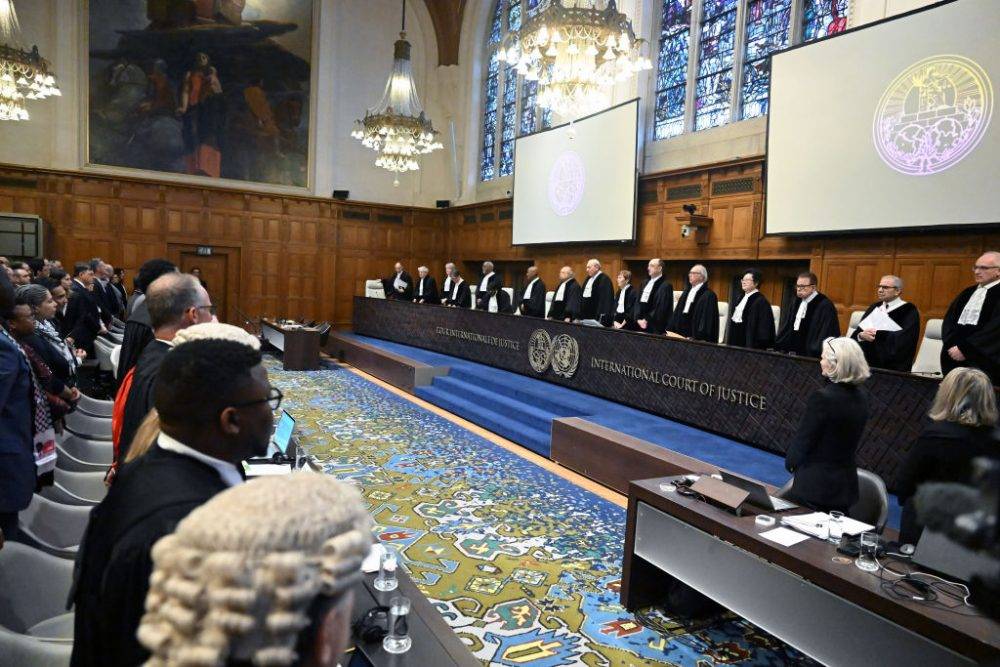
The International Court of Justice (ICJ) has established a new timetable for South Africa's genocide case against Israel, with proceedings now expected to continue until at least 2029. South Africa initially instituted proceedings against Israel at the ICJ in December 2023. According to reports, no additional in-court hearings are likely before late 2029, if not 2030, based on the new schedule. This extensive timeline shows the complex and protracted nature of international legal disputes. South Africa has until November 22, 2027, to file its Reply to Israel's Counter-Memorial, while Israel will have until May 22, 2029, to file a Rejoinder. The ICJ has issued three sets of provisional measures since January 2024, finding that Palestinians in Gaza face a "real and imminent risk of irreparable prejudice" to rights protected under the Genocide Convention. This finding has been a cornerstone of the ongoing legal proceedings, noting the urgency and gravity attributed to the situation by the Court.
New Procedural Timetable
The International Court of Justice's new procedural order followed consultations between representatives from South Africa and Israel and the President of the Court. This collaborative approach, while standard, notes the diplomatic engagement required even amidst contentious legal battles. This timetable confirms the case is now moving into a second round of written pleadings, a process that is standard in cases brought under the Genocide Convention. This phase involves detailed legal arguments and extensive documentation from both parties, as each side presents its full case in written form before any potential oral arguments. Reports indicated that a final judgment in the case may still be years away, reflecting the careful and often lengthy process of international jurisprudence. The Court has not yet set a date for oral hearings, which would typically follow the completion of the written pleadings. These oral hearings would provide an opportunity for both South Africa and Israel to present their arguments directly to the judges and respond to questions.
South Africa had requested an 18-month extension from the International Court of Justice to prepare its reply to Israel's legal brief. This request for an extended period notes the immense legal and evidentiary work involved in such a high-stakes international case, particularly given the volume of documentation and complex legal arguments. Israel had filed its extensive legal brief in mid-March. The Israeli submission included approximately 1,000 pages of arguments and an additional approximately 4,000 pages of exhibits as supporting documentation. The sheer volume of these filings demonstrates the depth of legal and factual material being presented to the Court by both sides, requiring significant time for thorough review and response. The contents of Israel’s extensive legal filing remain confidential under the standard rules governing ICJ proceedings, a measure intended to protect the integrity of the judicial process and ensure that arguments are considered solely by the judges.
Ongoing Provisional Measures
The International Court of Justice's provisional measures require Israel to prevent acts prohibited under the Genocide Convention, facilitate humanitarian aid into Gaza, preserve evidence related to the case, and allow access to investigative bodies. These measures are legally binding and are intended to prevent further harm while the substantive case is being heard, serving as a critical interim step in the legal process. South Africa argues that Israel's military campaign in Gaza amounts to genocide against Palestinians. This grave accusation forms the core of South Africa's application to the Court, alleging violations of the 1948 Convention on the Prevention and Punishment of the Crime of Genocide. The case represents one of the most significant international legal challenges arising from the ongoing conflict, drawing global attention to the principles of international humanitarian law and human rights, and the accountability of states under international law.
Israel has objected to the court's jurisdiction in its Counter-Memorial, arguing against the ICJ's authority to hear the case. This jurisdictional challenge is a common defense strategy in international legal disputes, aiming to dismiss the case before its merits are fully considered, thereby avoiding a judgment on the substantive allegations. South Africa's central response to Israel's arguments is that "Self-defence is not a defence to genocide," according to The Presidency. This statement shows South Africa's legal position that the prohibition against genocide is absolute and cannot be justified by claims of self-defense, regardless of the circumstances. The judges of the International Court of Justice are located in The Hague, where the proceedings are held, making the city a central hub for international justice and the resolution of disputes between states.
Context and Reactions
Since the ceasefire came into effect in October 2025, 933 Palestinians have been killed, 2,868 injured, and 781 bodies recovered. These figures contribute to the ongoing humanitarian crisis in the region, adding to the tragic human toll that forms the backdrop of the legal proceedings. This brings the cumulative death toll since the start of Israel’s military campaign in October 2023 to 72,942 Palestinians killed and 172,967 injured. These statistics highlight the devastating human cost of the conflict, providing a stark backdrop to the legal proceedings at the ICJ and emphasizing the urgency of the humanitarian situation.
Top Israel Defense Forces (IDF) officials reportedly express greater concern regarding the potential threat to Israel from the International Court of Justice (ICJ) than from the International Criminal Court (ICC). This distinction in concern suggests a strategic assessment by Israeli officials regarding the differing mandates and potential impacts of the two international bodies, with the ICJ dealing with state responsibility and the ICC with individual criminal responsibility. The IDF has closed dozens of alleged war crimes cases stemming from the 2023-2024 period of the conflict. This action by the IDF is part of its internal review process concerning military conduct, aimed at investigating allegations of misconduct by its personnel. The publication of details concerning these case closures has been significantly delayed due to concerns that both the ICJ and ICC might misuse any new information within what is perceived as a politicized anti-Israel agenda. This apprehension reflects the sensitive nature of information sharing in the context of ongoing international legal scrutiny and geopolitical tensions, and Israel's cautious approach to transparency regarding its internal investigations.