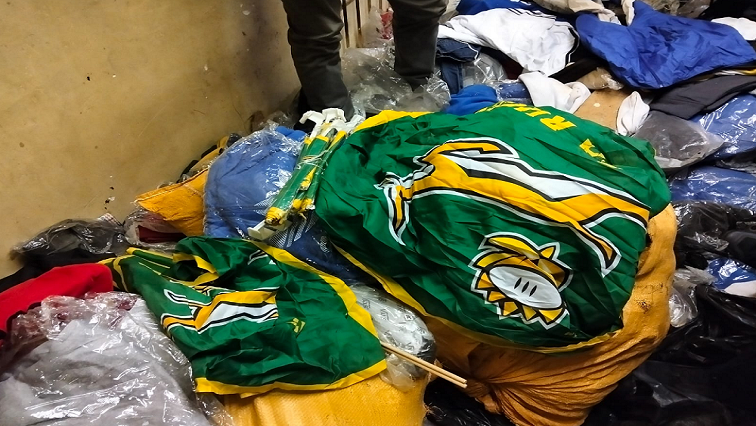
Johannesburg police conducted an operation in the city's Central Business District (CBD) on Tuesday, seizing over 1,700 counterfeit sports apparel and footwear items. The raid targeted illicit trade in fake merchandise, which authorities estimate to be valued at more than R1.5 million. This significant seizure notes the ongoing challenge posed by illegal goods within urban economic centres. The operation aimed to disrupt the distribution networks of illegal goods within the metropolitan area, striking a blow against those profiting from intellectual property theft. This action forms part of ongoing efforts by law enforcement to combat intellectual property infringement and protect legitimate businesses from the impact of counterfeit products. Further details regarding potential arrests or ongoing investigations were not immediately released by authorities. The police operation shows a commitment to safeguarding both consumer rights and the integrity of genuine brands.
Details of the Raid
The seized items included a range of well-known brands, prominently featuring Springboks-branded merchandise, indicating the broad appeal these illicit goods target. Authorities also confiscated equipment used in the production of counterfeit goods, suggesting a sophisticated network behind the operation. This included a substantial quantity of counterfeit labels and stickers, an embossing machine, and several silkscreen plates. The presence of such manufacturing tools indicates a sophisticated operation beyond simple retail distribution, pointing towards local production capabilities. The raid aimed to dismantle the infrastructure supporting the illicit trade in fake sports apparel and footwear within the Johannesburg CBD, targeting not just the end product but also the means of its creation. The discovery of manufacturing equipment alongside finished goods provides valuable intelligence for ongoing investigations into these criminal enterprises.
Context and Significance
The estimated value of the counterfeit sports merchandise seized by Johannesburg police exceeds R1.5 million, representing a substantial financial hit to illicit traders. The substantial value of the confiscated goods, specifically over 1,700 items, shows the scale of illicit trade operations within the city's Central Business District. This seizure represents a significant financial blow to criminal networks involved in the production and distribution of fake apparel and footwear, disrupting their revenue streams. Law enforcement officials have indicated that such operations are part of a broader strategy to combat economic crimes and safeguard consumer interests against substandard or illegally branded products. The financial impact of counterfeit goods often extends to legitimate businesses, affecting brand reputation and sales, and undermining the economy. These operations also aim to protect consumers from potentially inferior or unsafe products that do not meet regulatory standards.
Police Statement
The counterfeit goods were discovered at a storage facility located within the Johannesburg Central Business District this week. Police sources confirmed the location of the seizure, indicating the operation successfully targeted a key point in the distribution chain for illicit merchandise. The discovery at a storage facility suggests a coordinated effort to move and store large volumes of fake sports apparel and footwear before wider distribution into various retail channels. This action notes ongoing police efforts to dismantle the infrastructure supporting the trade in counterfeit items across the city, moving beyond street-level vendors to target larger logistical hubs. The strategic targeting of storage facilities is key for disrupting the supply chain of these illegal products.
Broader Implications
The seizure of manufacturing equipment and materials indicates a broader operational scope than simple retail distribution of counterfeit items. Police confiscated equipment such as an embossing machine and several silkscreen plates, alongside a significant quantity of counterfeit labels and stickers, all integral to the production process. This discovery suggests that the operation targeted not only the sale but also the local production capabilities of illicit goods within the Johannesburg Central Business District. Authorities believe disrupting these manufacturing elements is key to weakening the supply chain of fake sports merchandise at its source. The presence of such tools points to a more organized network involved in the creation and dissemination of these products, suggesting a concerted effort to produce and distribute large quantities of fake goods. This full approach aims to diminish the capacity of criminal organizations to operate within the city.