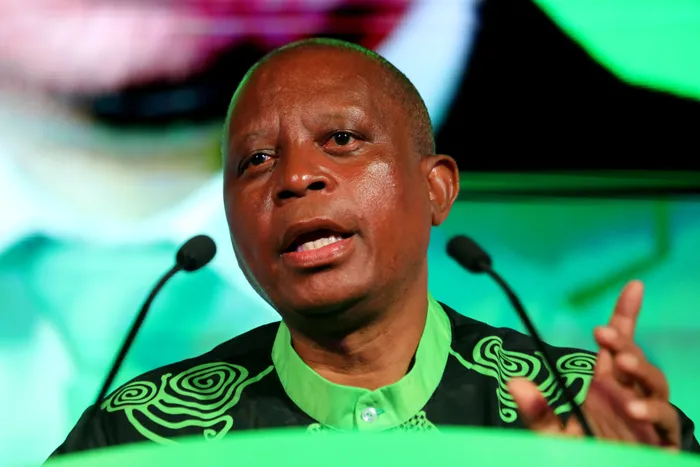
ActionSA leader Herman Mashaba recently declared that undocumented foreign nationals left stranded after deportations should be assisted by their home countries, not South Africa. In an interview with IOL, Mashaba stated his party's intention for "mass deportations," asserting that South Africa would not bear responsibility for individuals deported to its borders. He emphasized that if South Africa were to repatriate migrants, for example, by dropping them at Musina, it would become the problem of their respective countries. Mashaba firmly articulated that undocumented foreign nationals, if left stranded following deportation processes, should receive assistance from their countries of origin, rather than South Africa. This position shows ActionSA's hardline approach to immigration enforcement.
"It is not South Africa's problem. Let it be the problem of those countries. It's not our problem," Mashaba said, adding, "South Africa is not a place to harbour criminals because people who came into our country illegally are criminals." He further explained that his party's stance is that other nations should not outsource their problems to South Africa. Mashaba noted the diverse origins of illegal migrants, mentioning countries such as Pakistan, Bangladesh, India, and China, in addition to African nations. His remarks, made during a recent interview with IOL, outlined a clear policy proposal should his party gain political power. "If South Africans give us the mandate to govern," he stated, "we are going to make sure that those who are in our country illegally, and those who acquired South African citizenship fraudulently, are dealt with. We will fight to revoke those citizenships and ensure they are returned. We want to see mass deportations." This declaration by Mashaba forms a central pillar of ActionSA's electoral platform, signalling a significant shift in immigration policy if they were to assume leadership.
ActionSA's Hardline Stance
ActionSA leader Herman Mashaba stated that his party, if it gains power, intends to deport all undocumented foreign nationals to their home countries. Mashaba emphasized that the situation of any migrants left stranded after such deportations is not South Africa's responsibility. He clarified that if individuals are returned to the border, their respective countries should manage the consequences. This firm position reflects ActionSA's commitment to prioritizing the interests of South African citizens and enforcing strict immigration laws. The party maintains that the onus for assisting its citizens, even those who have been deported, lies squarely with their nations of origin.
Mashaba specifically mentioned that ActionSA's proposed actions would target illegal immigrants originating from a range of nations, including Pakistan, Bangladesh, India, China, and various other countries. This broad scope indicates the party's intention to address undocumented migration from diverse global origins, not solely from African nations. His statements suggest a full approach to identifying and removing individuals who have entered or remained in South Africa without proper authorization. The party's leader consistently frames the presence of undocumented foreign nationals as a matter of national security and economic stability.
Mashaba reiterated his position, asserting that if South African citizens grant his party the mandate to govern, ActionSA will ensure that both individuals residing in the country illegally and those who have fraudulently obtained South African citizenship are addressed. He indicated a firm resolve to pursue these measures should his party assume control. Mashaba's statements align with ActionSA's publicly declared stance on immigration, which advocates for stringent enforcement of immigration laws and the removal of undocumented individuals from South Africa. The party's platform also includes a commitment to reviewing and revoking any South African citizenships that are found to have been acquired through fraudulent means, further demonstrating their intent to clean up what they perceive as systemic issues within the country's immigration system. He has consistently stated, "We want to see mass deportations," showing the scale of the action ActionSA envisions.
Current Repatriation Efforts
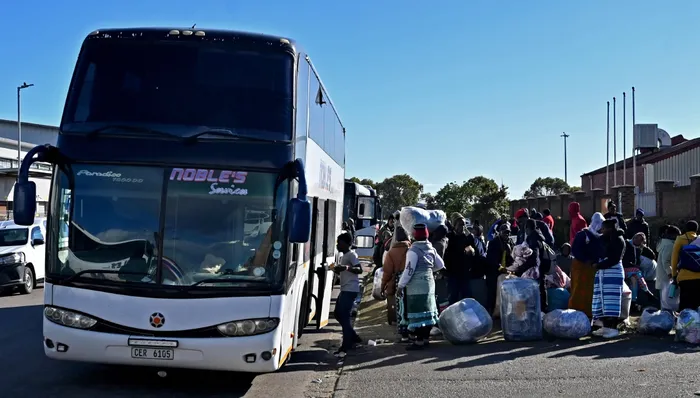
Authorities are continuing deportations and voluntary repatriations through the Musina Repatriation Centre, with hundreds of migrants arriving at the facility. This increase in arrivals at Musina follows the closure of the Durban Repatriation Centre. The ongoing operations at Musina highlight the continuous efforts by South African authorities to manage the flow of undocumented foreign nationals. The facility serves as a critical point for processing individuals before their return to their home countries. Some foreign nationals have been deported or have voluntarily returned to countries such as Mozambique and Malawi, indicating the diverse origins of those being repatriated. The closure of the Durban facility has shifted the operational burden and focus predominantly to the Musina centre, which is strategically located near the border.
Political analyst Solly Rashilo stated that more than 53,000 foreign nationals have been processed for deportation and repatriation. This significant number illustrates the scale of the challenge faced by the South African government in managing undocumented migration. Rashilo noted that the issue has become a significant political flashpoint, stating, "Yes, it has become a major political flashpoint in 2026. Surging anti-migrant protests, the June 30 ‘deadline’, concerns over violence and record deportations of more than 53,000 people reflect deep public anger over unemployment, crime and pressure on public services." He added that the situation "resonates as a proxy for governance failures but risks accusations of xenophobia." The analyst's comments suggest that the issue of immigration is deeply intertwined with broader societal frustrations and economic anxieties within South Africa. The increasing number of repatriations and deportations is a direct response to these pressures, but also carries political and social risks.
Political and Legal Context
Herman Mashaba, leader of ActionSA, has stated that individuals who entered South Africa unlawfully are considered criminals. This assertion forms a core part of ActionSA's immigration stance. This perspective is central to the party's argument for stringent enforcement and mass deportations, framing undocumented status not merely as an administrative issue but as a criminal offense. Goodenough Mashego, a political analyst, noted that immigration policy falls under the purview of the national government rather than municipal authorities. This distinction is key given that Mashaba's party competes in local and national elections, and his pronouncements often relate to national policy changes. Mashego's analysis points to a potential disconnect between the rhetoric employed by political parties at the local level and the actual legal and administrative frameworks governing immigration.
Solly Rashilo, another political analyst, noted that the immigration issue carries the risk of xenophobia accusations. Rashilo's observation shows the sensitive nature of the debate surrounding undocumented foreign nationals and the potential for such rhetoric to be perceived as discriminatory. The discussion around immigration in South Africa has become a significant political flashpoint, with public anger often cited regarding unemployment, crime, and pressure on public services. Rashilo previously indicated that the issue serves as a proxy for governance failures but could lead to accusations of xenophobia. The analyst's comments suggest that while concerns over immigration are prominent, the language used by political figures can have broader societal implications, potentially inflaming tensions. The national government's role in setting and implementing immigration policy remains central, regardless of municipal leadership's views, making the implementation of policies like "mass deportations" a complex undertaking with national implications. Rashilo further emphasized that the issue of immigration, while reflecting valid public concerns, also risks accusations of xenophobia, noting the delicate balance political leaders must strike.
Analyst Commentary
Political analyst Goodenough Mashego stated that Herman Mashaba is campaigning on an issue beyond the authority of local government, noting that immigration policy falls under national purview. Mashego commented, "Mashaba, first of all, is going into a local election, and the local government does not have the power to set immigration policy." The local government elections are scheduled for November 4, 2026. This upcoming electoral contest provides a backdrop for Mashaba's strong pronouncements, as parties seek to gain traction with voters by addressing highly emotive issues. Mashego added that while politicians might promise actions, "councillors and mayors don't have the power to do that," emphasizing that "the power to set immigration policy rests with the national government." This critical observation notes the limitations of local government in implementing national policies, even if such policies resonate strongly with the electorate. He observed a trend, stating, "everybody believes immigration is going to work for them," including the uMkhonto weSizwe Party, suggesting that the issue is being widely leveraged across the political spectrum.
Political analyst Solly Rashilo noted that surging anti-migrant protests, the June 30 ‘deadline’, concerns over violence, and record deportations reflect deep public anger regarding unemployment, crime, and pressure on public services. This full view from Rashilo shows the multi-faceted nature of the immigration debate in South Africa, linking it to broader socio-economic challenges. The analyst's insights provide context to the public sentiment that political figures like Mashaba are tapping into, as they advocate for more stringent immigration controls. The "June 30 ‘deadline’" refers to specific pressures or expectations within the public discourse surrounding immigration enforcement, further intensifying the political climate. The record number of deportations, exceeding 53,000, indicates the government's response to these public pressures, even as the debate continues to evolve.