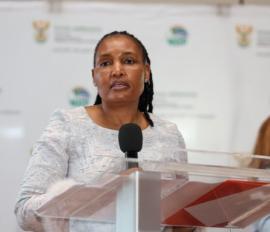
Human Settlements Minister Thembi Simelane unveiled two national initiatives on Monday at the opening of the International Pan-African City Symposium and Exposition, held at Nelson Mandela University. The Minister announced these two national initiatives with the stated aim to professionalise the human settlements sector. Simelane emphasized that the launch was not spontaneous, saying, "The launch of this institute is not an accidental event. It is the result of years of ideas, advocacy, academic work, sector mobilisation and commitment to the recognition of Human Settlements as a serious field of knowledge, practice and public service." The initiatives are designed to strengthen municipal capacity and create employment pathways for graduates within the sector. The International Pan-African City Symposium and Exposition, where these key announcements were made, operated under the theme: "Smart Futures Villages to Smart Economies – Exploring Models that Create Resilient, Equitable, Regenerative and Thriving Communities."
Minister Simelane noted a disconnect between graduates and opportunities. "Over the years, universities have produced graduates in housing and human settlements programmes. These graduates possess skills, knowledge and attributes that are directly relevant to the sector. Yet many of them do not find structured pathways into the Human Settlements system," she said. Simelane urged industry stakeholders to address this gap. "Contractors, developers, and service providers in human settlements technical projects need to do the same by creating opportunities for these graduates. This does not mean that other relevant qualifications are excluded. It means that Human Settlements qualifications must no longer be invisible in the sector they were designed to serve," Simelane added, stressing the importance of integrating these skilled individuals into the workforce.
Graduate Employment Strategy Detailed
The initiatives launched by Minister Thembi Simelane are specifically designed to strengthen municipal capacity and establish employment pathways for graduates. As part of this full effort, the development of a National Strategy for the Engagement of Housing and Human Settlements Graduates was announced. This strategy aims to create structured entry points into the sector for university graduates, directly addressing the current disconnect between academic qualifications and professional opportunities.
The strategy will focus on several key areas, providing a strong framework for graduate integration. These include structured experiential learning programs and formalised internship models designed to give practical, hands-on experience. It also encompasses youth entrepreneurship initiatives, fostering innovation and self-employment within the sector. The strategy prioritises the integration of graduates into critical areas such as social facilitation, data infrastructure, and local government support, ensuring that their skills are deployed where they are most needed. Additional focus areas within the strategy include beneficiary management, the development of affordable housing solutions, title deed acceleration to formalise property ownership, and promoting the adoption of modern, sustainable construction techniques across the sector. This multi-faceted approach seeks to build a resilient and skilled workforce for human settlements development.
Municipal Capacity Drive Explained
Minister Simelane urged all provinces, including metropolitan municipalities, human settlements entities, and non-governmental organisations, to prioritise specialised human settlement development qualifications during their recruitment processes. This call to action emphasizes the need for targeted expertise in the sector. A National Special Project will be undertaken to assess and strengthen the capacity of municipalities and provinces to plan, develop, and manage human settlements programmes effectively. This critical initiative will be conducted in partnership with the Presidency, showing its national importance. The National Special Project will focus on identifying institutional weaknesses within these bodies. Its objective is to improve the ability of municipalities, particularly accredited municipalities and secondary cities, to deliver housing and human settlements projects efficiently and to a high standard.
Institute's Role and White Paper
Minister Thembi Simelane spoke at the launch of the Institute of Human Settlements Practitioners South Africa (IHSP-SA). The IHSP-SA is expected to play a critical role in advancing professional standards, ethical practice, research, and skills development across the human settlements sector. Its establishment is a significant step towards formalising and elevating the profession. The launch of the institute comes as the government moves to implement the Human Settlements White Paper, which Cabinet approved in 2024. This timing ensures that the IHSP-SA's objectives align closely with national policy. The department intends to formalise a cooperation agreement with the IHSP-SA to support capacity development, research initiatives, professional standards, continuous professional development, and graduate support, thereby creating a synergistic relationship key for sector growth.
Minister's Call to Action
The government is intensifying efforts to professionalise South Africa's human settlements sector, according to Minister Thembi Simelane. Simelane called on universities and the Department of Higher Education and Training to explore mechanisms enabling graduates burdened by historic student debt to access their academic certificates and enter the workforce. The minister stressed the importance of addressing this barrier to entry for skilled individuals, ensuring that qualified professionals are not held back from contributing to the sector. The Human Settlements White Paper supports these efforts, calling for stronger sector capacity, minimum competency standards, and the professionalisation of human settlements practice. This full approach aims to elevate the sector's capabilities and ensure a skilled, ethical, and effective workforce for the future of human settlements in South Africa.