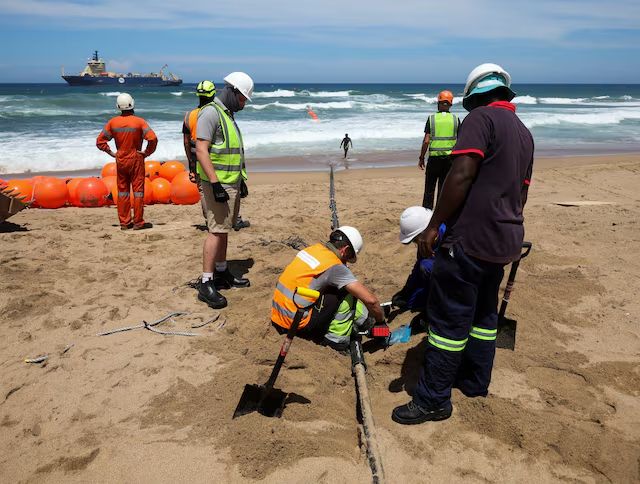
French telecoms operators Orange and Free are jointly funding a €93 million ($107.82 million) subsea cable project designed to connect Reunion with South Africa. This new infrastructure is slated to enter service in 2028, enhancing connectivity in the Indian Ocean region. The European Union will also contribute to the funding for the project, showing the strategic importance of this digital link. The collaboration between the two French telecoms giants aims to significantly bolster the digital infrastructure of the region, providing a key upgrade to existing communication pathways.
Project Details and Investment
Orange and Free have not disclosed their individual financial contributions to the subsea cable initiative, opting to present their involvement as a joint undertaking. The total investment for the project stands at €93 million. This figure translates to approximately $107.82 million, calculated using an exchange rate of $1 to 0.8625 euros. This substantial financial commitment notes the scale and ambition of the project, which seeks to establish a strong and high-capacity data link. The European Union is also providing funding for the infrastructure development, which aims to improve digital connectivity between Reunion and South Africa, contributing to broader regional development goals. The cable system is projected to begin operations in 2028, marking a significant milestone in regional telecommunications. The joint funding model ensures a shared commitment to the successful implementation and long-term operation of this vital piece of digital infrastructure.
Infrastructure and Deployment
Orange will serve as the landing party for the new subsea cable connecting Reunion and South Africa. This role typically involves managing the physical connection point where the cable comes ashore, including the necessary infrastructure and operational support on the ground. The responsibility of a landing party is critical for the smooth integration of the subsea cable with terrestrial networks, ensuring efficient data flow. The deployment of the cable infrastructure will be handled by Orange Marine, a specialized subsidiary of Orange. Orange Marine is tasked with the complex logistical and technical challenge of laying the cable across the ocean floor. This subsidiary will implement the design specifications provided by Alcatel Submarine Networks, which is responsible for the cable's engineering and technical architecture. Alcatel Submarine Networks' expertise in designing advanced subsea cable systems is key to ensuring the high performance and reliability of the new link. The collaboration between Orange, Orange Marine, and Alcatel Submarine Networks aims to ensure the efficient installation and future operation of the new digital link, enhancing data transmission capabilities across the Indian Ocean region. The project is scheduled to be operational by 2028, promising a significant boost to digital communication in the area.
Strategic Importance and Replacement
The subsea cable will establish a direct digital link between the French Indian Ocean island of Reunion and South Africa. This direct connection is expected to provide enhanced speed, reliability, and capacity for data transmission, benefiting various sectors from business to education and public services. This new infrastructure is designed to replace the existing SAFE cable, which was commissioned in 2002. The SAFE cable has served the region for over two decades, and its replacement signifies a key upgrade to meet the increasing demands of modern digital communication. The replacement aims to upgrade connectivity and ensure continued reliable data transmission between the two regions, addressing the growing need for higher bandwidth and more resilient network infrastructure. This strategic investment is poised to support economic growth and foster greater digital inclusion across the Indian Ocean.