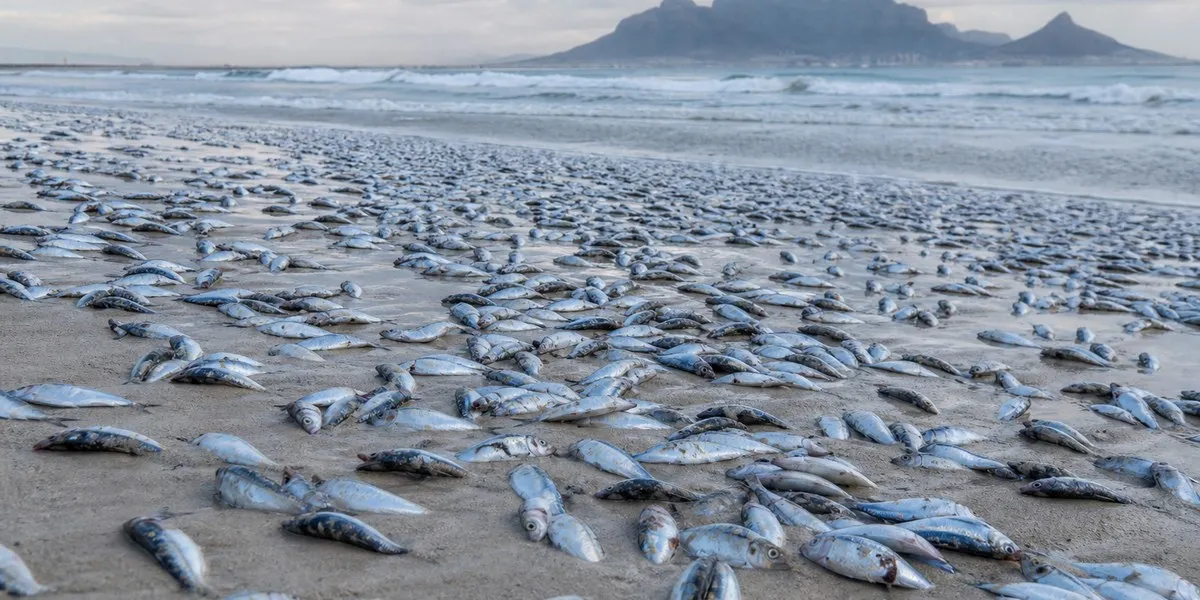
A mass die-off of pilchard has occurred along South Africa's coast, stretching from Cape Town to Gqeberha, following an outbreak of pilchard herpesvirus (PHV). This significant viral infection has raised substantial concerns regarding the country's supply of canned fish, a staple food item for many. Researchers are actively monitoring the spread of the disease, which has affected pilchard populations in key fishing areas, creating widespread unease. The incident notes potential vulnerabilities in the marine ecosystem and its profound impact on the local fishing industry and food security. Authorities are currently assessing the full extent of the die-off and its long-term implications for pilchard stocks, with specialists and industry representatives issuing warnings about potential consequences.
Waves of Die-Offs
Thousands of dead sardines and pilchards have washed ashore along South Africa's coastline, marking a significant die-off event that has captured national attention. The initial reports of fish deaths emerged in July, with the first incidents specifically recorded in the areas of Saldanha, St Helena Bay, and Gansbaai. This initial wave prompted immediate concern among local communities and environmental agencies. A subsequent wave of mortality later impacted Hobie and Pollock beaches in Gqeberha, indicating a broader geographical spread of the problem. This second outbreak spread geographically, moving in the direction of Namibia, further extending the affected region and escalating the crisis. The scale of the mortality event has showed the severity of the pilchard herpesvirus outbreak.
Economic and Social Stakes
Specialists and industry representatives have warned of a potential impact on the availability of canned fish, the broader fishing sector, and the delicate marine ecosystem. Canned pilchards serve as a significant and affordable source of protein for low-income households across the country. These essential fish are incorporated into the state school nutrition programme, which provides key meals for approximately 10 million pupils nationwide, noting the broad social implications of the die-off.
This year's pilchard catch is notably lower when compared to an average of 270,000 tonnes recorded over the previous five years, signaling a substantial decline in local supply. The economic effects are already becoming apparent in the market. The price of pilchards, for instance, increased by 80 cents between July and August, placing additional financial strain on consumers. This price rise represents an 11% increase compared to August 2025 figures, indicating a growing strain on consumers and the market as a whole and reflecting the immediate economic pressures resulting from the reduced availability.
Industry and Government Response
The pilchard herpesvirus (PHV) outbreak marks the first confirmed detection of the virus in South Africa, directly linked to a recorded mass sardine die-off, making this a novel and challenging situation for authorities. This year's pilchard catch has been significantly lower than previous averages, impacting local supply chains and availability for consumers. Mike Copeland, chair of the South African Pelagic Fishing Association, provided specific figures, stating that "this year’s catch amounted to about 124,000 tonnes, compared with an average of 270,000 tonnes over the previous five years." This stark comparison shows the severity of the current situation for the fishing industry.
Due to these low local catches, companies have been forced to resort to importing raw materials to meet demand. Copeland further explained the challenges faced by the industry, noting that "because of low local catches, companies imported raw materials from Morocco and Japan, but export moratoriums are in place due to global shortages." This situation exacerbates the supply problem, as international markets are also experiencing constraints.
Despite the severity and the widespread impact, the Department of Forestry, Fisheries and the Environment does not believe the number of dead fish detected so far warrants an immediate moratorium or stock restrictions on pilchard fishing. Officials are carefully observing the situation and drawing comparisons to similar incidents that have occurred elsewhere. Australia’s experience with PHV, for example, suggests that affected pilchard populations may recover in approximately three years, offering a potential timeframe for recovery, though the South African situation remains under close scrutiny.