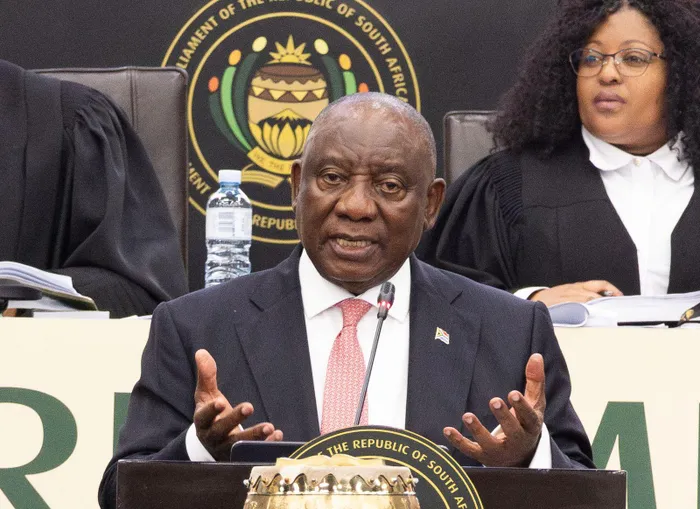
President Cyril Ramaphosa has urged citizens to engage in the upcoming National Dialogue process, emphasizing that public involvement is key for preserving democracy and accountability. The President made these remarks in his weekly newsletter on Monday, 25 May, as South Africa commemorates thirty years since the adoption of its Constitution. The Constitution was adopted by the Constitutional Assembly on May 8, 1996. This month, South Africa is marking thirty years since the adoption of its constitution, a significant milestone in the nation's democratic journey. The President showed the importance of citizen participation as a cornerstone of a healthy and functioning democracy.
President Ramaphosa stated, "As we mark thirty years since the adoption of our country’s constitution this month, we can reflect with pride on the political culture we have built as a nation – a culture that is strong, participatory, continuously evolving and firmly anchored in the democratic values we hold dear." He added, "We are fortunate to live in a society with a vibrant public space and deeply engaged citizens who know that they have a voice, and more importantly, that their voice matters." Ramaphosa called on all South Africans to participate in crafting a new vision for the nation, particularly noting the importance of youth involvement "who will live with the impact of the decisions we make today." He stressed that the National Dialogue is not merely a symbolic exercise but a vital opportunity for collective introspection and future planning. The President’s message reinforced the idea that the strength of South Africa's democracy lies in the active engagement of its people, ensuring that the nation's trajectory is guided by a broad spectrum of voices and perspectives.
Foundations of Democracy
South Africa’s Constitution continues to protect freedom of expression, uphold the rule of law, and ensure accountability for all. Active public participation helps to give life, meaning, and resilience to the country’s constitutional democracy, according to President Cyril Ramaphosa. He elaborated that active public participation continues to give life, meaning, and resilience to South Africa’s constitutional democracy, ensuring its continued strength and relevance. The constitution safeguards freedom of conscience, thought, and expression, firmly entrenching media freedom as one of the cornerstones of its democracy. This strong constitutional framework provides the bedrock upon which a participatory and accountable governance system is built.
Political contestation in South Africa takes place openly and freely. The nation's courts serve as institutions that people trust, providing recourse for ordinary South Africans, political actors, and various organisations. These judicial bodies play a critical role in upholding justice and ensuring that the rights enshrined in the Constitution are protected for all citizens. Ramaphosa stated that no one is above the law and scrutiny in South Africa, emphasizing that no individual or institution is beyond accountability. This principle of accountability is fundamental to maintaining public trust and the integrity of democratic institutions. Civil society in the country remains vibrant and resilient, further contributing to the democratic framework. Its continued activism and advocacy serve as an important check on power, fostering an environment where diverse viewpoints can be expressed and considered. The President noted that this vibrant civil society is a testament to the enduring democratic values upheld in South Africa.
The President's remarks showed the importance of these foundational elements, noting that the Constitution provides a strong framework that guarantees fundamental rights and freedoms. He reiterated that the protection of these rights, coupled with an active and engaged citizenry, ensures the continued health and evolution of South Africa's democratic system. The rule of law, he emphasized, applies equally to all, irrespective of their position or influence, reinforcing the principle of equality before the law. This commitment to transparency and accountability is what makes South Africa's democracy resilient and capable of addressing contemporary challenges.
A Legacy of Participation
The Constitutional Assembly was determined that all South Africans should participate meaningfully in drawing up the first democratic constitution, President Cyril Ramaphosa stated. For nearly a year and a half, extensive efforts were made to gather public input on the desired constitutional framework. During this intensive period, efforts were made to get people’s inputs on the type of constitution they wanted for the newly democratic nation. The Constitutional Assembly received thousands of written submissions during this period, covering a wide array of issues. These submissions addressed topics such as reproductive health rights, taxation, gun ownership, environmental conservation, and animal welfare. This full public consultation process ensured that the final document reflected the aspirations and concerns of a diverse populace. The President noted that this inclusive approach was revolutionary at the time and set a precedent for future governmental processes.
President Ramaphosa noted that the participatory approach used to create the constitution continues to guide efforts to transform South Africa. Members of the public actively participate in law-making through public hearings, a practice that reflects this ongoing commitment to engagement. These hearings offer citizens a direct avenue to influence legislative processes, ensuring that new laws are informed by the lived experiences and perspectives of those they will affect. Citizens are also able to comment on draft policies, regulations, and environmental decisions, ensuring their voices are heard in various governmental processes. This continuous feedback loop is vital for responsive and representative governance.
South Africa ranks among the leading countries globally for an open, transparent, and participatory budget process, according to President Ramaphosa. He noted that the annual parliamentary budget hearings make the budgeting process open to public scrutiny and parliamentary oversight. This high ranking is a testament to the nation's commitment to financial transparency and public accountability. The President also announced that upcoming pilot dialogues will further enhance public participation. These planned dialogues are set to include ward-based engagements, digital engagements, and sectoral dialogues, aiming to broaden the scope of civic involvement in national discussions. This multi-faceted approach is designed to reach as many citizens as possible, ensuring that the National Dialogue is truly representative.
The President further elaborated on the significance of these ongoing participatory mechanisms, stating that they are not just procedural but are integral to the democratic ethos of the country. He emphasized that the ability of citizens to influence policy, legislation, and even budgetary allocations is a direct outcome of the foundational principles laid during the constitution-making process. This legacy of participation ensures that governance remains connected to the people it serves, fostering a sense of ownership and collective responsibility for the nation's future.
Upcoming National Dialogue
Citizens are able to interact directly with elected representatives through the annual Taking Parliament to the People programme, convened by the National Council of Provinces. President Cyril Ramaphosa stated, "Through the annual Taking Parliament to the People programme convened by the National Council of Provinces, citizens are able to interact directly with elected representatives." This programme serves as a key platform for direct engagement between the public and their parliamentary representatives, fostering accountability and responsiveness. He emphasized that the current generation holds a responsibility to participate meaningfully in the National Dialogue. This responsibility stems from the understanding that the decisions made today will shape the future for generations to come.
The National Dialogue Steering Committee has outlined plans for a series of pilot dialogues. President Ramaphosa announced, "The National Dialogue Steering Committee has announced that between June and August this year, they will be holding up to 195 pilot dialogues across the nine provinces that will include ward-based engagements, digital engagements and sectoral dialogues." These dialogues are scheduled to take place between June and August this year, encompassing all nine provinces of South Africa. The approach for these pilot dialogues will include ward-based engagements, digital engagements, and sectoral discussions, ensuring a full reach. Between June and August this year, the National Dialogue Steering Committee will be holding up to 195 pilot dialogues across the nine provinces, demonstrating a significant commitment to widespread public consultation.
Organizers have declared their intention to prioritize direct community participation in the National Dialogue. This focus aims to ensure that the discussions are grounded in the experiences and perspectives of ordinary citizens. The National Dialogue is designed to reflect South Africa’s diverse demographics comprehensively. It should fully encompass the nation's racial, cultural, social, economic, and geographic diversity, according to the organizers. The inclusion of various engagement formats, such as ward-based and digital platforms, is intended to facilitate broad participation from different segments of society, ensuring that a wide array of voices contributes to the national conversation. Today’s generation carries a responsibility to participate meaningfully in the National Dialogue, as their input is key for shaping a future that reflects collective aspirations. The steering committee's commitment to ensuring a fully representative dialogue shows the importance of hearing from all corners of society, from rural communities to urban centres, and from various socio-economic backgrounds. This inclusive approach is fundamental to building a truly national consensus on the path forward for South Africa.