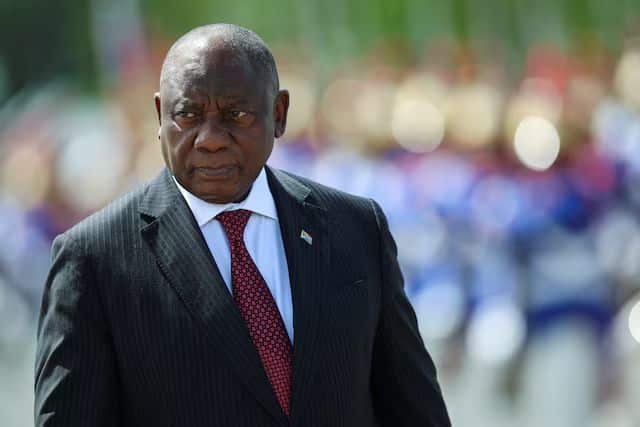
South African President Cyril Ramaphosa has launched a legal challenge against a panel report that suggested he may have engaged in misconduct concerning cash stolen from his farm. The President initiated the court proceedings after the independent panel's findings were released. Mr. Ramaphosa has maintained that the money stolen from his Phala Phala farm represented proceeds from the sale of buffaloes. This legal action shows the President's firm stance against the panel's conclusions, which have cast a shadow over his administration. The controversy, often referred to as "Farmgate," has been a significant political issue in South Africa, drawing considerable public and media attention.
Legal Challenge Details
President Cyril Ramaphosa seeks to set aside a 2022 finding from an independent panel, which alleged he may have violated the constitution. The panel's report centered on the theft of foreign currency from his Phala Phala farm in 2020. His legal challenge aims to overturn these conclusions, which have raised questions about his conduct and the ethical implications for a head of state. The independent panel's findings, released in 2022, prompted immediate political fallout and calls for accountability. President Ramaphosa's legal team is arguing that the panel overstepped its mandate and misinterpreted the available evidence, leading to flawed conclusions.
The African National Congress (ANC), Ramaphosa's party, currently holds approximately 40% of the seats in the National Assembly. This parliamentary representation is a key factor in the political implications of any findings against the President, particularly concerning potential impeachment proceedings. The legal challenge is ongoing, with Ramaphosa's representatives arguing against the validity of the panel's interpretations and their potential impact on his constitutional standing. The President's legal team contends that the panel's process was procedurally flawed and its findings lacked sufficient legal basis.
Scandal Background
The scandal originated from the theft of approximately $580,000 in cash bundles from a sofa on President Cyril Ramaphosa's Phala Phala farm in 2020. This incident triggered a wave of scrutiny regarding the source and handling of the foreign currency, particularly given the large sum involved. Subsequent investigations, including one by the central bank, have addressed aspects of the controversy. The central bank's probe concluded that President Ramaphosa had not contravened exchange control regulations in connection with the funds. This finding provided some clarity on the financial regulatory aspect of the matter, even as the broader political implications continued to unfold. The origin and purpose of the large sum of cash remain central to the ongoing discourse surrounding the President's conduct, with his assertion that it stemmed from buffalo sales being a key point of contention.
Political Context and Support
The Constitutional Court stated earlier this month (May 2026) that the parliamentary vote blocking impeachment proceedings against President Ramaphosa was invalid, requiring further investigation into the allegations. This ruling followed a 2022 decision by African National Congress (ANC) lawmakers to block such impeachment efforts. Despite the court's intervention, the ANC reiterated its support for President Ramaphosa this month (May 2026), reinforcing his position within the party. Any impeachment vote against a sitting president would necessitate a two-thirds majority to pass in the National Assembly, a high bar given the ANC's current parliamentary strength. The ANC's continued backing is key for President Ramaphosa as he navigates these legal and political challenges. The party's steadfast support indicates a unified front, at least publicly, against attempts to unseat him.
Court's Recent Intervention
Earlier this month (May 2026), the Constitutional Court determined that the parliamentary vote blocking impeachment proceedings against President Cyril Ramaphosa was invalid. This ruling necessitates further investigation into the allegations surrounding the Phala Phala farm incident, effectively reopening the parliamentary review process. The court's decision mandated renewed scrutiny of the matter, ensuring that the allegations receive a full and proper parliamentary inquiry, rather than being dismissed. This judicial intervention has significant implications for the ongoing political landscape and the President's immediate future.