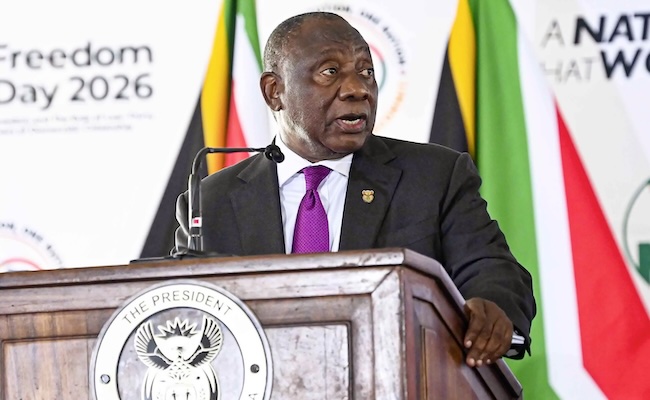
The Constitutional Court has reopened the impeachment process for President Cyril Ramaphosa, ruling that the National Assembly's previous decision regarding a panel report was flawed. This ruling effectively reopened the impeachment door for President Cyril Ramaphosa, marking a critical juncture in his presidency. The court found Parliament's initial handling of the report wanting, meaning the report should be referred to an impeachment committee for further review. This development marks a significant legal step in the ongoing scrutiny of the President, potentially reigniting a process that could lead to his removal from office. The implications of this decision are broad, setting the stage for renewed political and legal battles.
Phala Phala Scandal's Genesis
The issue surrounding President Cyril Ramaphosa's conduct originated in 2022 when National Assembly speaker Nosiviwe Mapisa-Nqakula constituted a Section 89 panel. This panel was established to investigate serious allegations of misconduct against the President. The panel's mandate was to investigate the theft of $580,000, which had been found stuffed into a couch at Ramaphosa’s Phala Phala game farm. This inquiry sought to determine if the President had a case to answer regarding the incident, which brought a cloud of controversy over his administration. The allegations centered on various aspects, including the origin of the foreign currency, its undeclared nature, and the President's handling of the security breach.
The panel, chaired by retired chief justice Sandile Ngcobo, subsequently concluded its investigation. Its findings were significant, as it determined that Ramaphosa indeed had a prima facie case to answer concerning the matters under review. This conclusion suggested that there was sufficient evidence to warrant further parliamentary proceedings into the President's conduct. Despite the panel's findings, Parliament voted down the Section 89 report later in 2022, effectively preventing further parliamentary action at that time. This decision by the National Assembly was met with criticism from various quarters, with many arguing that it undermined accountability and the spirit of parliamentary oversight. The vote was seen by some as a move to shield the President from deeper scrutiny, raising questions about the independence of the legislative body.
Following Parliament's decision to reject the report, Ramaphosa initiated legal proceedings to challenge the panel's findings. He made an application to the Constitutional Court in early 2023, seeking to review and set aside the Section 89 panel report. His legal team argued that the panel had erred in its conclusions and that the evidence did not support a prima facie case. However, the Constitutional Court dismissed this application in March 2023, upholding the validity of the panel's findings that a prima facie case existed. This ruling was a major setback for the President's legal strategy, confirming the legitimacy of the initial findings against him. Consequently, Ramaphosa formally dropped further legal action related to the report in May 2023. These developments laid the groundwork for the renewed scrutiny now facing the President, demonstrating the persistence of the legal challenges despite attempts to dismiss them. The ongoing legal saga has kept the Phala Phala scandal firmly in the public and political spotlight, ensuring its continued relevance in the national discourse.
Legal and Political Pathways
President Cyril Ramaphosa now faces three distinct pathways following the Constitutional Court's decision: he can choose to litigate further against the impeachment process, endure the parliamentary scrutiny that will follow, or resign from his position. Each option carries significant political and personal risks for the President. The decision to litigate further would entail a prolonged legal battle, potentially delaying but not entirely stopping the parliamentary process. Enduring parliamentary scrutiny would mean facing a potentially hostile inquiry, with the possibility of impeachment looming. Resignation, while a drastic step, would allow him to avoid the full parliamentary process but would undoubtedly be a blow to his political legacy.
While the impeachment process moves forward, investigations by several key South African institutions have previously cleared him of wrongdoing. The South African Reserve Bank (SARB), the South African Revenue Service (Sars), and the public protector have each concluded their inquiries, finding no basis for allegations against the President concerning the Phala Phala matter. These findings provided some relief to the President, suggesting that from a regulatory and financial perspective, he had not committed any breaches. However, these investigations focused on specific aspects of the scandal, such as foreign exchange regulations and tax compliance, and did not directly address the broader questions of ethical conduct or the use of state resources for private matters that the Section 89 panel touched upon. The differing conclusions highlight the complex and multi-faceted nature of the Phala Phala scandal, where various institutions have examined different angles with varying outcomes.
However, a declassified Independent Police Investigative Directorate (IPID) report has introduced new questions regarding Major-General Wally Rhoode. The report's findings raise concerns about the conduct of Rhoode, potentially adding another layer of complexity to the ongoing Phala Phala matter. This development suggests that while some institutions have cleared the President, the actions of individuals associated with the incident continue to draw scrutiny. The IPID report's focus on a high-ranking police official linked to the security breach at Phala Phala could open new avenues for investigation and further complicate the President's position.
Should the impeachment process continue within Parliament, the National Assembly would require a two-thirds threshold to remove Ramaphosa from office. This mandate translates to 267 Members of Parliament (MPs) needing to vote for impeachment, a scenario that would necessitate a significant number of African National Congress (ANC) MPs to break ranks and vote against their party leader. Achieving such a threshold is historically challenging within the ANC, which typically enforces strong party discipline. However, internal factions and discontent within the party could potentially create an environment where such a vote becomes a real possibility, although it would represent an unprecedented internal rebellion. The political maneuvering and negotiations leading up to any such vote would be intense, with both pro- and anti-Ramaphosa factions vying for influence.
In the event of Ramaphosa's removal or resignation, Paul Mashatile has been identified as a potential successor. Mashatile, however, also faces his own set of challenges, including existing corruption allegations. His potential ascension to the presidency would therefore not necessarily resolve the issues of public trust and accountability that have plagued the current administration. The political landscape remains fluid as these legal and parliamentary processes unfold, with the succession question adding another layer of complexity to an already intricate situation. The prospect of a new leader with their own set of controversies shows the deep-seated challenges facing South African politics regarding governance and corruption.
Expert and Market Perspectives
Richard Calland, emeritus professor of public law at the University of Cape Town, suggested that further legal action, or "lawfare," is the most probable course of action for President Ramaphosa. Calland stated, "So we’re back to that point now … It’s very relevant again. I think he can go back to that matter and reignite the case and seek a stay on proceedings in the National Assembly." This perspective aligns with the fact that Ramaphosa's legal team had explicitly reserved the right to revive their legal challenge should circumstances change. This strategic reservation indicates a preparedness to engage in protracted legal battles, using all available judicial avenues to contest the impeachment process. The President's legal team is known for its careful approach, and a renewed legal challenge would likely be full, seeking to exploit any procedural or substantive weaknesses in the case against him.
Despite previous investigations by various bodies, key questions persist regarding the Phala Phala matter. These include the precise amount of money stolen from the farm, the legitimacy of the buffalo sale, the source of the large cash sum, why the cash remained undeclared for 44 days, and the specific role played by Bejani Chauke. These unresolved issues could fuel further scrutiny in any renewed parliamentary process, as they represent critical gaps in the public's understanding of the event. The lack of definitive answers to these questions has allowed speculation to flourish, contributing to public skepticism and maintaining the scandal's prominence. Any parliamentary committee tasked with reviewing the matter would likely delve deeply into these points, demanding full transparency and accountability from the President and his associates. The ongoing nature of these questions ensures that the Phala Phala scandal remains a potent source of political vulnerability for Ramaphosa.
The political stakes were high even before the Constitutional Court's latest ruling. Ramaphosa reportedly tendered his resignation to the African National Congress's (ANC) top seven leadership on December 1, 2022, following the Section 89 panel's initial findings, but was ultimately advised against stepping down. This revelation shows the immense pressure he faced and the internal party dynamics at play. The fact that the party leadership intervened to prevent his resignation notes their strategic interest in maintaining stability and avoiding further political upheaval, especially given the upcoming national elections. Calland noted the pressure on the President to remain in office, saying, "There are plenty of people who are telling him that the country needs him, or the government needs him; his reforms need to stay in place – not fall off track; and that there’s been a sense of real turnaround in the past few months and he needs to finish the job." This sentiment reflects a belief among some within the ANC and broader society that Ramaphosa's leadership is key for ongoing economic reforms and for restoring confidence in the government. The argument is that his departure would create a vacuum and potentially derail progress, further destabilizing an already fragile political and economic environment.
According to Calland, the Constitutional Court's recent ruling serves as a critical warning to Parliament, cautioning against using its majority to suppress accountability. He described the judicial intervention as a positive sign for democratic governance, stating, "This is good constitutional democracy at work, where one bit of a system is correcting another bit of a system and, together, they are generating the kind of practice and principles that you need in a healthy democracy." This interpretation suggests that the judiciary is fulfilling its role as a check on legislative power, ensuring that parliamentary procedures are conducted fairly and in accordance with constitutional principles. The ruling reinforces the idea that no institution, including Parliament, is above the law and that accountability mechanisms must be allowed to function effectively.
Financial markets, however, have not shown a significant reaction to the news of the renewed impeachment threat. Analysts attribute this muted response primarily to ongoing global distractions, which have overshadowed domestic political developments in South Africa. The lack of a strong market reaction suggests that investors may either perceive the impeachment threat as unlikely to succeed or that the broader global economic landscape is currently a more dominant factor in their decision-making. Despite the political turbulence, the markets appear to be taking a wait-and-see approach, potentially factoring in the high threshold required for a successful impeachment and the President's history of navigating political challenges. This dispassionate market response contrasts sharply with the intense political drama unfolding within the country.