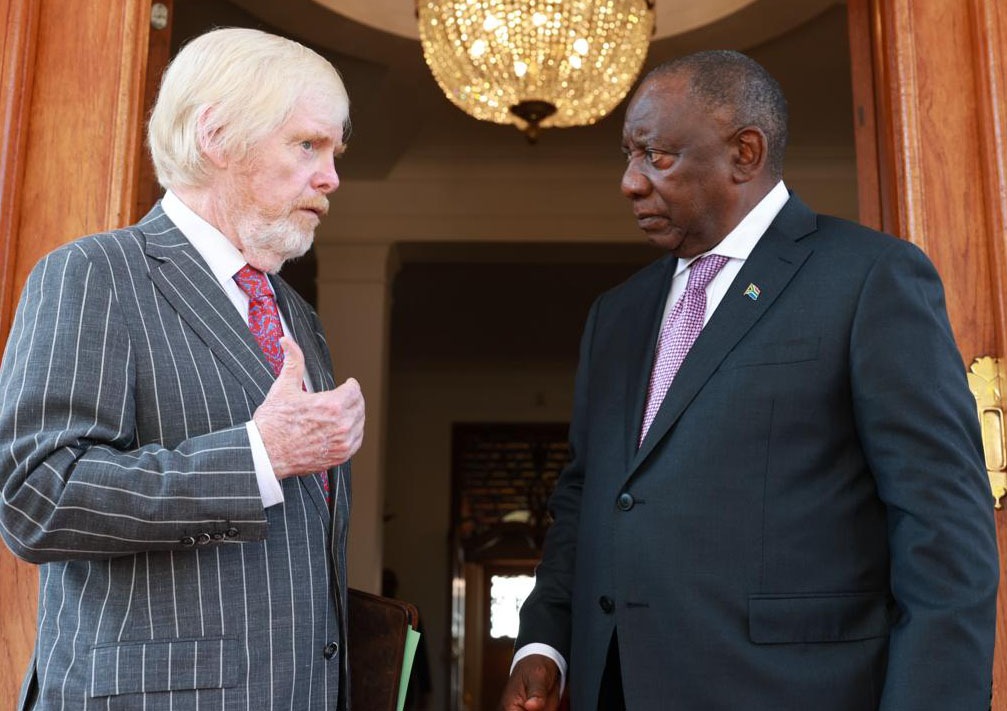
US Ambassador to South Africa Leo Brent Bozell III delivered a message from United States President Donald Trump to President Cyril Ramaphosa in Pretoria on August 26. The communication detailed demands from Washington ahead of a response being prepared by Ramaphosa's administration. This diplomatic exchange followed President Trump's signing of an executive order on February 7, 2025, which has been a point of contention between the two nations. The South African government is now formulating its official position on the matter, aiming to address the concerns raised by the US while safeguarding its own interests.
Trump's Five Key Demands
United States President Donald Trump's message to President Cyril Ramaphosa outlines five key demands from Washington. The first demand calls for South Africa to prioritize the protection of farmers from violence. Secondly, the US insists that South Africa condemn the “Kill the Boer” chant, categorizing it as hate speech. A third demand is the scrapping of the expropriation without compensation law, which has been a contentious policy. President Trump's administration seeks an end to the 30% Broad-Based Black Economic Empowerment (BBBEE) ownership requirement for US investors operating in South Africa. The final demand requires South Africa to demonstrate its non-alignment in foreign policy by distancing itself from nations considered adversaries of the United States, such as Iran. These five asks form the core of the message delivered by Ambassador Bozell III.
Trade and Aid Implications
United States President Donald Trump’s executive order banning US aid to South Africa and offering asylum to Afrikaner farmers remains in effect. The order will stay in place until Pretoria adequately addresses Washington’s five demands, as outlined in the message delivered to President Cyril Ramaphosa. The African Growth and Opportunity Act (Agoa) was not specifically mentioned by President Trump in his communication to President Ramaphosa. Agoa had expired last year, but Congress retrospectively revived the trade preference program and extended its duration until December of this year. Separately, Washington recently imposed a 12.5% tariff on certain South African imports. This tariff was levied due to allegations that South Africa has failed to curb the import of goods produced by forced labor, adding another layer of economic pressure to the bilateral relationship.
Beyond the 12.5% tariff, President Trump also imposed a 25% tariff on autos and 50% tariffs on steel and aluminum. However, several products exported by South Africa to the US were exempted from the new 12.5% tariff. These exempted goods include macadamia nuts, oranges, limes, tea, spices, seeds, cane sugar, orange and lime juice, syrups, chemicals, critical minerals, platinum-group and precious metals, isotopes, civil aircraft and parts and components, and pharmaceuticals. This targeted application of tariffs indicates a nuanced approach to economic pressure.
South Africa's Position
Pretoria believes progress has been made in addressing the demands outlined by the United States, according to sources close to the South African government. President Cyril Ramaphosa will highlight this perceived progress in his forthcoming reply to US President Donald Trump. His administration is reportedly focusing on demonstrating steps taken to address Washington's concerns, particularly those related to the protection of farmers and the expropriation without compensation law.
South Africa's eligibility for benefits under the African Growth and Opportunity Act (Agoa) is currently undergoing a routine review. This periodic assessment determines whether beneficiary countries continue to meet the program's requirements, which include criteria related to human rights, rule of law, and market access. The review process is standard for all Agoa-eligible nations.
Official Reactions and Outlook
US Ambassador Leo Brent Bozell III expressed US impatience in March, stating the five demands had been put to the South African government over a year earlier without a response. The ambassador's complaint showed the growing frustration within the US administration regarding the perceived lack of progress from Pretoria. Separately, United States President Donald Trump signed legislation to extend the African Growth and Opportunity Act (Agoa) until December 2028. This extension provides a longer-term framework for trade relations under Agoa, despite the current tensions. The combination of specific demands, aid restrictions, and targeted tariffs notes the multifaceted pressure being applied by the United States on South Africa. The South African government's response is anticipated to be a critical step in navigating these complex bilateral relations.