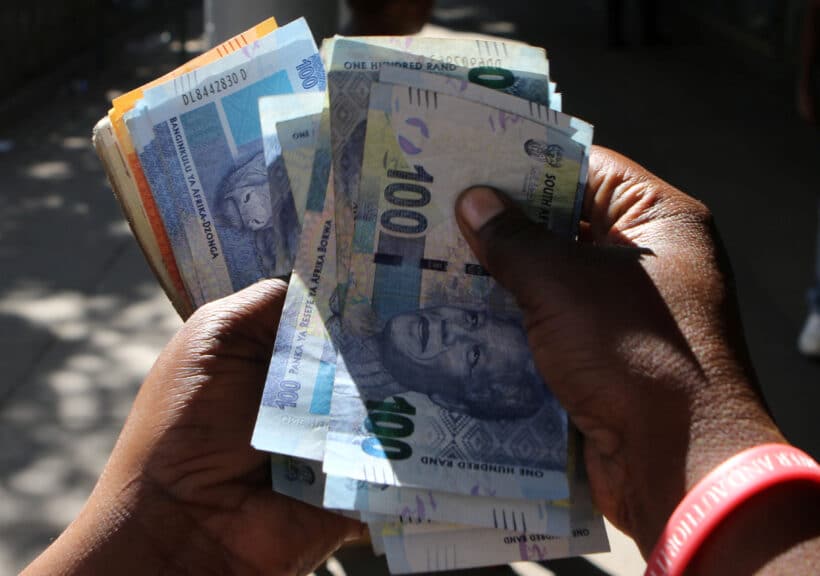
The South African rand remained steady in early trade on Wednesday as market participants awaited the release of April inflation data, a key indicator for the nation's economic health and monetary policy direction. Statistics South Africa is scheduled to publish this key economic indicator at approximately 0800 GMT, providing a fresh look at price pressures within the economy. South Africa, a net fuel importer, is particularly vulnerable to global energy price increases, making the inflation data closely watched. The performance of the rand, often influenced by economic data releases, reflected this anticipation.
Inflation Forecasts Detailed
Analysts polled by Reuters anticipate April inflation to accelerate to 3.9% year on year, an increase from the 3.1% recorded in March. This expected acceleration shows the persistent inflationary pressures facing the South African economy. Rising fuel prices contribute significantly to this expected inflationary pressure, primarily driving up transport costs across various sectors. This direct impact on consumer goods and services is a key concern for policymakers and consumers alike.
Nedbank economists estimate an even higher reading, forecasting April inflation at 4.4%. This suggests a potentially more pronounced increase in the cost of living for South African households. The divergence in forecasts notes the uncertainty surrounding the precise impact of recent economic factors on consumer prices.
Nedbank economists noted, "Household spending at that time would have been supported by the favourable inflation backdrop, easier financial conditions and improving sentiment prior to the full effect of the onset of the Iran war." This statement suggests that while conditions were supportive for consumers in the preceding period, the impact of geopolitical events on energy prices is now expected to influence the inflation trajectory more significantly. The forecast notes the vulnerability of the South African economy to global energy market fluctuations, which can quickly translate into domestic price increases, particularly for a country heavily reliant on imported fuel. The ongoing global energy landscape continues to present challenges for managing domestic inflation.
Broader Economic Indicators and Market Movements
Beyond inflation, the statistics agency is also scheduled to release retail sales numbers at approximately 1100 GMT, offering further insight into the country's economic performance and consumer spending patterns. These figures are vital for gauging the strength of domestic demand. Retail sales in South Africa saw an increase of 1.6% year on year in February, indicating a modest recovery in consumer activity. For March, analysts are predicting a more substantial rise, with forecasts suggesting a 2.5% increase in retail sales. A stronger-than-expected retail sales report could signal improving consumer confidence and economic growth.
In the bond market, the yield on South Africa’s benchmark 2035 government bond declined by 1.5 basis points, settling at 8.915%. This movement indicates a slight strengthening in bond prices, often a sign of increased investor demand or expectations of stable economic conditions and interest rates. The performance of government bonds is a key indicator for investors assessing the country's fiscal health and economic outlook.
Market Influences and Outlook
At 0619 GMT, the rand traded at 16.68 to the dollar, remaining stable as markets awaited the key economic data releases. The currency's performance in early trade reflected a cautious stance among investors, who were holding off on significant moves until the inflation and retail sales figures were published.
The U.S. Dollar, a significant factor in global currency movements due to its status as a safe-haven asset and a benchmark for international trade, was flat against a basket of major currencies during early trading hours. This stability in the dollar provided a neutral backdrop for the rand ahead of local inflation figures, meaning the rand's movements were primarily driven by domestic factors and expectations rather than external currency pressures.
In the bond market, South Africa’s benchmark 2035 government bond showed a slight strengthening in early deals. This movement in government bonds can reflect investor sentiment regarding the country's economic stability and future interest rate expectations. A stronger bond market often suggests that investors perceive lower risk or anticipate that the central bank might maintain or even lower interest rates in the future, depending on the inflation outlook. The bond market's performance often provides an early indication of broader economic confidence among investors and can influence the cost of government borrowing. The upcoming data releases will be critical in shaping market sentiment for the rand and South African assets in the short to medium term.