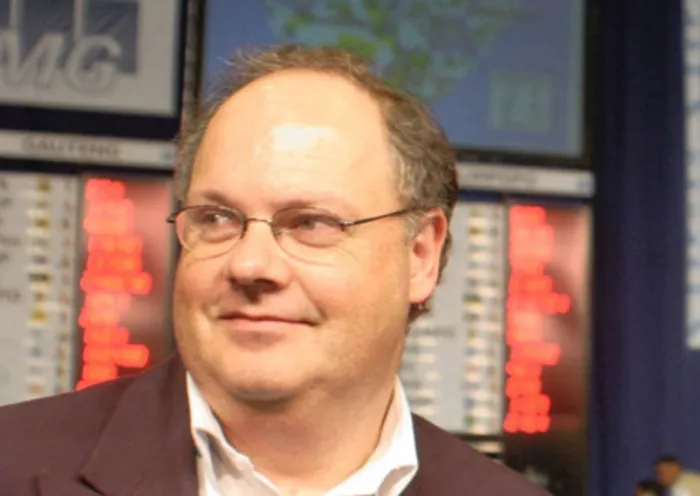
South African Revenue Service (SARS) Commissioner Johnstone Makhubu has announced a strategic shift towards improving taxpayer relationships, emphasizing trust and confidence over a sole focus on revenue collection. This new approach aims to cultivate a more collaborative environment between the tax authority and citizens. Commissioner Makhubu has adopted a notably softer tone with taxpayers, emphasizing relationship building as a core component of SARS's mandate, moving beyond solely chasing revenue numbers.
Commissioner Makhubu stated that SARS's "long-term success relies on cultivating a trusted, capable, and sustainable institution." He elaborated that a revenue administration's success "must be judged not only by what it collects, but by how it treats taxpayers, how it conducts itself, and whether it earns the confidence of the people it serves." This emphasis shows his belief that the institution's legitimacy is intrinsically linked to public perception and engagement. Makhubu added that the organization must "evolve beyond transactions and disputes," recognizing that "Revenue is our mandate, but trust is our license to operate." He stressed a shared responsibility to protect the tax system's integrity and strengthen confidence in the rule of law, noting that compliance should naturally arise from ease of engagement, transparency in operations, and collaborative efforts between SARS and the public.
New Era of Tax Administration
The next phase for the South African Revenue Service (SARS) will concentrate on enhancing service delivery, clarifying processes, accelerating issue resolution, and fostering closer engagement with stakeholders, according to Commissioner Johnstone Makhubu. This full strategy marks a significant pivot in how the tax authority plans to interact with the public. SARS intends to simplify compliance for taxpayers while simultaneously addressing non-compliance and adapting to their evolving requirements, ensuring a responsive and efficient system. Makhubu stated that he wants the relationship between SARS and its stakeholders, especially tax practitioners, to "evolve beyond transactions and disputes," fostering a more cooperative and less adversarial environment.
To achieve these goals, SARS will direct its efforts towards four primary priorities: ensuring a workforce of capable and ethical employees, accelerating its modernisation initiatives, securing sustainable funding, and cultivating stronger relationships with taxpayers. These pillars are designed to create a strong and respected tax administration. Commissioner Makhubu emphasized that compliance should naturally arise from ease of engagement, transparency in operations, and collaborative efforts between SARS and the public, moving away from a punitive-first approach. This strategic direction aims to build a foundation of mutual respect and understanding, ultimately benefiting both the tax authority and the broader South African economy.
Modernisation and Technology Integration
The South African Revenue Service (SARS) is embarking on its "Modernisation 3.0" initiative, which aims to establish an intelligent tax and customs administration platform. This ambitious project will integrate advanced data analytics, automation, and artificial intelligence (AI) to streamline operations and enhance efficiency across all SARS functions. The initiative is part of a broader strategy to evolve the tax authority's capabilities, ensuring it remains at the forefront of global tax administration practices.
Key modernisation efforts under this plan include significant improvements to Value Added Tax (VAT), customs, and excise processes, which are critical for national revenue collection and trade facilitation. SARS also intends to enhance its case management systems, aiming for more effective and timely resolution of taxpayer issues, thereby reducing administrative burdens. The expansion of digital identity verification and the increased application of AI technologies are central to these technological upgrades, facilitating more secure, accurate, and efficient interactions between SARS and taxpayers. These technological advancements are expected to improve the overall taxpayer experience and enhance SARS's ability to combat non-compliance effectively.
Commissioner Johnstone Makhubu has clarified that while technology is a cornerstone of this modernisation drive, its role is to support and augment human capabilities rather than replace them. The objective is for technological advancements to complement human roles within SARS, ultimately leading to improved outcomes for both the institution and taxpayers. This approach shows a commitment to integrating innovation while maintaining essential human oversight and engagement in tax administration, ensuring that technology serves to empower, not displace, the human element of service delivery.
Context and Historical Perspective
Commissioner Johnstone Makhubu outlined the South African Revenue Service's (SARS) vision for a new era of tax administration during his address at the 13th Annual Tax Indaba. This significant event provided a platform for him to articulate the strategic direction under his leadership. Makhubu assumed the role of SARS Commissioner on May 1, 2026, succeeding Edward Kieswetter, marking a new chapter for the institution. Before his appointment as Commissioner, Makhubu served as the Deputy Commissioner for Taxpayer Engagement and Operations within SARS, a role that provided him with extensive insight into the dynamics of taxpayer interactions and operational efficiencies.
Under the leadership of his predecessor, Edward Kieswetter, SARS achieved a record tax collection of R2 trillion in the past financial year, demonstrating the institution's capacity for strong revenue generation. Makhubu has emphasized that SARS's "long-term success relies on cultivating a trusted, capable, and sustainable institution." He stated that a revenue administration "must be judged not only by what it collects, but by how it treats taxpayers, how it conducts itself, and whether it earns the confidence of the people it serves," reiterating a core tenet of his new approach. The Commissioner also indicated a need for SARS to "evolve beyond transactions and disputes," noting a shared responsibility "to protect the integrity of the tax system, improve the taxpayer experience, and strengthen confidence in the rule of law." He further articulated that "Revenue is our mandate, but trust is our license to operate. Together, we can build a tax administration that serves the country not only today, but for generations to come," encapsulating his vision for a future-proof and trusted tax authority.