South Africa's National Institute for Communicable Diseases (NICD) has confirmed the presence of the Andes hantavirus strain in connection with a cruise ship, with two cases identified. Tests by South Africa’s National Institute for Communicable Diseases (NICD) revealed the Andes strain, confirming only two hantavirus cases related to the ship. The two individuals infected with the Andes strain came off the MV Hondius, which had been affected by a disease outbreak. The Andes strain of hantavirus spreads human-to-human. A Dutch woman died in Johannesburg on April 26 after contracting the infection. Additionally, a British man fell ill on the ship after it departed St. Helena for Ascension Island; he was evacuated to South Africa from Ascension Island on April 27 and remains hospitalized. Both infected individuals became ill while on the vessel. According to reports, the Andes strain of hantavirus is capable of human-to-human transmission. The World Health Organization (WHO) has recommended "maximal physical distancing" as a preventative measure.
Cruise Ship Outbreak Details
The MV Hondius departed from southern Argentina on April 1, sailing toward Antarctica before crossing the Atlantic Ocean. This journey began from southern Argentina. A deadly outbreak of this rare hantavirus unfolded over the course of several weeks on the cruise ship. Reports indicated that the ship was positioned between the British island territories of South Georgia and St. Helena in the middle of the South Atlantic.
On April 6, a 70-year-old Dutch man onboard fell ill, experiencing fever, headache, and mild diarrhea. He died on April 11 after developing respiratory distress. His body was subsequently removed from the ship on April 24 in St. Helena. His 69-year-old wife disembarked with his body and traveled to South Africa. The Dutch man and his wife had traveled in Argentina and elsewhere in South America before they boarded the cruise. During her April 25 flight, the woman's condition worsened, and she collapsed at an airport in South Africa. The Andes strain caused infection in the Dutch woman who died in Johannesburg on April 26.
Another passenger, a British man, became sick on the ship after it left St. Helena and sailed to Ascension Island. His positive test for hantavirus prompted South African health authorities to conduct a posthumous test on the Dutch woman's body. That test result came back positive on Monday. Health officials in South Africa received a positive result for hantavirus on Saturday, approximately 21 days after the first passenger died.
In total, three passengers have died. This includes the Dutch man and the Dutch woman, as well as a German woman who died on the ship on Saturday, four days after falling ill. Her body remains on the ship. WHO suspects the other cases also are hantavirus and is treating it as an outbreak. The World Health Organization (WHO) has recommended "maximal physical distancing" as a preventative measure against the virus. One passenger remains in intensive care at a South African hospital. Additionally, three other individuals still aboard the cruise ship have exhibited symptoms and were awaiting evacuation.
Hantavirus Strain and Transmission
The Andes strain is the only known hantavirus strain that causes human-to-human transmission, although this type of spread is very rare and requires very close contact, according to reports. Human-to-human transmission of the Andes strain is very rare and only happens due to very close contact. Other hantavirus strains are more commonly transmitted through contact with infected rodents or their urine, droppings, or saliva. While hantavirus is primarily spread by rodents and does not usually spread person-to-person, some health authorities indicate such transmission could be possible.
The Andes virus, a specific hantavirus species, is found in South America, mainly in Argentina and Chile. Reports indicated that a deadly outbreak of this rare hantavirus unfolded over several weeks on a cruise ship. Both infected individuals became ill while on the vessel. Health officials in South Africa received a positive result for hantavirus on Saturday, approximately 21 days after the first passenger died.
One passenger remains in intensive care at a South African hospital. Additionally, three other individuals still aboard the cruise ship have exhibited symptoms and were awaiting evacuation. Nearly a month passed between when an elderly Dutch man fell sick and died and laboratory tests confirmed hantavirus infections.
International Response and Logistics
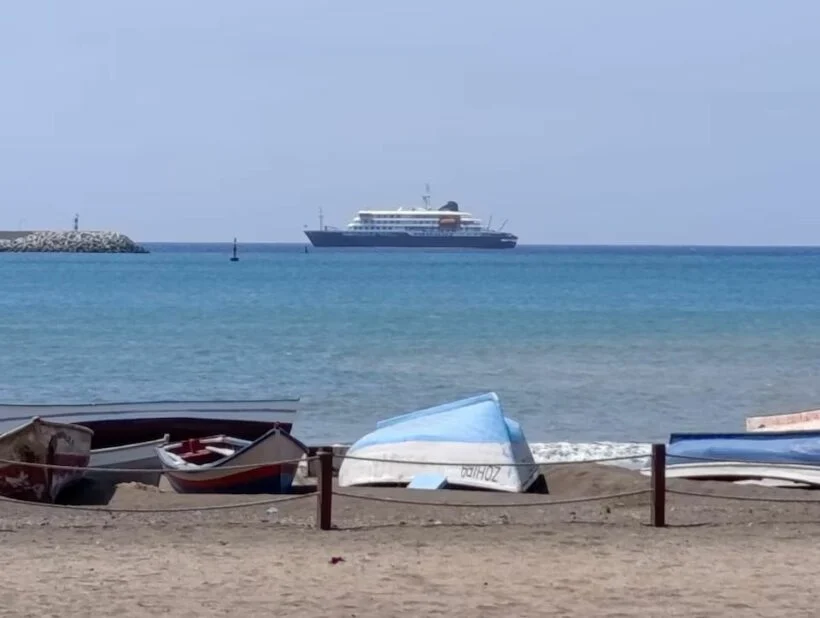
The Spanish government granted permission for the MV Hondius to dock in the Canary Islands, where the ship was intending to sail. The Spanish government gave permission for the ship to dock in the Canary Islands. Aircraft were dispatched to Cape Verde to evacuate two individuals requiring urgent medical care, as well as a passenger traveling with the German woman who died onboard; these individuals were to be transported to the Netherlands. The ship then would sail to Spain’s Canary Islands. The vessel is currently awaiting further instructions off the coast of West Africa. The MV Hondius was preparing to travel from Cape Verde towards Europe on Wednesday.
Passengers and crew have been isolated in their cabins, implementing "maximal physical distancing" to prevent further spread. On Sunday, WHO announced it was investigating a suspected hantavirus outbreak on the ship. The WHO stated that the outbreak was being managed and assessed the global risk as low. WHO said the outbreak on the ship was being managed and the global risk was low.
The WHO is also tracing individuals who were on a passenger plane between St. Helena and Johannesburg, South Africa, with the Dutch woman who later died of the virus. WHO was tracing people who were on a passenger plane between St. Helena and Johannesburg, South Africa, with the Dutch woman. Nearly 150 passengers and crew members from 23 countries were aboard the ship. Almost a month elapsed between the elderly Dutch man falling ill and dying, and laboratory tests confirming hantavirus infections. The Dutch man and his wife had traveled in Argentina and other parts of South America before boarding the cruise.