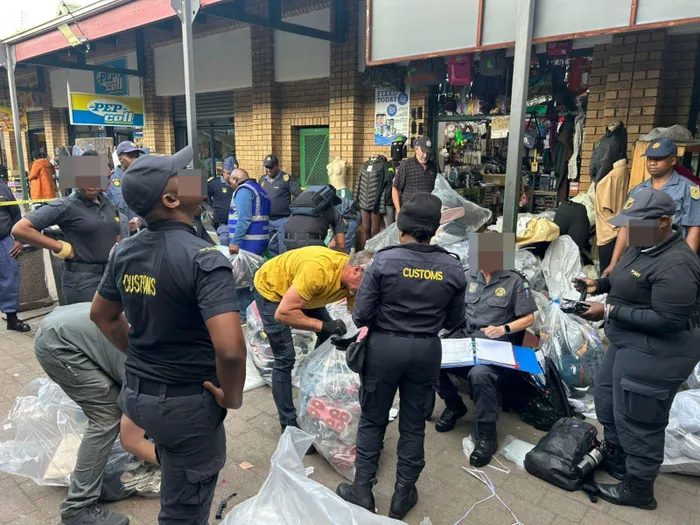
South African authorities are intensifying enforcement efforts against illicit trade, marking a significant push in the nation's ongoing campaign. The South African Revenue Service (SARS) stated that these operations are integral to an expansive crackdown targeting smuggling, counterfeit goods, and widespread tax evasion throughout the country. This intensified focus aims to bolster compliance and curb the flow of illegal products within South Africa. The government's strong stance shows a commitment to safeguarding the economy and legitimate businesses from the detrimental effects of illicit activities.
Major Raids Yield Significant Seizures
The South African Revenue Service (SARS) and other agencies conducted operations in the North West province, resulting in the seizure of goods estimated at R245 million. The raids targeted various locations, including Rustenburg, Brits, Marikana, and Hartbeespoort. This action forms part of a broader, intensified campaign by South African authorities to combat illicit trade across the country. The operations focused on disrupting networks involved in smuggling, the distribution of counterfeit goods, and tax evasion. SARS explicitly stated that these efforts are part of an ongoing crackdown designed to aggressively pursue those engaged in illegal economic activities. The North West seizures represent a significant outcome in the ongoing efforts to enforce compliance and stem the flow of illegal products within South Africa's borders. Authorities have indicated that such coordinated efforts will continue as part of the broader strategy to safeguard the economy from the impact of illicit trade activities. The value of the seized goods shows the scale of the challenge faced by law enforcement in addressing these criminal enterprises, noting the widespread nature of illicit trade networks.
The Widespread Scale of Illicit Trade
Tobacco, alcohol, and branded clothing are consistently among the most frequently counterfeited and illicitly traded goods in South Africa. These categories remain prime targets for illicit networks due to high demand and potential for significant profits. The illicit trade sector has a substantial financial impact on the nation, with estimates suggesting it costs the South African economy as much as R100 billion annually. This staggering figure represents a considerable drain on national resources and legitimate tax revenue, hindering economic growth and development.
Research from the University of Cape Town’s Research Unit on the Economics of Excisable Products (REEP) notes the significant prevalence of illegal cigarettes. According to REEP, illegal cigarettes represented approximately 60% of sales in 2021. This figure marks a sharp increase from around 30% prior to 2020. The illicit cigarette market experienced a notable surge following the Covid-19 sales ban implemented in 2020, contributing to its current scale. The ban inadvertently created an environment conducive to the expansion of illegal markets, which have proven difficult to curtail even after the lifting of restrictions. This sustained high level of illicit cigarette sales continues to pose a significant challenge to both public health initiatives and tax collection efforts.
Government's New Disruption Programme
President Cyril Ramaphosa announced the government is establishing a national illicit economy disruption programme. This initiative aims to coordinate efforts across various state agencies and the private sector to combat illegal economic activities. The programme will utilize data analytics and artificial intelligence to target high-risk sectors within the illicit trade, including tobacco, fuel, alcohol, and counterfeit goods. This strategic approach is designed to enhance the effectiveness of enforcement by identifying patterns and predicting potential illicit activities. By leveraging advanced technology, the government seeks to create a more sophisticated and proactive response to the complex challenges posed by the illegal economy. Parliament has also expressed support for stronger action against illicit trade, backing the government's intensified approach, signaling a unified front against these detrimental practices.
Parliamentary Support and Economic Impact
More than 170,000 items were confiscated in raids conducted across Rustenburg, Brits, Marikana, and Hartbeespoort as part of the ongoing operations. These significant seizures demonstrate the tangible results of the intensified enforcement efforts. The illegal economy is believed to account for approximately 20% of South Africa's Gross Domestic Product (GDP). This substantial portion of economic activity operating outside legal frameworks represents a massive loss in tax revenue and undermines legitimate businesses.
British American Tobacco South Africa (BATSA) has indicated its intention to cease local production, citing the "devastating impact" of the illicit cigarette trade. This decision will result in the closure of BATSA's Heidelberg manufacturing facility in Gauteng, which is expected to occur by the end of 2026. This closure will have significant implications for local employment and the manufacturing sector. The company's move shows the significant economic pressures exerted by illicit trade on legitimate businesses and the broader economy, illustrating how widespread illegal activities can force established companies to reconsider their operations within the country. The impact extends beyond revenue losses, threatening job security and industrial capacity.