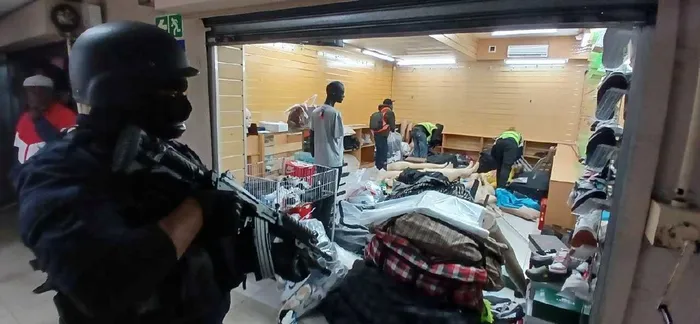
The South African Revenue Service (SARS) recently seized goods valued at an estimated R245 million as part of intensified efforts to combat illicit trade. These actions are aimed at curbing smuggling, counterfeit goods, and tax evasion across the country, activities that significantly undermine the nation's economic stability. Illicit trade is reportedly costing the South African economy as much as R100 billion annually, a staggering figure that notes the urgency of the government's response. To address this significant financial loss and its broader implications, President Cyril Ramaphosa announced the establishment of a national illicit economy disruption programme. This full programme shows a concerted push by the government to dismantle networks involved in illegal economic activities, which deprive the state of key revenue and undermine legitimate businesses, ultimately impacting job creation and economic growth.
The severity of the situation has prompted a multi-faceted approach, with various state agencies coordinating their efforts to tackle the widespread problem. The recent seizures by SARS are just one component of a broader strategy designed to disrupt illicit supply chains and bring perpetrators to justice. The government's commitment to this fight is evident in the strategic planning and resource allocation aimed at bolstering enforcement capabilities and improving intelligence gathering.
Scope of Illicit Trade
Tobacco, alcoholic beverages, and branded apparel and clothing are identified as some of the most frequently counterfeited and illicitly traded goods within South Africa. The illicit cigarette market, in particular, has seen a substantial and alarming increase. A study by the University of Cape Town’s Research Unit on the Economics of Excisable Products (REEP) indicated that approximately 60% of cigarettes sold in the country in 2021 were illegal. This figure represents a significant rise from the pre-Covid-19 period, when the illicit market accounted for roughly 30% of sales. The surge occurred notably after the 2020 sales ban on tobacco products, creating a fertile ground for illegal operators to flourish and expand their market share.
The impact of this illicit trade extends profoundly to legitimate businesses, threatening their viability and sustainability. BAT South Africa (BATSA) has cited the phenomenon as a primary reason for its decision to close its sole South African manufacturing facility. The facility, located in Heidelberg, Gauteng, is slated for closure by the end of 2026. This strategic move by BATSA notes the immense commercial pressures faced by legal operators due to the prevalence of illegal goods in the market, which often retail at significantly lower prices, making it impossible for compliant businesses to compete. The closure is expected to affect production and supply chains within the country, leading to job losses and reduced local manufacturing capacity.
Government's Coordinated Response
In response to the escalating crisis, government efforts against illicit trade have intensified, resulting in significant confiscations. More than 170,000 items were confiscated during recent raids conducted in various locations across the country, including Rustenburg, Brits, Marikana, and Hartbeespoort. These operations demonstrate a proactive stance against illicit activities, aiming to disrupt their operations at multiple points.
The national illicit economy disruption programme, announced by President Cyril Ramaphosa, is set to specifically target high-risk sectors including tobacco, fuel, and alcohol. This full programme will leverage advanced data analytics and artificial intelligence to identify and disrupt illicit activities within these industries, enhancing the precision and effectiveness of enforcement actions. The use of technology is expected to provide a significant advantage in tracing complex networks and identifying key players.
The initiative emphasizes stronger coordination among various government departments, aiming to streamline operations and enhance efficiency across the board. A core focus of the programme involves accelerating investigations into illicit trade networks and ensuring stricter enforcement of existing laws. This approach seeks to close loopholes that illicit traders exploit and to significantly increase the consequences for those involved in illegal economic activities, thereby acting as a stronger deterrent. The programme is designed to foster a smooth exchange of information and resources between agencies, creating a more formidable front against organised crime.
Parliament is also expected to engage actively with key agencies to fortify these efforts. The South African Revenue Service (SARS), the Border Management Authority, and the police will participate in these key parliamentary discussions. The objective of these engagements is to integrate strategies and enhance collaboration between these entities, which are critical in controlling borders, collecting revenue, and maintaining law and order. Such inter-agency cooperation is deemed essential for a full and effective response to the complex and evolving challenges posed by the illicit economy.
Economic and Political Urgency
The raids targeting illicit trade were strategically conducted in several locations, including Rustenburg, Brits, Marikana, and Hartbeespoort, showing the widespread nature of the problem. President Cyril Ramaphosa has unequivocally emphasized that illicit and counterfeit goods inflict severe damage on the economy, destroy legitimate jobs, and undermine local businesses that operate within the confines of the law. Ramaphosa stated, "We are establishing a national illicit economy disruption programme that brings together key state agencies and other stakeholders, including the private sector, to collectively tackle this scourge." He further noted the technological backbone of this initiative, adding that the program would leverage technology: "Through effective use of data analytics and AI, we will be targeting high-risk sectors like tobacco, fuel, alcohol and other counterfeit products."
The illicit economy has reportedly grown to approximately 20% of South Africa's Gross Domestic Product, a figure that shows the magnitude of the challenge and the significant financial drain on the nation. President Ramaphosa further showed the severity of the issue, declaring, "Organised crime is now the most immediate threat to our democracy, our society and our economic development." This stark assessment reflects the deep concern within government circles regarding the corrosive effect of illicit activities on the fabric of the nation. Joe Maswanganyi, Chairperson of the Standing Committee on Finance, affirmed that illicit trade poses a serious threat to the economy, requiring urgent and coordinated action from all sectors. Maswanganyi stated, "This is a serious matter, causing damage to the economy of the country, our committee will engage with SARS, the Border Management Authority and the Police. This is a matter that needs a multidisciplinary approach; it needs all of us to find a solution." The unified stance from both the executive and legislative branches signals a strong resolve to confront and dismantle the illicit economy, safeguarding South Africa's economic future and democratic institutions.