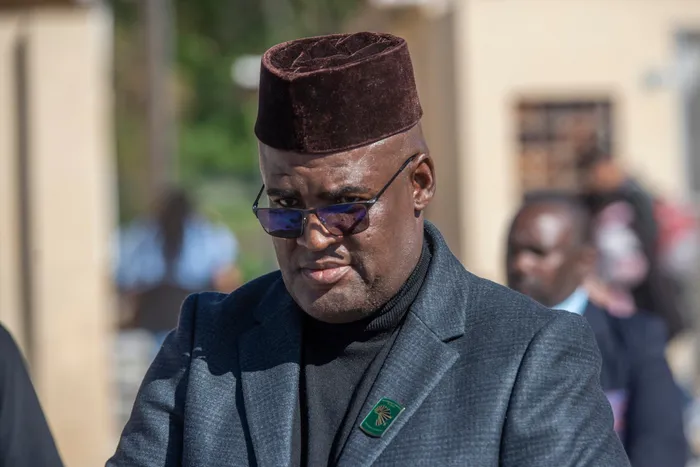
South Africa's government currently lacks updated data on land owned by foreign nationals, according to Land Reform and Rural Development Minister Mzwanele Nyhontso. This absence of current statistics means policymakers are relying on information that is now seven years old. The most recent available information dates back to the 2017 Land Audit, which was conducted by the Department of Land Reform and Rural Development. The reliance on such dated figures presents a significant challenge for informed decision-making regarding land policy and ownership trends within the country.
Minister Nyhontso confirmed the situation, stating, "There are currently no updated statistics available. The most recent available information is from the 2017 Land Audit conducted by the Department." This audit remains the primary reference point for understanding foreign land ownership patterns across the country, noting a critical gap in the government's current data collection and analysis capabilities. Without more recent data, it is difficult to assess any shifts or changes in foreign land ownership since 2017, which could impact various socio-economic and developmental aspects of the nation.
2017 Land Ownership Snapshot
According to the 2017 Land Audit, foreign nationals owned a total of 789,932 hectares of land across South Africa. This figure represented 0.56% of the Republic of South Africa's total land area at the time of the audit. The audit provided a detailed, albeit now historical, overview of how foreign land ownership was distributed across the nation's nine provinces. This foundational data set has been key for initial discussions on land reform, even as calls for updated information grow louder.
The Northern Cape province recorded the largest share of land owned by non-South Africans, amounting to 298,226 hectares. This substantial portion underlines the diverse nature of land ownership patterns across the country, with some provinces attracting significantly more foreign investment in land than others. Following this, the Western Cape province had 117,063 hectares owned by foreign nationals, indicating another key region for non-South African landholders. The Free State accounted for 73,168 hectares of land under foreign ownership, while Limpopo recorded 70,518 hectares. These figures reveal a varied landscape of foreign landholding, reflecting different economic opportunities and geographical attractions within each province.
Further provincial breakdowns from the 2017 audit show that North West province had 56,498 hectares owned by non-South Africans. Gauteng, a key economic hub, accounted for 50,977 hectares of foreign-owned land, a notable amount given its smaller geographical size relative to other provinces. The Eastern Cape registered 48,860 hectares, and KwaZulu-Natal followed closely with 46,658 hectares. Mpumalanga had the lowest recorded amount among the provinces, with foreign nationals owning 27,964 hectares. The detailed provincial data from the 2017 Land Audit offers a valuable, though outdated, benchmark for understanding the distribution and concentration of foreign land ownership across South Africa.
Government's Data Gaps
The Department of Land Reform and Rural Development faced significant limitations in its 2017 Land Audit regarding the specific use of foreign-owned land. The audit could not determine whether the land owned by foreign nationals was utilized for agricultural, commercial, or residential purposes. This inability to classify land use means that the government lacks key insights into the economic activities associated with these foreign-owned properties. For instance, it remains unclear how much of this land contributes to food security through agriculture, or to economic development through commercial enterprises, or simply serves as residential property.
This data gap extended to properties held by foreign-owned corporations, where the department was similarly unable to establish the land-use classification. The absence of such detailed information means the government lacks a full understanding of how these land holdings are being developed or exploited across different sectors. This lack of granular data makes it challenging for policymakers to assess the socio-economic impact of foreign land ownership, develop targeted interventions, or ensure that land use aligns with national development objectives. The department has acknowledged that this deficiency hampers its ability to formulate fully informed policy responses to the issue of foreign land ownership.
Legislative Response and Future
The Department of Land Reform and Rural Development is currently developing new legislation aimed at regulating landholding by foreign persons within South Africa. This legislative effort seeks to establish clearer frameworks and potentially impose restrictions or conditions on non-citizens acquiring land. The proposed legislation, which is intended to address the identified data gaps and policy concerns surrounding foreign land ownership, has not yet been finalized. The development of this new legal framework is a direct response to the challenges noted by the 2017 Land Audit and the ongoing lack of updated information.
Before it can proceed further, the draft legislation must still secure approval from the Cabinet. This key step is necessary for the bill to be formally introduced into the parliamentary process, where it would undergo further review, public consultation, and debate before potentially becoming law. The journey from a departmental draft to enacted legislation is often lengthy and involves multiple stages of scrutiny and amendment. The government's commitment to developing this legislation signals a proactive approach to managing foreign land ownership, aiming to create a more transparent and regulated environment for land transactions involving non-South African entities and individuals.