South Africa has pledged $2.5 million (R41.2 million) to support the Africa Centres for Disease Control and Prevention (Africa CDC) in its efforts to combat the ongoing Ebola outbreak in both the Democratic Republic of the Congo and Uganda. This significant financial commitment from South Africa shows its dedication to continental health security. The Africa CDC stated that South Africa's contribution sends a "strong and reassuring message that Africa stands united in protecting the lives and well-being of its people." The organization added that this comes at a time when the continent faces increasing public health threats with significant risks of cross-border transmission, emphasizing the necessity of strong, coordinated responses. The pledge aims to bolster the Africa CDC's capacity to respond effectively to the current crisis and mitigate future health emergencies across the continent.
Outbreak Details and Challenges
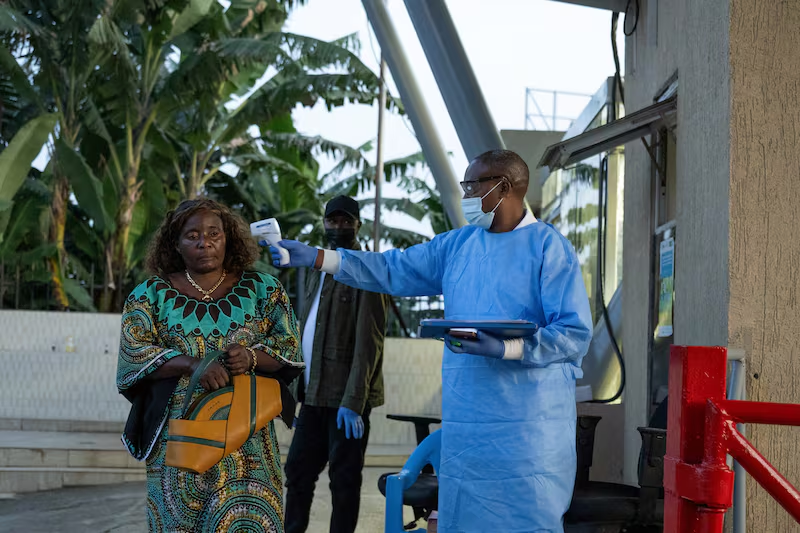
The current Ebola outbreak presents a grave public health challenge. More than 500 suspected cases and over 130 deaths had been recorded by Tuesday in the ongoing outbreak across the Democratic Republic of the Congo and Uganda. These figures highlight the rapid spread and severe impact of the disease in affected communities. The current epidemic is attributed to the Bundibugyo strain of the Ebola virus, a specific variant that poses unique challenges for public health officials. Unlike the Zaire strain, which was responsible for the devastating 2014 outbreak and for which vaccines and specific treatments have since been developed, the Bundibugyo strain currently has no available vaccines or specific treatments. This absence of targeted medical interventions complicates containment efforts and increases the fatality risk, making strong public health measures even more critical. The lack of specific pharmaceutical tools necessitates a focus on surveillance, rapid diagnosis, isolation, and supportive care to manage the outbreak.
South Africa's Commitment
President Cyril Ramaphosa's commitment to continental health initiatives was noted by his role as the African Union’s Champion on Pandemic Prevention, Preparedness and Response. This leadership position shows South Africa's dedication to fostering a resilient public health infrastructure across Africa. Ramaphosa emphasized the importance of tangible support in addressing health crises, stating, "Solidarity must translate into concrete action." This powerful message shows the need for practical contributions to combat outbreaks such as the current Ebola epidemic, rather than mere declarations of intent. This pledge from South Africa is specifically intended to bolster the Africa Centres for Disease Control and Prevention's operational capabilities in affected regions. The funding aims to support critical areas such as enhanced surveillance to track the spread of the virus, improved diagnostics to ensure timely identification of cases, and full response efforts against the Bundibugyo strain of the Ebola virus, for which no specific vaccines or treatments are currently available. These efforts are key for containing the disease and protecting vulnerable populations.
Regional Health Response
The World Health Organization (WHO) declared the Ebola outbreak a public health emergency of international concern on Saturday. This declaration is a significant step, signaling the global community's recognition of the severity and potential for international spread of the outbreak. The ongoing outbreak has prompted international attention and coordinated response efforts, mobilizing resources and expertise to support affected countries. The declaration by the WHO signals the gravity of the situation and the potential for international spread, necessitating a unified global health strategy. This response aims to contain the current epidemic, which is attributed to the Bundibugyo strain of the Ebola virus. This declaration also notes the importance of timely and effective interventions to prevent further transmission within and across national borders. The outbreak is expected to continue until May 20, 2026, indicating a prolonged period of vigilance and intervention will be required.
Call for Solidarity
The World Health Organization's declaration of a public health emergency shows the urgent need for collaborative action to contain the Ebola outbreak. South Africa's substantial contribution to the Africa Centres for Disease Control and Prevention aims to reinforce continental efforts, providing much-needed resources for surveillance, diagnosis, and response. The Africa CDC has noted that such solidarity is key for protecting the lives and well-being of people across the continent, particularly in the face of cross-border health threats. This collective approach is vital to strengthening Africa's capacity to manage and overcome future public health challenges.