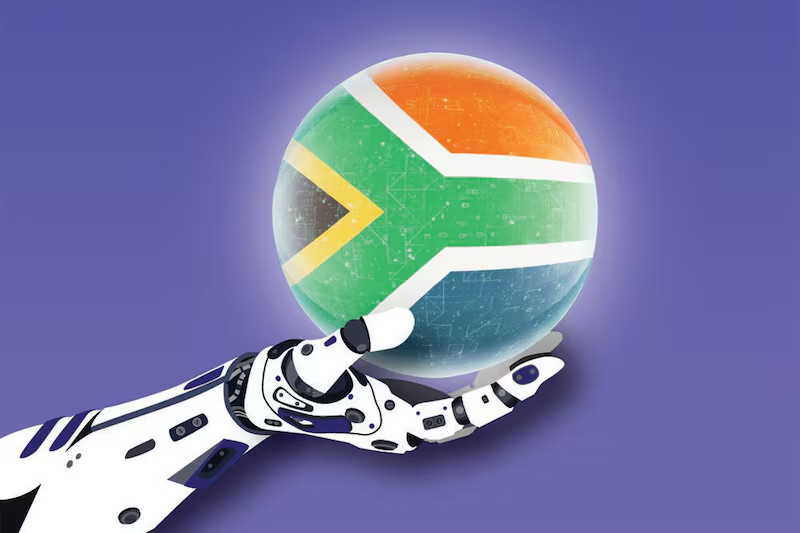
South Africa has established an expert panel to guide the development of its revised artificial intelligence (AI) policy. This significant move shows the nation's commitment to proactively addressing the challenges and opportunities presented by rapidly advancing AI technologies. The appointment aims to steer the nation's strategic approach to AI, ensuring its policies are updated and responsive to evolving technological advancements, thereby positioning South Africa as a responsible player in the global AI landscape. The panel's formation is a key step in overhauling existing frameworks concerning AI governance and implementation within the country, reflecting a recognition that current policies may no longer be adequate for the pace of innovation. This initiative is expected to lay the groundwork for a full and forward-looking AI strategy.
Expert Panel Guidance
An expert panel has been appointed to help steer a revised artificial intelligence policy, providing key insights and recommendations. The expert panel is specifically tasked with providing these recommendations that will shape South Africa's updated AI policy. Its primary objective involves ensuring that the revised policy not only safeguards the nation's interests but also actively fosters innovation in the burgeoning artificial intelligence sector. This guidance is expected to address critical areas such as ethical AI development, ensuring fairness and accountability in algorithms, strong data privacy measures to protect citizens' information, and a thorough understanding of the socio-economic impact of AI technologies across various industries, from healthcare to finance.
The panel's work will also focus intently on aligning South Africa's AI strategy with international best practices and regulatory frameworks, ensuring the country remains competitive and collaborative on a global scale. This includes examining how other nations are approaching AI governance and adapting successful models to the South African context. Recommendations from the panel are anticipated to form the cornerstone of future legislative and programmatic initiatives related to AI within the country, providing a solid foundation for its responsible development and deployment. Their input is considered vital for crafting a policy that is both visionary and pragmatic, balancing technological progress with societal well-being.
Policy Revision Timeline
A new draft of South Africa's artificial intelligence policy is expected later this year, marking a key moment in the country's technological agenda. This upcoming draft will signify a significant step in the country's ongoing efforts to update its frameworks for AI governance and implementation, moving beyond preliminary discussions to concrete proposals. The revision process aims to incorporate the expert recommendations gathered from the newly appointed panel and address the rapidly evolving technological landscape, ensuring the policy remains relevant and effective for years to come. The timeline for the draft release indicates a concerted push to finalize a full strategy for AI development and regulation within South Africa, demonstrating a clear commitment to establishing a strong regulatory environment. Further details on the draft's specific contents are anticipated closer to its release, which will provide a clearer picture of the government's proposed approach to AI. This proactive approach is designed to ensure that South Africa can harness the benefits of AI while mitigating potential risks effectively.
Media Discussion on AI
Business Day TV recently discussed the future trajectory of South Africa's artificial intelligence policy with Business Day’s Mudiwa Gavaza. The conversation centered on the path ahead for the country's AI strategy following the recent appointment of an expert panel tasked with revising the existing framework. This media engagement notes ongoing public and industry interest in how South Africa plans to manage the development and implementation of AI technologies, reflecting the broad societal implications of these advancements. The discussion explored potential impacts on various sectors, from job markets to public services, and the broader implications for the nation's technological advancement and global competitiveness. It also touched upon the expectations surrounding the forthcoming draft of the updated AI policy, which is anticipated later this year, showing the urgency and importance of this policy work. The interview provided valuable insights into the considerations and challenges facing policymakers as they navigate this complex and rapidly evolving field.