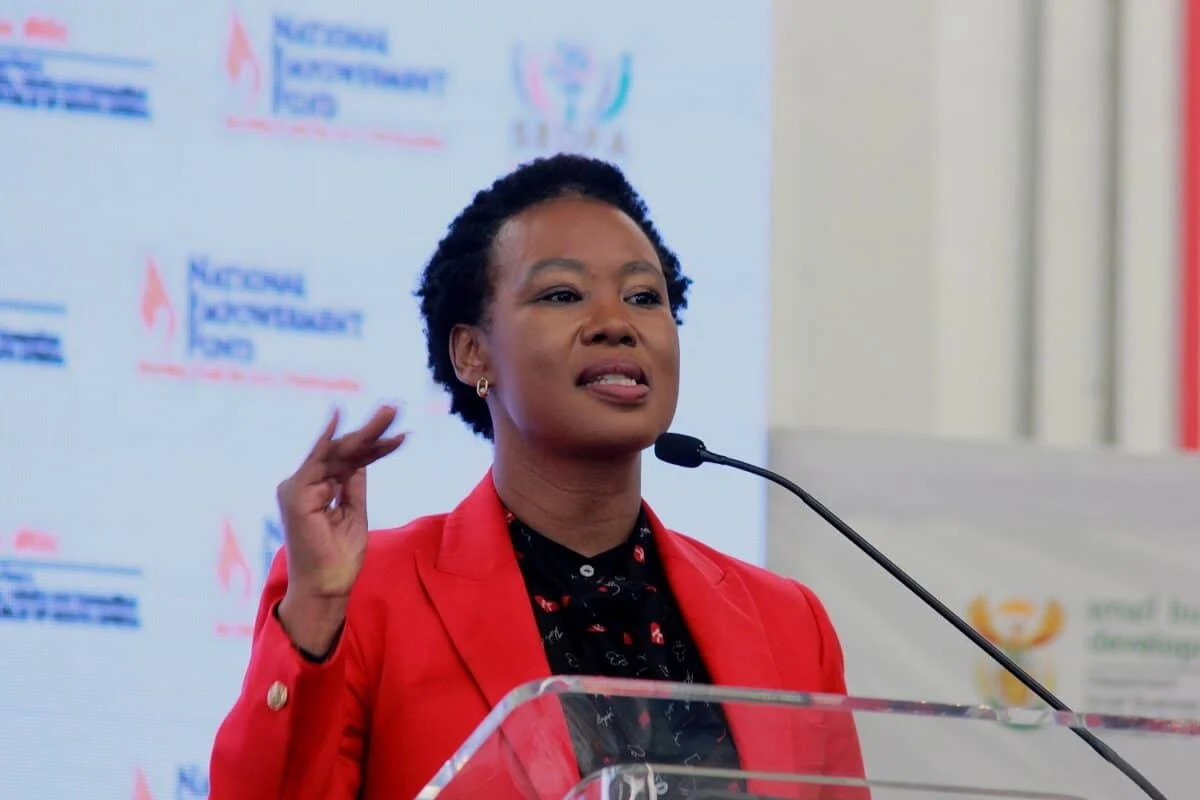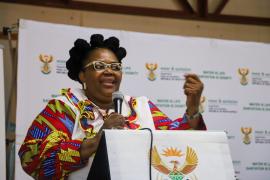
South Africa's Water and Sanitation Minister, Pemmy Majodina, met with United Nations Economic and Social Council (ECOSOC) President Lok Bahadur Thapa on Tuesday, on the sidelines of the United Nations High-Level Political Forum on Sustainable Development. The high-level meeting provided a key platform for dialogue and collaboration on pressing global issues. The meeting aimed to strengthen South Africa's partnership with ECOSOC, an objective that was successfully advanced through the candid exchange of ideas and commitments. During the discussions, South Africa noted its proactive efforts to accelerate progress towards Sustainable Development Goal 6 (SDG 6), which is central to the nation's development agenda. Minister Majodina showed the country's commitment, stating, "Water is a cross-cutting development issue that impacts every aspect of society. Our government's decision to elevate water governance to Presidential level reflects the importance we attach to ensuring sustainable water security for all South Africans, while accelerating the achievement of the Sustainable Development Goals." This statement emphasized the integrated approach South Africa is taking to address water challenges. The engagement reinforced South Africa's determination to accelerate the delivery of SDG 6 and the broader Sustainable Development Goals by 2030, aligning its national priorities with the global agenda.
South Africa's Water Initiatives
South Africa has established the National Water Crisis Committee (WATERCOM) as part of its full efforts to address water security challenges across the nation. This critical body was formed to provide strategic direction and oversight. President Cyril Ramaphosa chairs this committee, showing the high-level commitment and political will dedicated to the nation's water agenda. The President's direct involvement signifies the critical importance placed on resolving water-related issues. WATERCOM's mandate is to bring together all spheres of government – national, provincial, and local – in a coordinated effort. The committee aims to fast-track interventions, ensuring that urgent actions are taken without delay. It seeks to remove bureaucratic bottlenecks that often impede progress, thereby streamlining processes and improving efficiency. A key function of WATERCOM is to mobilise resources directly to municipalities experiencing water crises, ensuring that essential funding and support reach the areas most in need. This integrated approach seeks to enhance the efficiency and responsiveness of water management initiatives across the country, fostering a more resilient and sustainable water future for all citizens.
Global Sustainable Development Goals
The United Nations Sustainable Development Goals (SDGs), adopted by all UN member states in 2015, are a collection of 17 interlinked global objectives designed to achieve peace and prosperity for people and the planet by 2030. These ambitious goals serve as a universal call to action. These goals address pressing global challenges, including poverty eradication, hunger alleviation, ensuring good health and well-being, providing quality education, combating climate change, and protecting environmental integrity. Among these, Sustainable Development Goal 6 (SDG 6) specifically aims to ensure the availability and sustainable management of water and sanitation for all by 2030. This particular goal is critical for public health, economic development, and environmental sustainability. SDG 6 seeks to ensure universal access to clean water and sanitation by 2030, a fundamental human right. This objective encompasses a range of ambitious targets related to ensuring safe and affordable drinking water for everyone, achieving adequate and equitable sanitation and hygiene, improving water quality by reducing pollution, increasing water-use efficiency across all sectors, implementing integrated water resources management at all levels, and protecting and restoring water-related ecosystems such as mountains, forests, wetlands, rivers, aquifers, and lakes. South Africa's initiatives, particularly through the work of WATERCOM and the Minister's engagement, align smoothly with the broader international efforts to meet these critical targets, demonstrating the nation's commitment to global sustainability.
ECOSOC President's Engagement
Lok Bahadur Thapa, President of the United Nations Economic and Social Council (ECOSOC), expressed his appreciation for South Africa's active participation in the High-Level Political Forum. He acknowledged the valuable contributions South Africa makes to these global discussions. Mr. Thapa also encouraged South Africa to participate in the next cycle of Voluntary National Reviews (VNRs), a key process through which countries assess and present their progress on the Sustainable Development Goals. The VNRs provide a unique opportunity for countries to showcase their achievements and identify areas for further action. These reviews aim to facilitate the sharing of experiences, including successes, challenges encountered, and lessons learned, to accelerate the implementation of the ambitious 2030 Agenda for Sustainable Development. Minister Pemmy Majodina committed to conveying Mr. Thapa's recommendation regarding the Voluntary National Reviews to the South African government, indicating a willingness to engage further in this important process. The engagement showed the ongoing collaboration between ECOSOC and its member states in advancing global development objectives and fostering a shared vision for a sustainable future.
Minister's Call for Inclusivity
Minister Pemmy Majodina, representing South Africa, passionately called for increased participation by women and young people in global water governance discussions. She emphasized that truly effective and equitable water management strategies require a diversity of voices and perspectives. The South African Water and Sanitation Minister noted the importance of including these often-underrepresented groups to ensure that water management strategies are full, equitable, and reflective of the needs of all segments of society. Majodina's appeal showed the critical need for inclusivity in shaping international policies and initiatives related to water security, advocating for a more representative and effective approach to global water challenges.