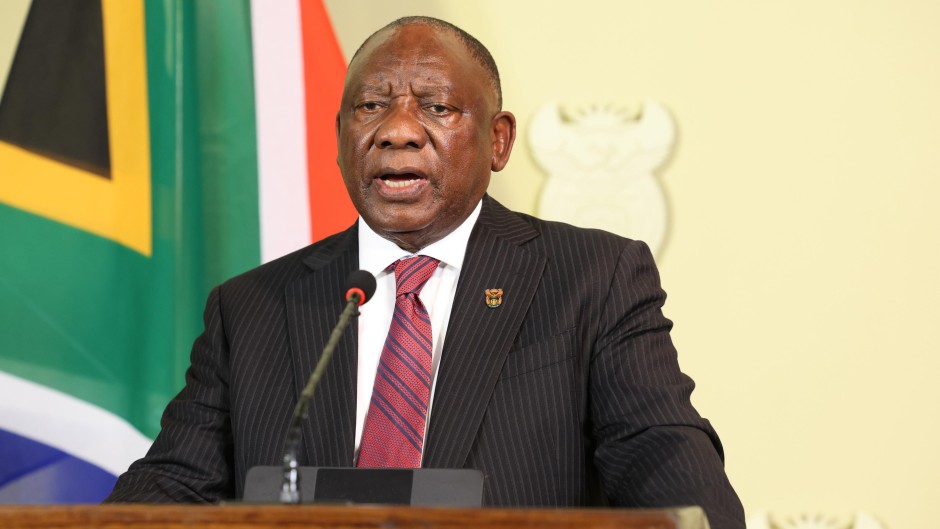
The South African rand weakened on Tuesday, experiencing a notable shift in its valuation against the US dollar. The currency was trading at 16.6250 against the dollar at 0730 GMT, indicating a responsive movement to prevailing market conditions. This specific trading level marked a 0.3% decline from its previous close, signaling a weakening trend for the rand in early trading hours. The currency's movement occurred as global attention focused on geopolitical developments, specifically regarding US President Donald Trump's decision to pause a planned attack on Iran. Concurrently, diplomatic efforts were underway, with Tehran reportedly sending a new peace proposal to Washington, contributing to a complex international backdrop. Domestically, investors maintained a cautious stance, eagerly awaiting the release of key economic data that could provide further direction for the market. Both April inflation data and March retail sales data are prominently scheduled for release on Wednesday, making them central to local economic assessments.
Global and Local Market Shifts
Globally, the US dollar demonstrated strength across currency markets, rising by 0.2% against a full basket of currencies. This upward movement of the dollar often reflects a flight to safety or increased demand for the world's primary reserve currency during periods of perceived uncertainty. Concurrently, prices of gold, a traditional safe-haven asset, experienced a decline, falling by 0.4%. This dual movement of a stronger dollar and weaker gold prices can be interpreted as reflecting nuanced shifts in investor sentiment amid the broader geopolitical landscape and economic anticipations. These financial movements occurred as investors meticulously weighed international developments, including the aforementioned geopolitical tensions, and anticipated upcoming economic releases from various regions. The dollar's rise against major currencies typically indicates a preference for the greenback during periods of uncertainty, potentially drawing capital away from emerging markets like South Africa, which can exert downward pressure on their respective currencies. The decline in gold prices often suggests a reduced demand for safe-haven investments, though this can be influenced by various factors beyond just geopolitical stability, including interest rate expectations and overall market liquidity.
Economic Data Ahead
Investors are closely watching upcoming economic data releases from South Africa, with particular attention focused on inflation and retail sales figures, which are critical barometers of economic health. Analysts polled by Reuters have indicated their expectations for the April inflation rate, providing a forward-looking perspective on price trends. They anticipate that April inflation will accelerate to 3.9% year-on-year. This projection marks a significant increase from the 3.1% recorded in March, suggesting a potential uptick in price pressures within the economy, which could have implications for consumer purchasing power and monetary policy.
The inflation data, scheduled for release on Wednesday, is a key indicator for the South African Reserve Bank's monetary policy decisions, as the central bank assesses the pace of price increases against its target range to manage price stability. A higher-than-expected inflation figure could prompt discussions about future interest rate adjustments. Simultaneously, the March retail sales data is also expected to be released on Wednesday. These figures will offer key insights into consumer spending trends and the overall health of the domestic economy, providing a clearer picture of economic activity following the preceding month. Stronger retail sales could signal strong consumer confidence and economic growth, while weaker figures might suggest a slowdown. Market participants will scrutinize both releases for their implications on the rand's performance and the broader economic outlook for South Africa, as these data points often influence investor confidence and capital flows.
Analyst Concerns on Rand
On the Johannesburg Stock Exchange, the Top-40 index recorded an increase of 0.2% during early trade, indicating a positive start for some of the country's largest listed companies. This modest gain in the equity market suggests a degree of resilience or selective investor confidence despite the rand's weakening. Concurrently, South Africa's benchmark 2035 government bond remained flat, with its yield holding steady at 8.85%. The stability in the bond market suggests that investors are not currently demanding a higher premium for holding government debt, which can be a sign of relative confidence in the country's fiscal position or a lack of significant new information to alter expectations. These movements indicate a relatively stable performance for key domestic financial instruments amidst broader currency fluctuations and global uncertainties. The slight uptick in the Top-40 index suggests some positive sentiment within the equity market, potentially driven by specific sector performance or company news. Meanwhile, the unchanged bond yield reflects a steady outlook for government debt in the short term, indicating that prevailing economic and fiscal expectations have not shifted dramatically. These local market indicators offer a counterpoint to the rand's weakening, providing a more nuanced picture of South Africa's financial landscape as investors await key economic data that could influence future market directions.