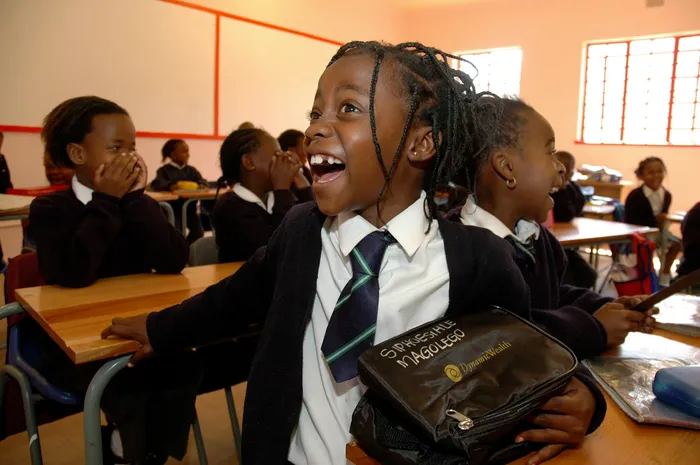
South Africa's population has increased from approximately 40 million people to over 63 million since 1994, representing a growth of more than 50% in the post-apartheid era. This substantial demographic expansion has presented considerable challenges across all public services, including education. Despite this significant demographic expansion, the country's education system maintains near-universal school participation, according to analysis. Today, only around 3% of children between the ages of seven and eighteen are not attending school, demonstrating a high level of engagement with the system. Experts indicate that education systems considered to have genuinely collapsed do not sustain such high participation rates while simultaneously educating a population that has grown by more than half. Countries whose education systems have genuinely collapsed do not continue devoting one-fifth of public expenditure to education. South Africa, however, continues to allocate a substantial one-fifth of its public expenditure to education, a commitment not typically seen in nations with failing educational infrastructures. This sustained investment and near-universal participation suggest a more strong and resilient system than public perception sometimes indicates.
Sustained Public Investment
Education continues to account for approximately one-fifth of South Africa's total government expenditure, reflecting a consistent allocation of resources towards the sector. This level of funding commitment shows the ongoing prioritization of education within public spending frameworks. Basic education alone absorbs about 14% of all public spending, indicating a significant investment in foundational schooling. This substantial financial backing supports the system across various levels, from primary schooling through to secondary education. The consistent allocation of approximately one-fifth of total government expenditure to education notes a deliberate and long-term strategy to bolster the sector. This level of sustained public investment is a key indicator of the government's role in maintaining and developing educational infrastructure and services nationwide, ensuring that resources are available to meet the needs of a growing student population. Such a commitment is rarely observed in countries where the education system is genuinely considered to have collapsed.
Managing Demographic Shifts
South Africa's education system has largely maintained high school participation rates amidst significant population growth. Currently, approximately 3% of children aged seven to eighteen are not attending school, a figure that shows the system's broad reach. The national learner-teacher ratio has demonstrated stability throughout the democratic period, fluctuating within a narrow range of 29 to 33 learners per teacher. This consistency is observed across various provinces, reflecting a generally well-managed distribution of educational personnel. For instance, the Western Cape reports a learner-teacher ratio of about 28 students per teacher. In contrast, Limpopo's ratio stands at approximately 33 learners per teacher, indicating regional variations while remaining within the observed national range. This reflects the system's capacity to absorb a growing student population without drastic shifts in core educational metrics. Countries whose education systems have genuinely collapsed do not keep learner-teacher ratios broadly stable over three decades of rapid demographic growth, further emphasizing the resilience demonstrated by South Africa’s educational infrastructure.
Beyond Public Perception
More young South Africans are now qualifying for university admission than at any previous time. This trend reflects an increasing number of students meeting the academic requirements for tertiary education, signaling an improvement in educational outcomes at the secondary level. This rising qualification rate for university admission stands as a testament to the system's capacity to prepare students for higher education. Additionally, countries with genuinely collapsed education systems typically do not maintain broadly stable learner-teacher ratios over three decades of rapid demographic growth. This observation suggests a level of systemic resilience within South Africa's education sector, despite significant population expansion over that period. The sustained public investment, near-universal participation, and stable learner-teacher ratios collectively paint a picture of an education system that, while facing challenges, continues to function and adapt effectively to the country's evolving demographic landscape.