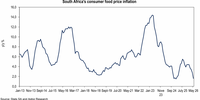
South Africa’s consumer food price inflation reached its lowest level in 17 months, slowing significantly to 1.6% in May 2026. This notable figure represents a substantial decrease from the 2.8% recorded just two months prior in March 2026, marking a positive shift for consumers. The deceleration in price increases was observed broadly across various food products, indicating a widespread easing of inflationary pressures within the food sector and contributing to the overall decline in the headline inflation rate. This sustained moderation provides a much-needed reprieve for household budgets, which have contended with elevated food costs for an extended period. The current rate is the lowest recorded in 17 months, showing a significant improvement in the country's food price stability.
Key Drivers of Price Moderation
The primary factors underpinning the moderation of South Africa's consumer food price inflation are the lower prices for grains and oilseeds, coupled with a more favorable pricing environment for fruit and vegetables. These critical agricultural commodities form the backbone of the national diet and agricultural economy. A key contributor to this positive trend is South Africa’s strong summer grains and oilseeds production, which is forecast at a record 21.1 million tonnes for the current season. This impressive output not only represents a substantial volume but also marks a significant 2% increase from the production levels achieved in the 2024-25 season.
The full figure for summer grains and oilseeds encompasses a vital array of crops, including maize, sunflower seed, soybean, groundnuts, sorghum, and dry beans. The abundance of these staple crops ensures a steady and ample supply to the market, directly translating into more competitive pricing for consumers. This substantial production volume is therefore a key factor contributing to the current downward trend in food prices across the country, alleviating pressure on both producers and end-users. The improved supply situation helps to stabilise market prices, reducing the cost burden throughout the food supply chain.
Impact of Global Factors
Beyond domestic agricultural successes, international developments are also poised to further influence South Africa’s food inflation outlook. The recent US-Iran deal, which facilitates the reopening of the Strait of Hormuz, is expected to further contribute to easing global fuel costs. This development holds particular significance for South Africa, given its heavy reliance on road networks for the distribution of essential goods. More than 80% of staple food products within the country rely on road transportation for their journey from farm to market and ultimately to the consumer.
Reduced fuel expenses stemming from such international agreements can directly translate into lower logistical costs for agricultural goods, potentially reinforcing the downward trend in food inflation within the country. The decrease in transportation overheads can allow retailers and distributors to pass on savings to consumers, amplifying the positive effects of domestic supply improvements. This interplay of global energy markets and local logistics notes the interconnectedness of food prices with broader geopolitical and economic factors.
Future Inflation Outlook
Despite the current positive trajectory, the forecast El Niño drought presents a notable medium-term risk to South Africa's hard-won food price stability. This potential weather phenomenon is anticipated to influence the trajectory of food price inflation specifically in 2027, rather than the immediate future. The expected El Niño is projected to impact the 2026-27 crop season, which typically begins later in the year. Agricultural produce from this specific crop cycle would then typically enter the market around mid-2027, delaying any potential inflationary pressure until that time.
Therefore, while the immediate outlook remains positive due to current ample supplies and favourable global fuel price trends, future inflation trends will likely be shaped by the severity and duration of the predicted drought. The potential impact on the 2026-27 harvest could significantly affect market dynamics and consumer prices in the subsequent year, showing the delicate balance between current abundance and future climatic risks. Stakeholders will be closely monitoring weather patterns to assess the potential for this medium-term risk to materialise and impact the sustained moderation of food prices.