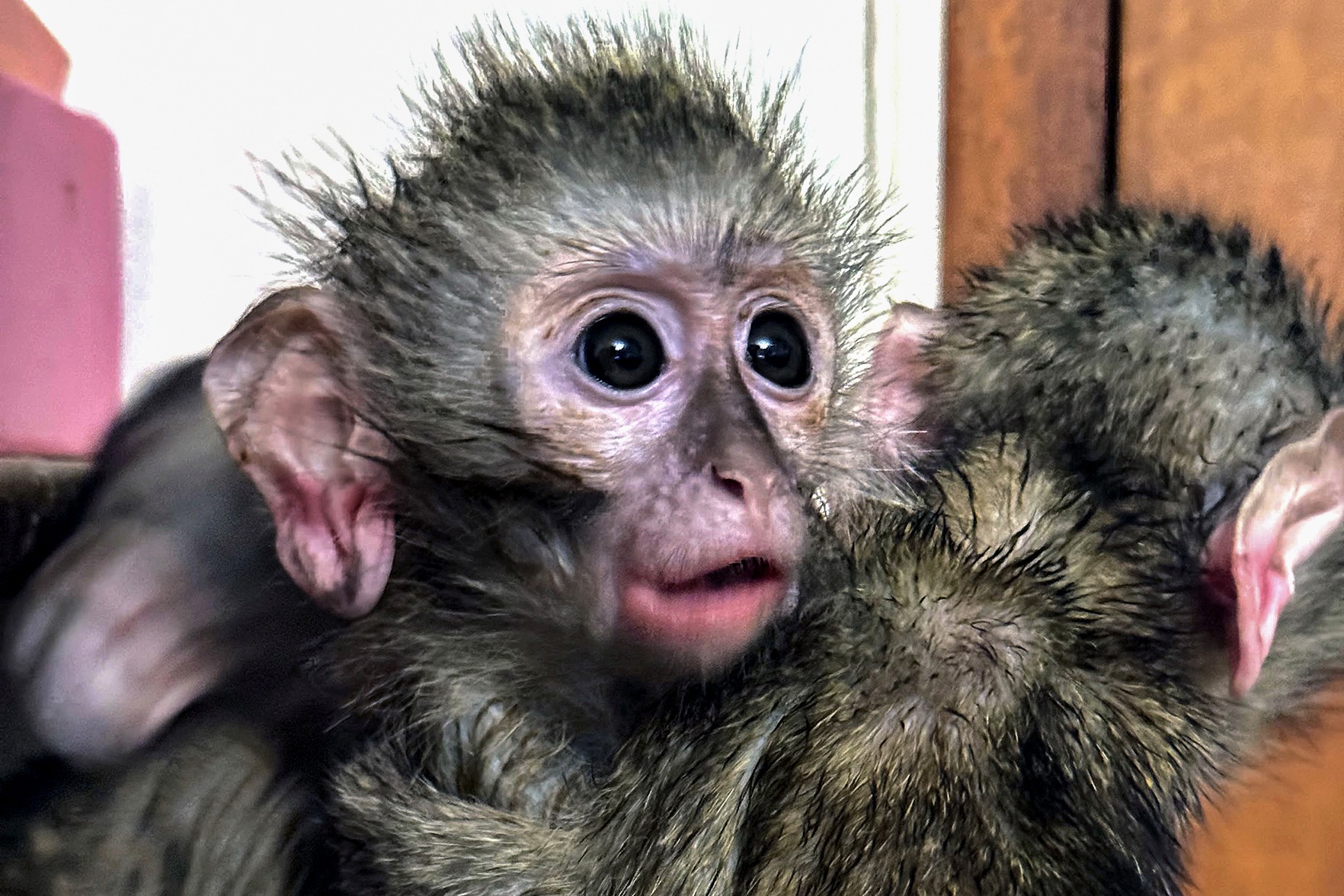
Government records reveal a substantial international trade involving South Africa’s wild chacma baboons and vervet monkeys, with thousands of trophies and more than 1,000 skulls authorized for export in just two years. An examination of the Department of Forestry, Fisheries and the Environment’s (DFFE) electronic export records for 2023 and 2024 shows that South Africa authorized more than 3,100 chacma baboon and vervet monkey trophy items for international export within this period. Specifically, the DFFE records reveal 1,867 chacma baboon trophy items and 1,279 vervet monkey trophies approved for export. Alongside these were 681 chacma baboon skulls and 590 vervet skulls. These figures combine to a total of 4,417 items authorized for export in two years. This substantial volume notes the scale of the trade in these wild primates.
Scale of Commercial Exports
South African eCITES records indicate that 3,146 trophy items alongside 1,106 skulls were authorized specifically for commercial trade. This designation shows the significant commercial dimension of the exports. In only two years, South Africa authorized more than 3,100 chacma baboon and vervet monkey trophy items for international export, with a considerable portion of these earmarked for commercial purposes. Among the 1,271 chacma and vervet skulls approved for export in 2023 and 2024, approximately 87%, or 1,106 skulls, were recorded specifically for commercial purposes. This high percentage demonstrates that the majority of skull exports are driven by commercial interests rather than personal use or scientific collection. The sheer volume of these commercial transactions raises questions about the sustainability and ethical implications of such extensive trade in wild primates.
The records detail specific commercial transactions involving vervet skulls. One transaction lists 105 wild vervet skulls destined commercially for the United States. Another commercial shipment involves 99 vervet skulls, further illustrating the bulk nature of some of these exports. Further records show other consignments with 69, 60, and 50 vervet skulls, indicating a consistent demand for these items in varying quantities. These multiple shipments, ranging from large to smaller batches, collectively contribute to the considerable overall volume of vervet skull exports.
For chacma baboons, there is the remarkable 180-skull US single consignment, alongside shipments of 90, 50, and numerous smaller quantities. This significant single consignment to the United States notes a particularly large commercial order for chacma baboon skulls. The presence of multiple shipments, both large and small, for both vervet monkeys and chacma baboons, indicates a well-established and active commercial network for these primate parts. The consistent flow of these items points to a sustained market demand that is being met through South Africa's export authorizations.
Market and Demand
Adult male chacma baboons, characterized by their large skulls and formidable canine teeth, command higher prices in the commercial market. The distinct features of these primates make them particularly desirable for collectors and commercial buyers. Individual skulls of these primates can retail for several hundred dollars, though wholesale packages are also available for larger orders. This pricing structure suggests a tiered market, catering to both individual collectors seeking unique specimens and larger commercial entities looking to acquire items in bulk. The ability to purchase wholesale packages further facilitates the large-scale commercial trade observed in the export records.
The market for primate skulls extends internationally, demonstrating a global demand for these items. US-based company Skulls Unlimited sells genuine vervet monkey skulls, indicating a direct consumer market in the United States. Another company, Worldwide Wildlife Products, advertises genuine chacma baboon and vervet monkey skulls which it states are imported from South Africa. These examples confirm the international reach of this trade and the specific sourcing of these products from South Africa. The explicit advertising by these companies shows the open and commercial nature of this market. The existence of specialized companies dealing in such items further solidifies the commercial infrastructure supporting this trade.
Regulatory Gaps and Conservation Concerns
The Department of Forestry, Fisheries and the Environment (DFFE) indicated in 2023 that it had no intention of developing a unified national policy to regulate the hunting of chacma baboons and vervet monkeys. This position means that a standardized approach to managing the trade and hunting of these primates across South Africa does not exist at a national level. The absence of such a policy contributes to a fragmented regulatory environment for these species, where provincial regulations may vary significantly, leading to inconsistencies in management and enforcement. This lack of a cohesive national strategy makes it challenging to implement full conservation measures or to effectively monitor the overall impact of hunting and trade on wild populations.
Chacma baboons are listed on CITES Appendix II, which includes species not necessarily threatened with extinction but for which trade must be controlled to avoid utilization incompatible with their survival. This listing requires international trade in chacma baboons to be monitored and regulated to ensure it is not detrimental to their wild populations. The CITES Appendix II listing serves as an international recognition of the potential vulnerability of these species to unchecked trade, emphasizing the need for careful management. Despite this international designation, the current regulatory framework within South Africa appears to lack the national uniformity that could provide strong protection.
South Africa currently lacks a full national census that establishes the precise numbers of chacma baboons or vervet monkeys remaining in the wild. Without such a census, wildlife managers and conservationists operate without definitive data on the total population sizes, distribution, or health of these primate populations. This data gap complicates efforts to assess the sustainability of current trade levels and to formulate effective conservation strategies for both species. The lack of detailed population figures makes it challenging to determine the impact of hunting and commercial exports on the long-term viability of these wild primate groups. It becomes difficult to ascertain whether the authorized export volumes are sustainable or if they are contributing to population declines, particularly given the substantial number of items authorized for commercial trade. The absence of this fundamental ecological data creates a significant obstacle to responsible wildlife management and raises serious concerns about the future of these primate populations in South Africa.