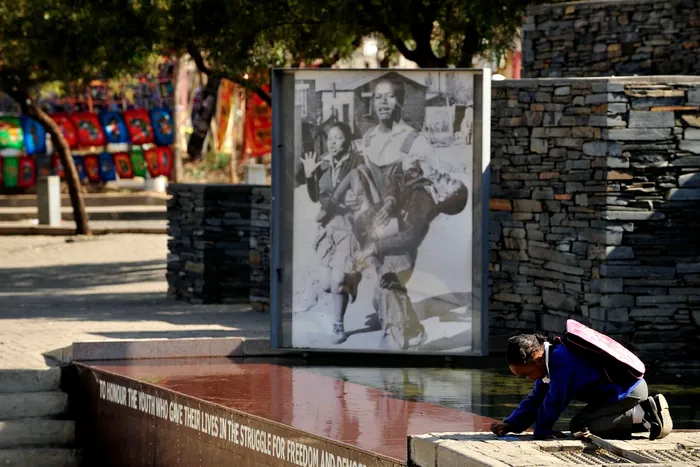
The Soweto uprising, which began on June 16, 1976, marked a significant moment in South Africa's history, forever altering the trajectory of the anti-apartheid struggle. The student-led protests in Soweto initiated a profound foundational change in how the international community perceived the apartheid state, shifting from a position of relative indifference to one of active condemnation and pressure. This key event not only galvanized internal resistance but also brought the brutal realities of apartheid to the forefront of global consciousness, sparking widespread outrage and demanding international action.
Roots of the Uprising
The uprising was fundamentally rooted in the Bantu Education Act of 1953, which mandated an inferior and separate education system for Black South African students. This discriminatory legislation was designed to limit the educational and professional opportunities for Black Africans, ensuring they received an education tailored to their perceived subordinate role in society. The Act was a cornerstone of the apartheid regime's policy of racial segregation, deliberately creating a system that offered vastly fewer resources and opportunities for Black students compared to their White counterparts. This systemic inequality in education fostered deep resentment and frustration among the youth, who recognized the deliberate limitations placed upon their futures.
Before 1960, the international community largely overlooked the injustices of apartheid, often viewing it as an internal matter for South Africa. However, the Sharpeville massacre in March 1960 began to shift the perspective of churches globally, exposing the violent repression inherent in the apartheid system. The massacre, where police opened fire on peaceful Black protesters, served as a stark awakening for many religious organizations and human rights advocates worldwide. Reverend Dr Allan Boesak explained that the World Council of Churches subsequently dispatched a delegation to South Africa in response to the growing awareness of the regime's brutality. This move represented an early, significant step by an international body to directly engage with the consequences of apartheid. Reverend Dr Boesak stated, "You will remember that, after Sharpeville, the World Council of Churches sent a delegation to come and talk to its member churches in South Africa as to what the church's reaction should be to this massacre. Then they wrote a report that became known [as the Cottesloe Report]."
The Cottesloe Report emerged from this visit by the World Council of Churches delegation to South Africa, providing an independent assessment of the situation and advocating for reforms. Reverend Dr Boesak noted the strong reaction it provoked within South Africa: "As a result of this, Hendrik Verwoerd became so angry at the members of the White Dutch Reform Church, who were part of their delegation, and Beyers Naudé was one of those, that he totally condemned it, and the White Dutch Reform Church withdrew its name from ever having signed that." The report's findings challenged the theological justifications for apartheid often espoused by segments of the White Dutch Reform Church, leading to significant internal conflict and noting the moral bankruptcy of the regime's policies. Reverend Dr Boesak noted that while the report was significant in its own right, its immediate impact on governmental policy was limited, observing, "That's how serious that was, but it took much longer for governments to open their eyes." The international community, particularly governments, was slow to act decisively, often prioritizing economic and political ties over human rights concerns.
On June 12, 1976, just days before the Soweto uprising, Reverend Dr Allan Boesak was graduating with his PhD degree in the Netherlands, a moment of personal achievement and celebration. Reflecting on that time, he recounted the stark contrast between his personal joy and the unfolding tragedy back home: "I felt very good about myself, and was still in a jubilant mood. So you can imagine the shock that went through me when I saw what was happening at home.” The news from South Africa, detailing the brutal suppression of student protests, prompted Reverend Dr Boesak to make a profound decision to return to his homeland. His sense of duty and solidarity with the youth of Soweto was evident in his declaration: "How could I stay in the Netherlands, safe with my family, whilst our children fight our fight for us for a better future, and they die on the streets. I have to be there (South Africa)." This personal commitment mirrored the growing resolve among many South Africans and international allies to confront the apartheid regime head-on.
Global Reaction and Pressure
The immediate catalyst for the Soweto uprising was the South African government's Afrikaans Medium Decree, issued in 1974. This decree mandated that subjects including mathematics and social studies be taught in Afrikaans alongside English, despite Afrikaans being the language of the oppressor and largely unfamiliar to many Black students. This policy was widely seen as an attempt to further entrench racial segregation and cultural oppression, making it extremely difficult for Black students to learn and succeed. The imposition of Afrikaans as a medium of instruction was the final affront to a generation already burdened by the inequalities of the Bantu Education Act, directly contributing to the growing unrest among Black South African students and igniting their collective defiance. The students viewed this decree as a direct attack on their right to a quality education and their cultural identity, leading to widespread protests and eventually the fateful march on June 16, 1976.
In the immediate aftermath of the Soweto uprising, international responses to apartheid injustices varied. The images of children being shot by police sent shockwaves across the globe, forcing many nations to confront the brutality of the South African regime. The governments that responded accurately and effectively to these injustices at the time were those of the Scandinavian countries: Sweden, Denmark, and Norway. These nations took early and decisive stands against the apartheid regime, implementing sanctions and providing support to anti-apartheid movements long before many other Western powers. Their principled stance set an important precedent for global engagement against the discriminatory system.
The Soweto uprising significantly heightened international awareness of apartheid, transforming it from a regional issue into a global human rights crisis. This increased global attention sharpened international action, particularly in the form of boycotts, divestment, and sanctions during the 1980s. The vivid and tragic images of the uprising, broadcast globally, made it impossible for the world to ignore the daily realities of life under apartheid. This surge in awareness put immense pressure on governments and corporations to disengage from South Africa, leading to a growing movement for economic and cultural isolation.
A key organization that emerged after the uprising, building on this momentum, was the United Democratic Front (UDF). The UDF came into being after the Soweto uprising, effectively harnessing the heightened international awareness and sharpening international action in terms of boycotts, divestment, and sanctions in the 1980s. The UDF played a key role in mobilizing both domestic and international opposition to apartheid, uniting various anti-apartheid groups under a single banner. Its formation capitalized on the global outrage sparked by the events in Soweto, transforming it into sustained pressure against the South African government. This period saw a tangible shift in how the international community engaged with the apartheid state, moving beyond mere condemnation to implement concrete measures aimed at dismantling the system. The actions taken by the Scandinavian countries set a precedent for other nations and international bodies to follow in increasing their pressure on South Africa. The UDF's advocacy further amplified these efforts, pushing for economic isolation and cultural boycotts that eventually contributed to the regime's decline. The collective impact of these international pressures, combined with sustained internal resistance, created an environment where the apartheid government found itself increasingly isolated and unsustainable.
Commemoration and Continued Struggle
The Soweto uprising is widely regarded as a key moment in the struggle against apartheid, contributing significantly to the eventual dismantling of the system in 1994. Its legacy is not only etched in the history of South Africa but also recognized globally as a symbol of youth courage and resistance against oppression. The bravery of the students in Soweto inspired generations of activists and demonstrated the power of ordinary people to challenge an unjust system.
The international recognition of the uprising began on 16 June 1991, when the Organisation of African Unity (OAU) initiated and celebrated the day as the Day of the African Child. This designation acknowledged the sacrifices made by the youth in Soweto and across the continent, noting their critical role in the fight for freedom and human dignity. The Day of the African Child serves as a reminder of the ongoing challenges faced by children in Africa and the importance of safeguarding their rights and well-being.
In South Africa, the enduring impact of the uprising is marked by annual commemorations that honor the sacrifices made and reflect on the progress achieved. June is observed annually as Youth Month, a period dedicated to reflecting on the role of young people in the nation's history and future. This month-long observance encourages dialogue and activities that promote youth development, civic engagement, and the continuation of the struggle for a more equitable society. Simultaneously, June 16 itself is commemorated as National Youth Day, solemnizing the events of 1976 and paying tribute to the students who lost their lives or were injured in the uprising. This day serves as a powerful reminder of the cost of freedom and the importance of active citizenship.
This year marks the Golden Jubilee of the Soweto uprising, a significant milestone observed under the theme: “Reset@50 – The Future Calls”. The theme encourages a forward-looking perspective while honoring the past, urging contemporary youth to reflect on the legacy of 1976 and to actively shape the future of South Africa. It calls upon the youth to address current challenges such as unemployment, inequality, and access to quality education, drawing inspiration from the courage and determination of their predecessors.
The significance of the Soweto uprising was further cemented in December 1994, when the event was officially renamed Youth Day and declared a national public holiday in South Africa. This declaration recognized the uprising's fundamental role in the country's transition to democracy and its ongoing importance for national identity and youth empowerment. The establishment of Youth Day as a public holiday ensures that the memory of the Soweto uprising remains central to the national narrative, serving as a constant reminder of the power of youth activism and the enduring struggle for justice and equality in South Africa.