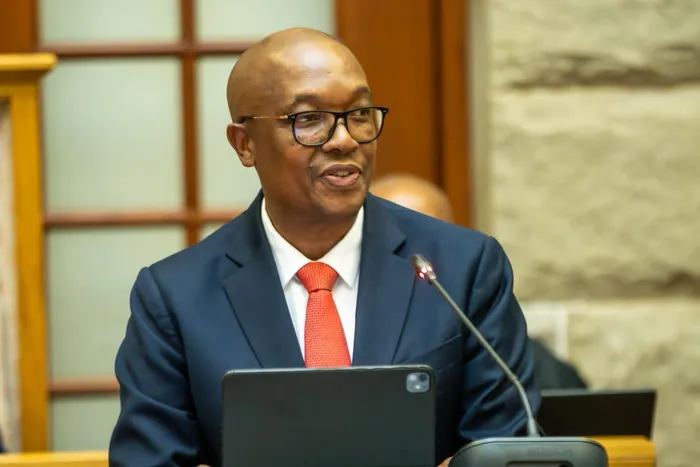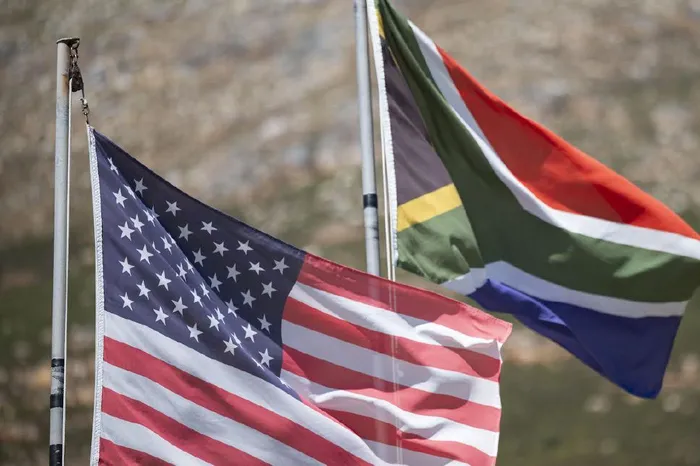
US Ambassador to South Africa, Brent Bozell III, has accused the nation of abandoning its official policy of neutrality, stating that Pretoria's actions constitute a deliberate choice rather than non-alignment. The Ambassador's remarks came as South African Deputy President Paul Mashatile was simultaneously in Beijing, engaged in efforts to deepen bilateral, political, and economic ties with China. Bozell III asserted, "Pretoria calls this ‘non-alignment’. We call it what it is: a choice," indicating a strong diplomatic stance from the United States regarding South Africa's foreign policy orientation. This development notes increasing international scrutiny of South Africa's diplomatic balancing act, challenging its long-held position on global affairs. The Ambassador's direct accusation shows a growing divergence in how the United States and South Africa perceive the latter's role on the international stage, particularly concerning its relationships with major global powers.
US Concerns Over Shifting Alliances
The United States has conveyed that a shift toward true geopolitical neutrality is a strict condition for stabilising and normalising bilateral relations with South Africa. Washington increasingly views South Africa's approach to international affairs as anti-American, a perception that has significantly impacted diplomatic exchanges and cooperation. This growing concern stems from South Africa's deepening engagements with nations often seen as geopolitical rivals to the United States. The US administration has made it clear that for bilateral relations to return to a stable and normalised state, South Africa must demonstrate a genuine commitment to neutrality, moving beyond what the US perceives as a biased alignment. This conditionality places significant pressure on Pretoria to re-evaluate its foreign policy trajectory and its implications for its relationship with one of its largest trading partners and aid providers.
The US also expressed deep frustration over South Africa's expanding role in the BRICS bloc, a group comprising Brazil, Russia, India, China, and South Africa. This sentiment from the United States has resulted in targeted aid freezes. The partial suspension of medical funding, specifically from programs like Pepfar, has also occurred, directly impacting key health initiatives within South Africa. Washington's frustration is not merely rhetorical; it has translated into tangible consequences for South Africa, particularly in areas of development aid and public health support. The decision to partially suspend funding from well-established programs like Pepfar signals a serious escalation in the US response to South Africa's foreign policy choices. This move notes the transactional nature of Washington's current foreign policy approach, where diplomatic alignment can directly influence the flow of international assistance and cooperation. The US position suggests that South Africa's active participation and increased influence within BRICS are seen as directly undermining American interests and its efforts to maintain a global balance of power.
South Africa's Stance on Non-Alignment
Pretoria refers to South Africa's approach to international relations as “active non-alignment.” The Department of International Relations and Cooperation (DIRCO) affirmed that South Africa pursues an independent foreign policy, which it states is firmly anchored in the principle of non-alignment. This principle, according to DIRCO, allows South Africa to engage with all nations based on mutual respect and shared objectives, without committing to any specific bloc. South Africa's foreign policy prioritises inclusive dialogue, global peace, and its own national interests, according to DIRCO. The department maintains that the country reserves the right to cultivate bilateral relations across the global spectrum, a fundamental tenet of its independent foreign policy. This right to engage broadly is seen by Pretoria as essential for fostering economic development, promoting multilateralism, and addressing global challenges from a position of independence.
Despite these declarations, South Africa has hosted joint military drills and welcomed foreign dignitaries from countries that are often seen as rivals to Western powers. This includes exercises with Russia and China, which have drawn criticism from the United States and other Western nations. These military exercises, particularly those involving naval forces, have been viewed by critics as a clear indication of South Africa's leaning towards the East, despite its claims of non-alignment. Such engagements are perceived by the US as contradictory to South Africa's stated policy of neutrality and contribute to Washington's view of Pretoria's foreign policy as anti-American. DIRCO's statements consistently emphasize that the country's independent foreign policy enables it to engage with all nations based on mutual respect and shared objectives, without committing to any specific bloc. The government asserts that its engagement with diverse international partners aligns with its declared policy of non-alignment, allowing for flexibility in its diplomatic and economic engagements. This posture is intended to balance its relationships across the geopolitical landscape, fostering a multipolar world order while safeguarding its national interests through diversified partnerships.
Ambassador's Public Criticism
South Africa recently hosted Iran’s Deputy Foreign Minister, Dr. Saeed Khatibzadeh, for bilateral talks, an event that occurred amidst rising diplomatic tensions. This high-profile visit by a senior Iranian official further fueled US concerns regarding South Africa's international engagements and its proclaimed non-alignment. US Ambassador Brent Bozell III subsequently expressed his frustration publicly on the social media platform X, directly addressing South Africa's foreign policy choices. Bozell's remarks come as Washington has shifted its foreign policy to a highly transactional "America First" stance, which prioritizes national interests and often involves conditionality in diplomatic relations and aid. This approach is anticipated to intensify should the Trump administration return in 2025, potentially leading to even greater pressure on nations perceived as not aligning with US geopolitical objectives. The Ambassador's public commentary notes growing US concern over South Africa's international engagements and its proclaimed non-alignment, signaling a more assertive and less tolerant stance from Washington regarding Pretoria's diplomatic autonomy. The use of a public platform like X by a sitting ambassador shows the depth of US dissatisfaction and its willingness to openly challenge South Africa's foreign policy decisions.
Expert and Official Responses
The United States strongly objected to South Africa deepening its ties with China, Russia, and Iran, viewing these relationships as a direct challenge to its own strategic interests and global influence. Washington also expressed deep frustration over South Africa’s ongoing International Court of Justice’s (ICJ) legal proceedings against Israel, a move that has been widely supported by many developing nations but strongly opposed by the US and its allies. This legal action at the ICJ has added another layer of complexity to the already strained US-South Africa relationship, with Washington perceiving it as another instance of South Africa aligning against Western interests. Independent political analyst and international relations expert Mpho Maake stated that the BRICS coalition is putting South Africa on a collision course with major Western lenders and investors, including the US. Maake's analysis suggests that while BRICS offers alternative avenues for cooperation and development, it also carries inherent risks of alienating traditional economic partners, potentially impacting South Africa's financial stability and access to key global markets. This perspective notes the economic ramifications of South Africa's foreign policy choices, suggesting a trade-off between geopolitical alignment and economic partnerships. Conversely, International relations expert Professor Andre Thomashausen stated that strategic alignment is not a prerequisite for national advancement, arguing that South Africa's pursuit of an independent foreign policy, even if it leads to friction with certain powers, can ultimately serve its long-term national interests by diversifying its partnerships and reducing dependency on any single bloc. This view emphasizes the potential benefits of a non-aligned approach, suggesting that a nation can thrive by engaging broadly rather than committing to a specific ideological or geopolitical camp.