The Institute for Economic Justice (IEJ) recently warned that South Africa faces a significant risk of renewed anti-migrant violence unless the government takes immediate and decisive action. The non-profit economic justice organization issued a full seven-page statement titled "They Are Us: Government Must Act Against Anti-Migrant Rhetoric and Vigilante Violence, and Urgently Address Socioeconomic Deprivation," outlining its profound concerns regarding the current trajectory of anti-migrant sentiment and its potential consequences.
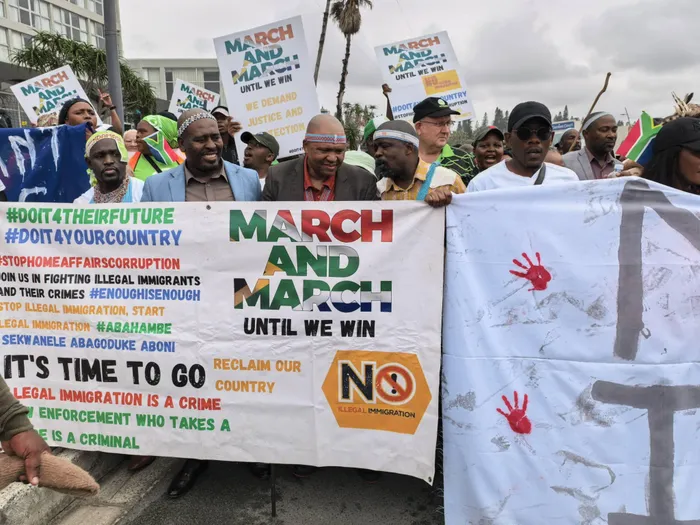
The IEJ noted that various groups, including March and March and Operation Dudula, have allegedly mobilized extensive campaigns against migrants. These actions are reportedly being conducted alongside political actors, contributing to an environment where anti-migrant sentiment could escalate into widespread violence. The organization emphasized the urgent need for government intervention to prevent such an escalation and to protect vulnerable communities.
Deepening Socioeconomic Crisis
The Institute for Economic Justice (IEJ) argues that public frustration regarding widespread unemployment, entrenched poverty, and declining public services is being misdirected towards migrants. This redirection, the IEJ contends, distracts from addressing the fundamental structural causes of South Africa's persistent economic challenges, which are the true root of widespread societal discontent. The organization showed this point, stating, "Everybody wants, and has the right to, decent work, dignified public services, food, shelter, and safety. The anger people feel towards these unacceptable conditions is understandable and needs to be addressed. The IEJ also rejects such conditions being used to justify violence against vulnerable groups."
South Africa faces an alarmingly high expanded unemployment rate of 44%, a figure that reflects the broad challenges within the labor market. Youth unemployment is approaching a staggering 70%, indicating a severe crisis for the country's younger generation and future economic prospects. The IEJ characterized the situation as an "orchestrated attempt to manipulate and channel the anguish of impoverished communities for political gain, and to destabilise the country." This manipulation, the organization suggests, exploits genuine grievances to fuel anti-migrant sentiment. Exacerbating service delivery issues, approximately 150,000 public sector vacancies remain unfilled, hindering the state's capacity to provide essential services to its citizens. "As even President Ramaphosa has acknowledged, migrants, including undocumented migrants, are employed precisely because their conditions prevent them from demanding a living wage, safe conditions, or legal protections," the IEJ noted, pointing to the systemic issues that make migrants vulnerable to exploitation.
The organization warned that these prevailing conditions disproportionately affect vulnerable populations, both South African and migrant alike. "The people who bore the brunt of these previous cycles of violence were working-class and deprived communities," the IEJ stated, drawing parallels with past outbreaks of xenophobia. It emphasized that "The Pan-Africanist tradition and the ideals of Ubuntu laid the foundations for a democratic South Africa. This foundation is under attack." The IEJ concluded its stark assessment by asserting, "Poverty and unemployment will not be solved by driving Somalian shopkeepers from their stores. Hospitals will not be better resourced by turning away Malawian mothers from maternity wards. Jobs will not be created by burning down the enterprises of Ghanaian traders. Migrants struggle alongside South Africans, not at our expense."
Escalating Migrant Persecution
Migrants across several provinces in South Africa have experienced a range of persecutions, which include intimidation, forced displacement from their homes and communities, and systematic exclusion from essential services. These incidents are not isolated; they encompass migrants being barred from attending schools, thereby denying children their right to education, and being denied access to key healthcare facilities, which jeopardizes their well-being and lives. Businesses owned by migrants have also been subjected to targeted attacks, resulting in significant economic losses and further destabilization of their livelihoods. Tragically, there have been instances of fatal violence reported against individuals, showing the severity and danger of the current climate.
The situation is further complicated by recent calls from some leaders for undocumented foreign nationals to depart from South Africa by a specific date. These leaders have publicly urged all undocumented foreign nationals to leave the country before June 30, 2026. Such calls contribute significantly to an environment of uncertainty, fear, and immense pressure for migrant communities residing in South Africa, potentially inciting further hostility.
Historical Echoes and Warnings
South Africa has a documented and tragic history of anti-migrant violence with severe and devastating consequences. The 2008 xenophobic attacks, for instance, resulted in the brutal deaths of 62 people, a figure which included 21 South African citizens, noting the indiscriminate nature of such violence. During the same period, more than 150,000 individuals were displaced from their homes, forced to abandon their communities and livelihoods. More recently, the July 2021 unrest further showed the potential for widespread disorder and destruction, claiming more than 350 lives across various provinces. The economic impact of the 2021 unrest was substantial and broad, with estimated losses exceeding R100 billion, severely damaging businesses and infrastructure. The IEJ warns that without immediate and effective intervention by the government, similar patterns of violence and widespread disruption could re-emerge, leading to further loss of life and economic devastation.
IEJ's Urgent Call to Action
The Institute for Economic Justice (IEJ) issued an urgent call to action, specifically urging media organizations to refrain from amplifying, legitimizing, or normalizing anti-migrant narratives. Instead, the organization advocated for reporting that focuses on the structural causes of inequality and socioeconomic deprivation, thereby providing a more accurate and nuanced understanding of the challenges facing South Africa. The organization reiterated its core message, stating, "Poverty and unemployment will not be solved by driving Somalian shopkeepers from their stores. Hospitals will not be better resourced by turning away Malawian mothers from maternity wards. Jobs will not be created by burning down the enterprises of Ghanaian traders. Migrants struggle alongside South Africans, not at our expense."
The IEJ also called on the government to take decisive steps to protect all individuals from vigilante violence and to ensure that immigration enforcement adheres strictly to the Constitution and international human rights standards. Beyond protection, the organization recommended a full set of policy actions. These include enforcing labor laws more rigorously to prevent exploitation, expanding public employment programs to address joblessness, and immediately filling the existing public sector vacancies to improve service delivery. The IEJ urged the implementation of pro-employment policies that genuinely benefit all residents, the diligent prosecution of perpetrators of xenophobic violence to ensure accountability, improved regional migration cooperation with neighboring countries, and the creation of legal pathways for long-term undocumented migrants to regularize their status, offering stability and reducing vulnerability.