From the archive
Johannesburg's Mayoral Choice: A Call for Ruthless Leadership
Johannesburg's severe financial and operational crises demand a ruthless leader to combat corruption and incompetence, according to one analysis.
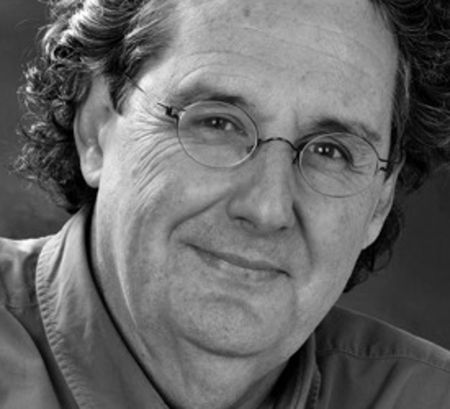
Johannesburg is reportedly facing severe financial difficulties, with claims suggesting the City of Johannesburg is bankrupt, unable to afford even basic office supplies, and struggling to pay contractors. Indeed, the City of Johannesburg is described as broke, lacking the necessary funds even for basic office supplies, let alone fulfilling its obligations to contractors. The city's billing system has been characterized as "delusory," while losses from water and electricity due to illegal connections and theft are on the rise. Journalist Anton Harber stated, "Losses of water and electricity through illegal connections and theft are increasing." Harber further described the state of infrastructure, noting, "We have one person, one vote, and on our roads we have one car, three potholes." This stark observation shows the crumbling state of essential city infrastructure.
The City's Dire State
Critical service entities within Johannesburg, including Joburg Water and City Power, are largely incapable of fulfilling their obligations to residents, according to reports. The claim that these critical service entities, such as Joburg Water and City Power, are largely unable to meet their responsibilities to the populace is a grave indictment of the city's operational health. This inability to deliver essential services is compounded by declining municipal revenue. Journalist Anton Harber stated, "Revenue collections are dipping." The financial strain on the City of Johannesburg has reportedly impacted its operational capacity, leading to a visible deterioration in public services.
The consequences of these challenges are evident in service delivery across the city. Some areas of Johannesburg have experienced prolonged water outages, with residents reporting a lack of supply for weeks at a time. Similarly, other parts of the city face repeated electricity cut-offs, disrupting daily life and economic activity. These critical service failures, where some areas are not receiving water for weeks and others experience repeated electricity cut-offs, paint a grim picture of urban dysfunction. These service interruptions highlight the operational difficulties faced by the city's utility providers. The decline in revenue collection, as noted by Harber, further exacerbates the situation for these critical service entities as they struggle to maintain and upgrade essential infrastructure. The inability to fund even basic operations points to a systemic breakdown that demands urgent and decisive intervention. The current state of affairs suggests a city teetering on the brink of collapse, with its residents bearing the brunt of chronic mismanagement and financial insolvency.
The Unconventional Candidate
The individual tasked with leading Johannesburg will need "cold-blooded ruthlessness, steely courage, manic energy and suicidal determination," according to one assessment of the mayoral role. This characterization suggests an extraordinary set of attributes for the demanding position, indicating that conventional leadership qualities may be insufficient to tackle the city's deep-seated problems. The qualities described bear a resemblance to the clinical definition of a psychopath, which is understood as "an individual characterised by a persistent lack of empathy, a shallow or absent conscience, and manipulative or antisocial behaviour, often hidden beneath a mask of superficial charm." This comparison, while provocative, notes the extreme nature of the challenges and the perceived need for a leader who can operate beyond typical emotional constraints.
Statistics indicate that approximately 1% of an average population exhibits psychopathic traits. Despite the unconventional nature of these requirements, the author has explicitly stated their intention to vote for a specific candidate for mayor, identifying one individual described as standing out amongst potential choices who fits this profile. This bold declaration shows the depth of frustration and the desperate search for effective leadership in a city facing such profound crises. The severe challenges facing the City of Johannesburg appear to be prompting a reconsideration of traditional leadership qualities, suggesting that only an individual with an almost superhuman resolve, or perhaps a lack of conventional human sentiment, could possibly navigate the city back from the precipice. The author is clear about who they are going to vote for, identifying one psychopath who stands out among the multitude of candidates. This perspective suggests a belief that only such a leader possesses the necessary attributes to dismantle the entrenched inefficiencies and corruption plaguing Johannesburg.
A Choiceless Democracy
Eighty-two political entities are contesting elections in Johannesburg, prompting questions about voter decision-making. Journalist Anton Harber asked, "There are 82 political entities standing in Johannesburg, so how does one decide which one has a leader that has best demonstrated what, for our purposes here, are essential virtues?" The sheer number of choices extends to individual candidates, with 7,443 candidates vying for 135 wards across the city. Harber noted this averages 55 candidates per ward. This extensive ballot, according to Harber, paradoxically presents a dilemma for voters. He stated, "We have so much choice and yet so little." Harber characterized this situation as a "choiceless democracy," a phenomenon he believes has become global. The author further elaborates on this paradox, stating, "We have so much choice and yet so little. It is what is called a choiceless democracy, and it has become a global phenomenon." This suggests that despite the overwhelming number of political parties and individual aspirants, the electorate finds itself without genuinely distinct or viable options for transformative change. The proliferation of candidates, rather than empowering voters, seems to dilute the political landscape, making it difficult to discern true leadership qualities or substantive policy differences. This "choiceless democracy" reflects a broader disillusionment with political systems where quantity does not equate to quality, leaving citizens feeling disempowered despite the illusion of abundant options. The challenge for Johannesburg's residents, therefore, is not merely to select a leader from a long list, but to find one capable of enacting the "cold-blooded ruthlessness, steely courage, manic energy and suicidal determination" deemed necessary to rescue the city from its current predicament.