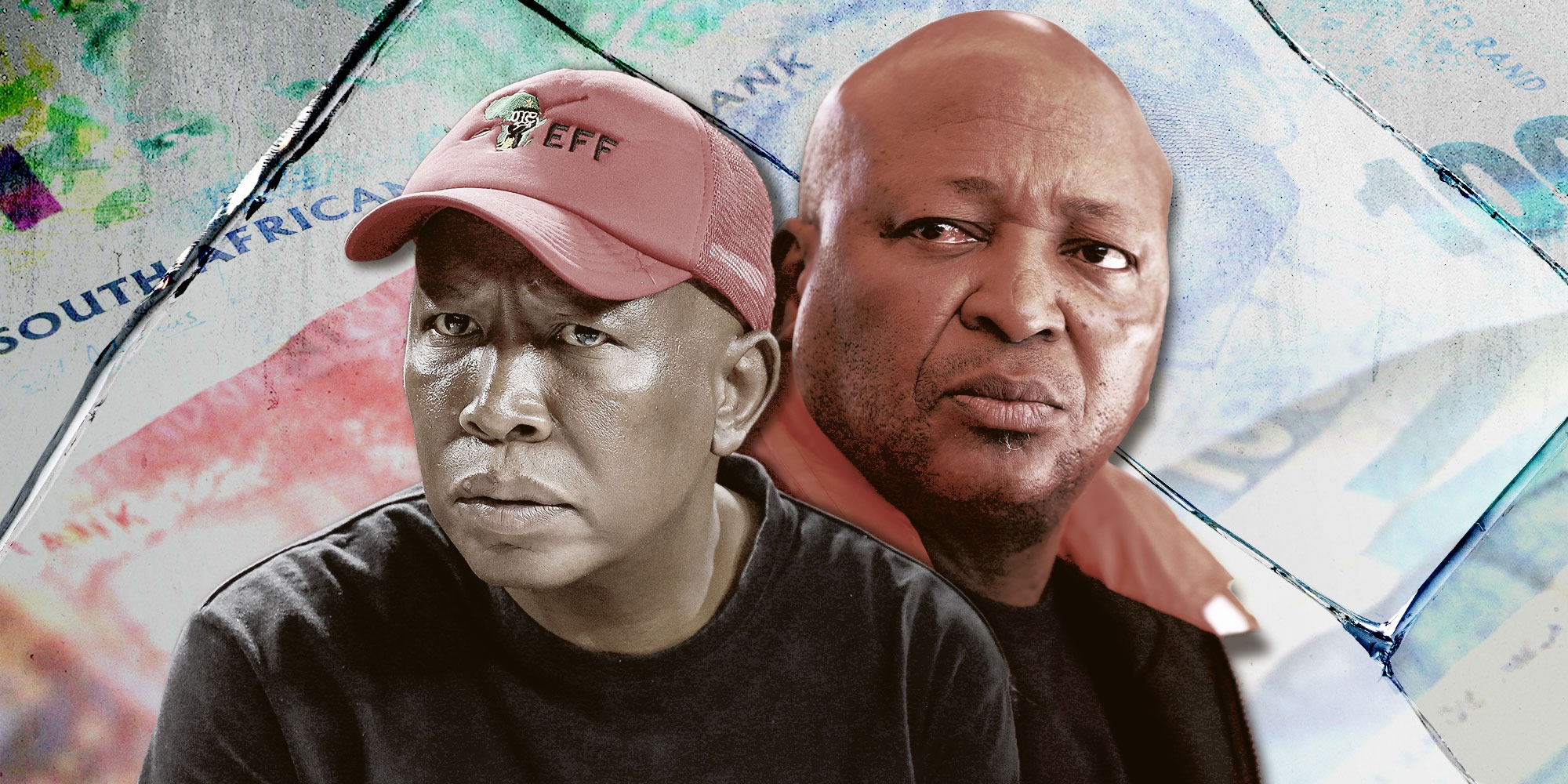
Julius Malema's R1-million defamation case against Kenny Kunene was struck from the court roll by Judge Leonard Twala at the Gauteng High Court. The ruling came after Malema initiated legal action following Kunene's public statements, which he contended were damaging to his reputation. The decision by Judge Twala to strike the matter from the roll effectively brought a temporary halt to the contentious legal battle between the two prominent figures.
Malema testified about his past associations, stating, "I knew the old man through Ze [Nxumalo] when they were engaged in a strike here in Johannesburg. I can’t remember which year." He further clarified his interactions, asserting, "I never went to Msibi with money. I went to Msibi from time to time to talk to him about taxis reducing their prices. We never spoke about any crime." These statements were part of Malema's efforts to counter the allegations of criminal conduct that formed the basis of Kunene's comments.
Kunene reacted to the judge's decision, saying, "I think the judge and the court have made it clear that they are in charge, and not Julius Malema, who, in my view, is misusing the justice system in an attempt to suppress freedom of expression. He goes on to insult the young and the old, insults the wives of politicians, body-shames women." Kunene's strong reaction showed the deep animosity and differing views on the role of justice and freedom of speech between the two parties. His comments noted his belief that Malema was attempting to silence criticism through legal means, rather than addressing the substance of the allegations.
Courtroom Blunder Detailed
Court documents related to the case were filed on Monday night, just hours before the scheduled hearing on Tuesday, June 9. This last-minute submission proved to be a critical procedural misstep. Malema's legal team argued that this non-compliance with court procedures was an administrative error, suggesting it was an oversight rather than an intentional delay or disregard for court rules. However, the court did not accept this explanation as sufficient to proceed. The failure to adhere to the stipulated deadlines for document submission ultimately contributed to the judge's decision to strike the case from the roll, signaling the court's strict adherence to procedural requirements.
The defamation case stemmed from an interview where Kenny Kunene made 10 alleged defamatory statements. These statements, broadcast during an interview with MacG on Podcast and Chill on February 20, formed the core of Malema's complaint. Central to the proceedings were claims from two witnesses regarding Julius Malema's presence at Jothan Msibi's farm, known as Uvivi Lodge. Tshepo Molekoa asserted that he saw Malema at Uvivi Lodge on at least seven occasions. Separately, an individual identified as Witness A claimed to have observed Malema at Uvivi Lodge a minimum of five times. These witness claims were presented as key evidence to substantiate Kunene's allegations.
However, Malema's legal team raised significant concerns about the independence of these witness statements. They contended, "The witness statements cannot be considered to be independent, as both affidavits appear to be a copy and paste from the other." This assertion suggested a lack of originality and potentially coordinated testimony, which could undermine the credibility of the witnesses. The legal team further questioned the credibility of the witnesses' claims of association with Msibi. "There are no employment contracts to show that they did indeed work for Mr Msibi, no photographs to show that they lived and worked on the farm and that they were as close to Mr Msibi as they claim," Malema's representatives stated. This challenge aimed to cast doubt on the witnesses' ability to accurately observe and report on Malema's activities at the lodge, thereby weakening the foundation of Kunene's defense.
Underlying Defamation Claims
The defamation case against Kenny Kunene originated from comments he made during an interview with MacG on Podcast and Chill, broadcast on February 20. During this widely viewed interview, Kunene made the 10 alleged defamatory statements that prompted Malema's legal action. Julius Malema has consistently denied allegations of criminal conduct stemming from his relationship with Jothan “Mswazi” Msibi. These denials form a central part of his legal argument against Kunene's statements, with Malema maintaining that his interactions with Msibi were not of a criminal nature.
During the proceedings, Tshepo Molekoa made specific claims regarding Malema's alleged financial transactions at Msibi's property. Molekoa asserted that he personally counted R80,000 in cash from a black Louis Vuitton bag, which he stated was brought by Malema. This testimony was presented as evidence supporting the claims made by Kunene that prompted the defamation suit, suggesting a direct link between Malema and potentially illicit cash dealings at the lodge.
Malema also addressed his residential arrangements during the legal proceedings. He admitted that his wife rented a home located within a cluster of four houses. This cluster also included a residence belonging to Adriano Mazzotti. This admission provided context to the nature of Malema's associations and living circumstances, which became relevant in the broader context of the defamation allegations. The various claims and counter-claims highlight the contentious nature of the dispute between Malema and Kunene, focusing on specific alleged events and associations that were brought into public discourse through the podcast interview. The details of these claims were central to the court's consideration of the overall defamation case, aiming to establish whether Kunene's statements were factual or defamatory.
Legal Ramifications and Costs
Malema's legal team failed to upload specific documents to the CaseLines system by the April deadline, a critical procedural failure that directly contributed to the case being struck from the roll. This non-compliance with court directives ultimately derailed the proceedings. The court subsequently ordered Malema to pay the costs incurred by Kunene's legal team, a common consequence for the party whose procedural errors lead to a case being struck off. This financial penalty adds to the repercussions of the administrative oversight.
Beyond the defamation case, Kunene faced a separate legal finding in August 2025 when the Equality Court determined that his repeated references to Malema as a "cockroach" constituted hate speech. This ruling was a significant legal setback for Kunene, noting the boundaries of free speech in South Africa. Kunene was directed to issue an apology for this ruling, though he is currently appealing that decision, indicating his disagreement with the Equality Court's judgment and his intention to challenge it further.
During the defamation proceedings, Malema's legal representatives raised concerns regarding the credibility of witness statements. "The witness statements cannot be considered to be independent, as both affidavits appear to be a copy and paste from the other," Malema's legal team stated. They further questioned the authenticity of the witnesses' claimed association with Jothan Msibi. "There are no employment contracts to show that they did indeed work for Mr Msibi, no photographs to show that they lived and worked on the farm and that they were as close to Mr Msibi as they claim," Malema's representatives contended. These challenges to witness credibility were a key part of Malema's strategy to dismantle the foundation of Kunene's defense, arguing that the evidence presented against him was unreliable and potentially fabricated. The striking of the case means these specific arguments were not fully adjudicated at this stage, but they show the contentious nature of the evidence presented.