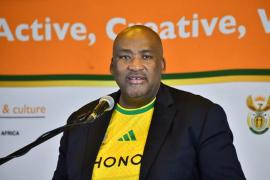
Minister of Sport, Arts and Culture Gayton McKenzie provided a breakdown of approximately R31 million spent on South Africa’s FIFA World Cup 2026 delegation and programme activities. The announcement follows questions raised in both Parliament and the media regarding the expenditure. The total expenditure, specifically R30,945,370.15, pertains to South Africa's preparations for the upcoming FIFA World Cup 2026. This detailed account was made public on Monday, July 20, 2026, outlining the financial commitments for the nation's participation and related initiatives. The expenditure covered fan engagement, activations, and legacy initiatives, encompassing the involvement of artists and cultural participants.
Expenditure Breakdown
Official trips and all travel-related expenditure for Minister Gayton McKenzie, his support staff, the Director-General, and a 14-member Project Team amounted to R7,865,134.97. This significant allocation covered international flights, accommodation, local transport, and travel insurance for the delegation. These funds also provided daily allowances for Minister Gayton McKenzie, executive management, officials, and South African artists and cultural representatives, ensuring their comfort and operational needs were met during their international engagements. The South Africa 2010 Legends Exhibition Match, which involved 27 participants, incurred costs totalling R6,706,925.00. This amount specifically funded the South Africa 2010 Legends Programme, which featured an exhibition match between South Africa's 2010 Bafana Bafana legends and Mexico’s 2010 legends, celebrating the legacy of the 2010 FIFA World Cup hosted in South Africa.
Separate expenditures for suites reached R3,361,845.18. This R3.36 million allocation funded official hospitality venues in both Atlanta, United States, and Monterrey, Mexico, providing essential spaces for official meetings, networking, and hosting dignitaries. These venues were key for high-level engagements and diplomatic interactions during the preparatory phase for the World Cup. Additionally, spectator match tickets were purchased at a cost of R3,011,465.00. The R3.01 million spent on tickets covered 294 official FIFA match tickets across three host cities for the upcoming tournament, allowing official representatives and invited guests to attend key matches. These tickets were distributed for games in various locations, ensuring broad representation and engagement across the tournament's footprint.
Funding Sources and Justification
The expenditure addressed fan engagement, activations, and legacy initiatives, encompassing the involvement of artists and cultural participants. The R7.86 million allocated for travel covered international flights, accommodation, local transport, and travel insurance. These funds also provided daily allowances for Minister Gayton McKenzie, executive management, officials, and South African artists and cultural representatives. Separately, R10 million was dedicated to establishing South Africa’s physical presence at the FIFA World Cup, which included setting up exhibition spaces in Mexico City, Atlanta, and Monterrey. These exhibition spaces served as hubs for promoting South African culture, tourism, and investment opportunities. The strategic placement of these exhibition spaces in key host cities aimed to maximize visibility and outreach to international audiences. Private sector partners, including Brand South Africa, Coca-Cola, HONOR, Betway, Cell C, and Old School, provided funding for "Lucky Fans," journalists, podcasters, and influencers, expanding the reach of South Africa's presence and engagement efforts. This multi-faceted approach aimed to ensure South Africa had a strong and visible presence during the build-up to the 2026 tournament.
Programme Activities and Participants
Programme activities, which encompassed fan engagement initiatives, participation in Aldea Global, partnership activations in Atlanta, and various Monterrey and legacy activities, incurred a cost of R10,000,000.00. These activities included the involvement of 30 artists and cultural participants, alongside the project delivery team, ensuring a diverse representation of South African talent. The allocation of R6.71 million specifically funded the South Africa 2010 Legends Programme, which featured an exhibition match between South Africa's 2010 Bafana Bafana legends and Mexico’s 2010 legends. This match served as a significant cultural and sporting exchange, rekindling memories of the 2010 tournament and fostering international goodwill. During the World Cup activations, South African musicians performed live, showcasing the nation's vibrant music scene. Chefs introduced South African food to attendees, offering a taste of the country's rich culinary heritage. Additionally, local artists and crafters showcased their products at these events, providing a platform for their work and promoting South African craftsmanship to an international audience. These cultural and artistic contributions were integral to the broader strategy of promoting South Africa's cultural richness and national brand. In total, 151 participants were dispatched to Mexico and the United States for the World Cup activities, not including the service provider team, noting the extensive human resources involved in the nation's preparatory efforts. This full programme aimed to maximize South Africa's visibility and engagement ahead of the FIFA World Cup 2026.