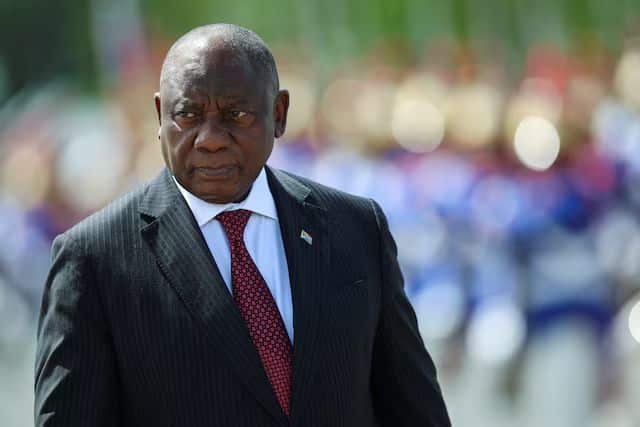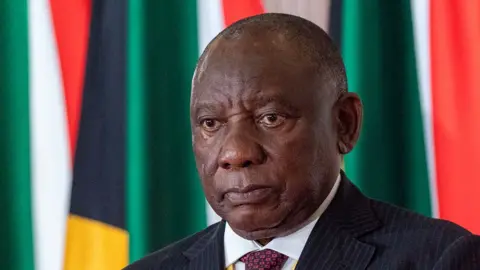
South African President Cyril Ramaphosa has initiated a legal challenge against a report commissioned by parliament. The President's action seeks to contest the findings of the report, which recommended that parliament consider impeaching him. This move comes as political pressure intensifies following the report's release. The President's legal action specifically targets the report's recommendation that Members of Parliament once again consider impeachment proceedings against him. President Ramaphosa has consistently denied any wrongdoing, stating that he is innocent of the allegations that prompted the parliamentary inquiry. His legal team is arguing that the panel's findings are flawed and should be set aside, asserting that the process was procedurally unfair. The challenge is expected to be considered by the courts, potentially delaying parliamentary proceedings on the matter.
Details of the Challenge
The report's findings have created a path for Members of Parliament to once again deliberate impeachment proceedings against President Cyril Ramaphosa. Charges against the President included alleged violations of the constitution and serious misconduct. President Ramaphosa has consistently denied any wrongdoing in connection with the claims, maintaining his innocence throughout the process. He stated that the cash at the center of the allegations originated from the legitimate sale of buffalo from his farming business. This explanation has been a cornerstone of his defense against the accusations. The impeachment committee tasked with reviewing the matter includes nine Members of Parliament from the ruling African National Congress (ANC). President Ramaphosa's legal challenge aims to prevent parliament from acting on the report's recommendations, arguing the findings are flawed. His legal representatives contend that the independent panel overstepped its mandate and misinterpreted the evidence presented to it, leading to conclusions that are not legally sound.
Background of the 'Farmgate' Saga
The 'Farmgate' saga began in 2020 after $580,000 (£430,000) had allegedly been stolen from President Cyril Ramaphosa's Phala Phala farm in the northern Limpopo province. In 2022, an independent panel concluded that President Ramaphosa might have committed serious misconduct relating to the theft of large sums of cash hidden in a sofa at his private farm. The panel found evidence that the president may have violated his oath of office, determining that he had "a case to answer." This finding suggested that there was sufficient prima facie evidence to warrant further investigation and potential impeachment proceedings. South Africa has strict rules regarding the holding of foreign currency, which mandate that it must be deposited with an authorised dealer, such as a bank, within 30 days of acquisition. The presence of such a large sum of undeclared foreign currency at his private residence raised questions about compliance with these regulations. The independent panel's report noted concerns that the President may have breached anti-corruption laws and potentially abused his presidential powers in handling the aftermath of the theft. The panel's detailed findings laid the groundwork for the current parliamentary considerations, prompting the establishment of the impeachment committee.
Parliamentary and Political Context
President Cyril Ramaphosa's legal challenge against the impeachment report was formally filed on Tuesday at the High Court in Cape Town. This development follows a Constitutional Court ruling earlier in the month, which determined that parliament had acted unconstitutionally four years prior when it voted against establishing an impeachment inquiry. That previous ruling showed the importance of parliamentary oversight and the constitutional imperative to hold high-ranking officials accountable. The political landscape has shifted significantly, as Ramaphosa's African National Congress (ANC) party lost its parliamentary majority in the general election held in 2024. This change in parliamentary composition means that securing votes for or against impeachment could be a more complex and unpredictable process than in previous years. In response to the ongoing situation, the Speaker of parliament has established an impeachment committee tasked with reviewing the matter. This committee comprises 31 Members of Parliament, drawing representatives from 16 different political parties, reflecting the diverse composition of the current legislative body. The committee's mandate is to thoroughly examine the independent panel's report and determine whether there are sufficient grounds for parliament to proceed with impeachment proceedings against the President. The legal challenge initiated by President Ramaphosa seeks to halt these parliamentary processes, arguing that the foundation upon which they are built is legally unsound.