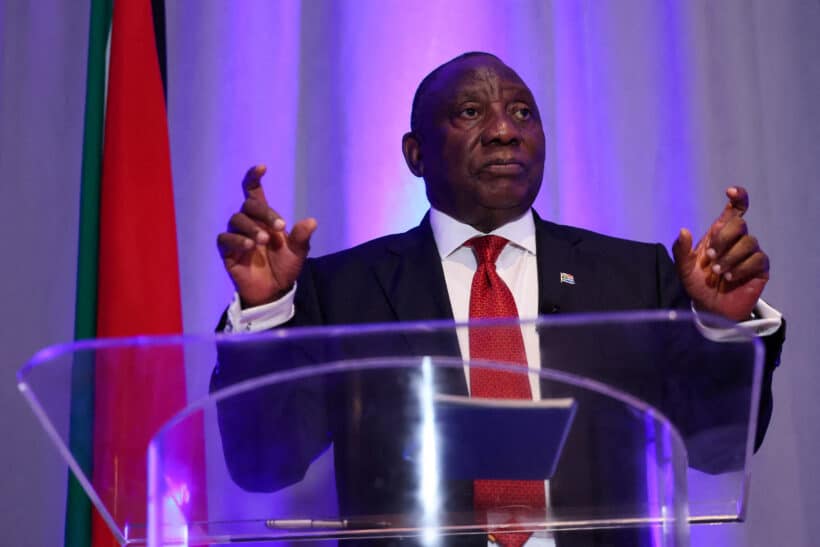
South African President Cyril Ramaphosa secured a court order on Friday, temporarily halting a parliamentary impeachment inquiry. The order specifically prevents the inquiry from proceeding with its investigation into misconduct allegations stemming from his "Farmgate" scandal. This significant legal development means that the parliamentary process related to the accusations against him has been effectively paused by the President's legal action. The court's decision represents a key moment in the ongoing political and legal saga surrounding the head of state.
Scandal's Origin and Ramaphosa's Defense
The "Farmgate" scandal originated from the theft of bundles of foreign currency discovered in a sofa at President Cyril Ramaphosa's ranch in 2020. The incident only became public knowledge after a former national spy boss, Arthur Fraser, filed a criminal complaint against the President in June 2022, alleging a cover-up. Ramaphosa addressed the allegations by stating that the $580,000 in question was the proceeds from the sale of buffaloes from his Phala Phala farm. He has consistently denied any wrongdoing related to the currency or its handling, maintaining that the funds were legitimate earnings from a private business transaction. The controversy has raised questions about the source and storage of the large sum of foreign currency.
Legal Challenge and Future Proceedings
The court order granted to President Cyril Ramaphosa likely provides him a reprieve from further scrutiny regarding the scandal until early September. At that time, Ramaphosa intends to seek a definitive ruling from the same court to overturn a panel report. This report had concluded that he may have violated the constitution in connection with the "Farmgate" allegations. The ruling on Friday specifically spares Ramaphosa further embarrassment over the scandal for the coming weeks. This legal strategy aims to nullify the panel's findings, which are central to the parliamentary impeachment proceedings. The temporary halt allows the President's legal team to meticulously prepare its arguments for the upcoming court date, where they will challenge the validity of the panel's conclusions. The outcome of this future court hearing will be key in determining the trajectory of the impeachment process.
Presidential Tenure and Political Context
President Cyril Ramaphosa, 73, has served as South Africa's head of state since 2018. His current presidential tenure is scheduled to conclude in 2029, marking his second term. This legal development comes as of the article's publication date on July 24, 2026, placing the events squarely within his second term in office. The political landscape surrounding the President remains a key focus ahead of his scheduled term conclusion, with the "Farmgate" scandal casting a long shadow over his administration. The ongoing legal battles add another layer of complexity to the political environment, particularly as the country approaches future elections.
Opposition Reaction
Opposition parties in South Africa have expressed strong reactions to President Cyril Ramaphosa's successful court application. The Democratic Alliance, a prominent opposition party, criticized the move, arguing it delays accountability and obstructs parliamentary oversight. The African National Congress, Ramaphosa's own party, has seen internal divisions emerge regarding the ongoing legal battles and their implications for leadership stability within the ruling party. Critics across the political spectrum suggest the court order could further politicize the impeachment process, which they maintain should remain within parliamentary oversight and be free from judicial interference. The legal maneuver has intensified debate over the separation of powers between the executive and legislative branches, and also raised concerns about presidential transparency and the integrity of public office.