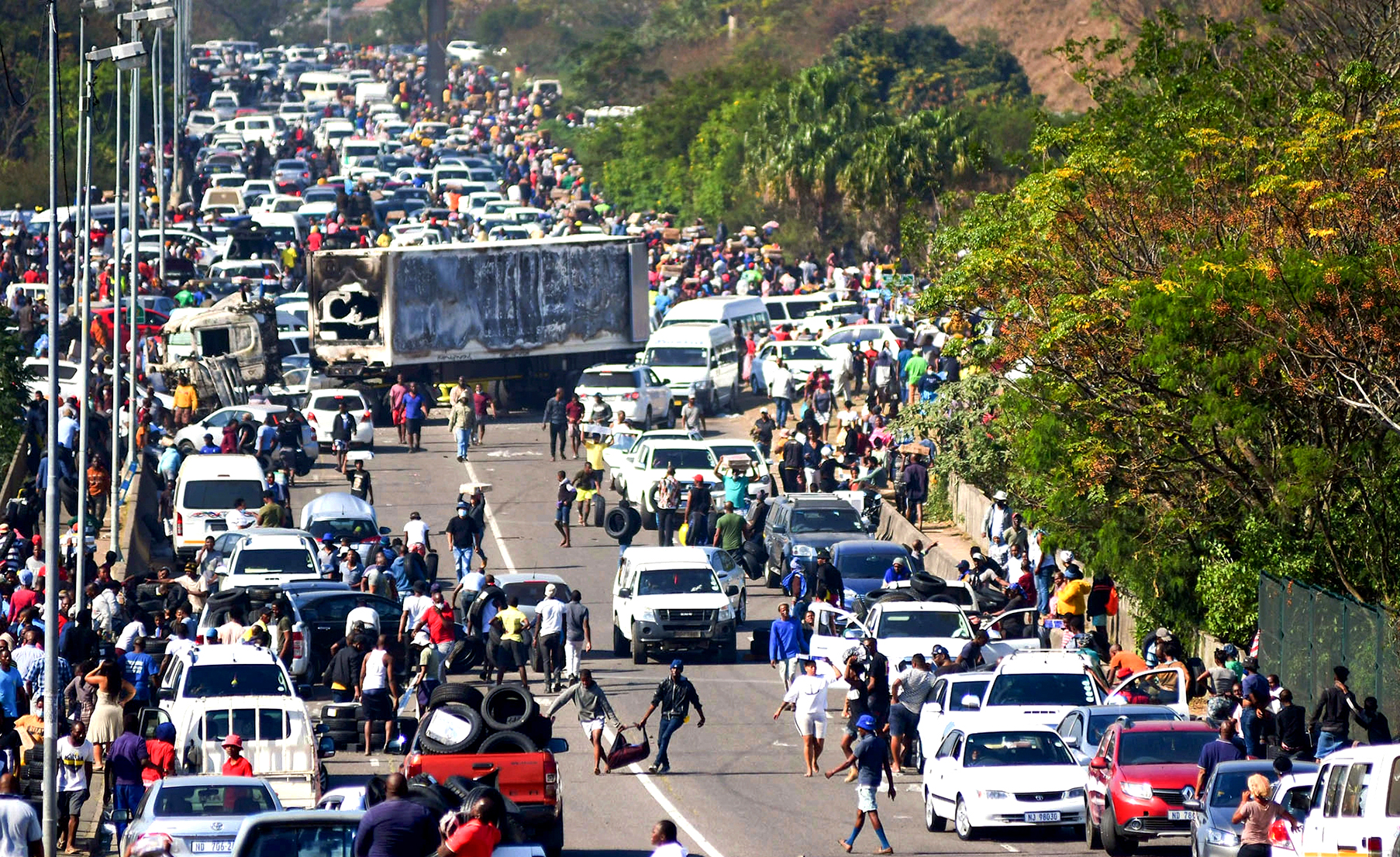
South Africa is facing widespread civil unrest, with concerns mounting over recurring violence that previously manifested during the July 2021 pro-Jacob Zuma riots. The nation experienced significant disruption and damage during those events, which rocked the country to its core. Observers indicate that a widespread ideology of hate has taken root, contributing to increasingly aggressive actions. This ideology, described as having become deep-seated, has reportedly led to blockades at hospital gates and instances of children being targeted by individuals pelting them with objects. The escalating tensions suggest a potential for further conflict across the country, raising urgent questions about the state's preparedness and response mechanisms.
Lessons From Past Unrest
An official inquiry, led by academic Sandy Africa, was conducted following the widespread destruction seen in July 2021. The Sandy Africa panel report was explicit about systemic issues, stating that "Poorly rolled-out programmes of service delivery and unacceptable living conditions, the state of the economy and the persistent levels of poverty served to provide the ripe environment to light the tinderbox that was the incarceration of former President Zuma that led to many poor and desperate people joining in the looting, alongside those more calculating in their objectives and motivation." The report noted what it described as "obvious to most but apparently not to those who govern us," showing a perceived disconnect between the government and the lived realities of its citizens. This critical assessment pointed to a fundamental failure in governance and an inability to address the root causes of public discontent.
The panel also noted that there had been several acts of major public disorder and violence in the lead-up to former President Zuma’s incarceration. Among these events, the report cited instances of firearms being discharged publicly, indicating a clear escalation of tensions and a breakdown of public order even before the widespread riots. According to the Sandy Africa panel report, "in spite of this, none of the intelligence structures of the state was able to predict or forewarn that the outbreak of looting, violence and destruction would take place in the form and the manner that it did." This indicated a significant intelligence failure, suggesting a lack of foresight and a critical lapse in the state's ability to protect its citizens and infrastructure. The report's findings painted a troubling picture of a state caught unprepared despite ample warning signs.
The report further detailed that "Several communities, in the days leading up to the violence, were aware that it would take place." This widespread community awareness contrasted sharply with the state's apparent lack of preparedness. Additionally, "Business delegations also informed us that they had been made aware that violence was imminent," suggesting a broader awareness of impending unrest that did not translate into state preparedness or effective preventative measures. These warnings, coming from both grassroots and economic sectors, show the depth of the intelligence failure identified by the panel. Despite these past warnings and the official inquiry's findings, numerous acts of public violence have recently occurred in various cities, echoing the patterns of unrest documented in the Sandy Africa panel report. This recurrence of violence raises serious questions about whether the lessons from the 2021 riots have been adequately learned and implemented. The nation was forged in the furnace of hopeful ideology, with underlying strands of non-racialism, Pan-Africanism, and black consciousness, principles now seemingly tested by ongoing societal divisions and unrest.
Current Immigration Tensions
The current grievance fueling unrest in South Africa centers on immigration, an issue with a broader societal reach than the grievances associated with former President Jacob Zuma. This shift in focus indicates a deepening and diversification of public discontent, moving beyond specific political figures to encompass wider socio-economic and identity-based concerns. In response to these tensions, the Department of Home Affairs is reportedly enhancing its operational systems, signaling a governmental acknowledgment of the growing pressures related to immigration. These efforts include conducting raids on businesses found to be employing undocumented individuals, a measure aimed at enforcing existing labor laws and addressing concerns about illegal employment practices. Authorities have indicated that expedited deportations are planned for those found to be in the country without legal status, a move designed to streamline the process of removing undocumented foreign nationals.
The Department of Home Affairs is introducing biometric enhancements to improve its ability to detect individuals who have overstayed their permitted periods in the country. This technological upgrade is intended to bolster border security and internal immigration controls, making it more difficult for individuals to remain in South Africa illegally. Official statistics indicate that approximately 3.5 million foreign nationals, encompassing both legal residents and undocumented individuals, currently reside in South Africa. This figure provides a baseline understanding of the demographic landscape. However, figures as high as 30 million foreign nationals are sometimes publicly circulated, contributing significantly to the discourse surrounding immigration and often fueling anti-immigrant sentiment. The substantial discrepancy between official statistics and publicly "bandied about" figures notes the challenge of managing public perception and addressing misinformation. The government's actions aim to address concerns about undocumented immigration and its perceived impact on the country, attempting to assuage public anxieties while navigating complex policy challenges.
Government's Apathetic Response
The article warns about what it describes as the "seemingly lackadaisical attitude of our state" regarding the potential for widespread civil unrest. This assessment aligns with findings from the Sandy Africa panel report, which investigated the July 2021 riots. The report stated that "Poorly rolled-out programmes of service delivery and unacceptable living conditions, the state of the economy and the persistent levels of poverty served to provide the ripe environment to light the tinderbox that was the incarceration of former President Zuma that led to many poor and desperate people joining in the looting, alongside those more calculating in their objectives and motivation." This critical quote from the report shows the deep-seated socio-economic grievances that provide fertile ground for civil unrest, suggesting that the state's failure to address these fundamental issues contributes directly to the current instability. The panel explicitly stated that these issues were "obvious to most but apparently not to those who govern us," further noting the perceived indifference or blindness of the ruling elite.
The Sandy Africa panel report detailed that prior to former President Jacob Zuma’s incarceration, "there had been several acts of major public disorder and violence in the lead-up to former President Zuma’s incarceration, with firearms being discharged publicly, among others." These specific instances of escalating violence served as clear warning signals that the state, according to the report, failed to heed. Despite these warning signs, the report concluded that "in spite of this, none of the intelligence structures of the state was able to predict or forewarn that the outbreak of looting, violence and destruction would take place in the form and the manner that it did." This indicated a significant failure in state intelligence, not merely in predicting the timing but also the scale and nature of the widespread violence that ensued. The inability of critical state apparatuses to anticipate such a significant national crisis points to fundamental weaknesses within the security and intelligence infrastructure.
The report noted that awareness of impending unrest extended beyond official intelligence channels, reaching both communities and business leaders. "Several communities, in the days leading up to the violence, were aware that it would take place," the Sandy Africa panel report noted, indicating a grassroots understanding of the brewing crisis. Adding to this, "Business delegations also informed us that they had been made aware that violence was imminent," suggesting a broader, unofficial understanding of the brewing crisis that did not appear to translate into effective preventative measures by the government. The cumulative evidence from the Sandy Africa panel report thus paints a picture of a state that is either unwilling or unable to respond effectively to clear and present dangers, a "lackadaisical attitude" that continues to fuel concerns about South Africa's stability. The current wave of public violence in various cities further reinforces these anxieties, suggesting a pattern of state inaction that risks plunging the nation into deeper turmoil.