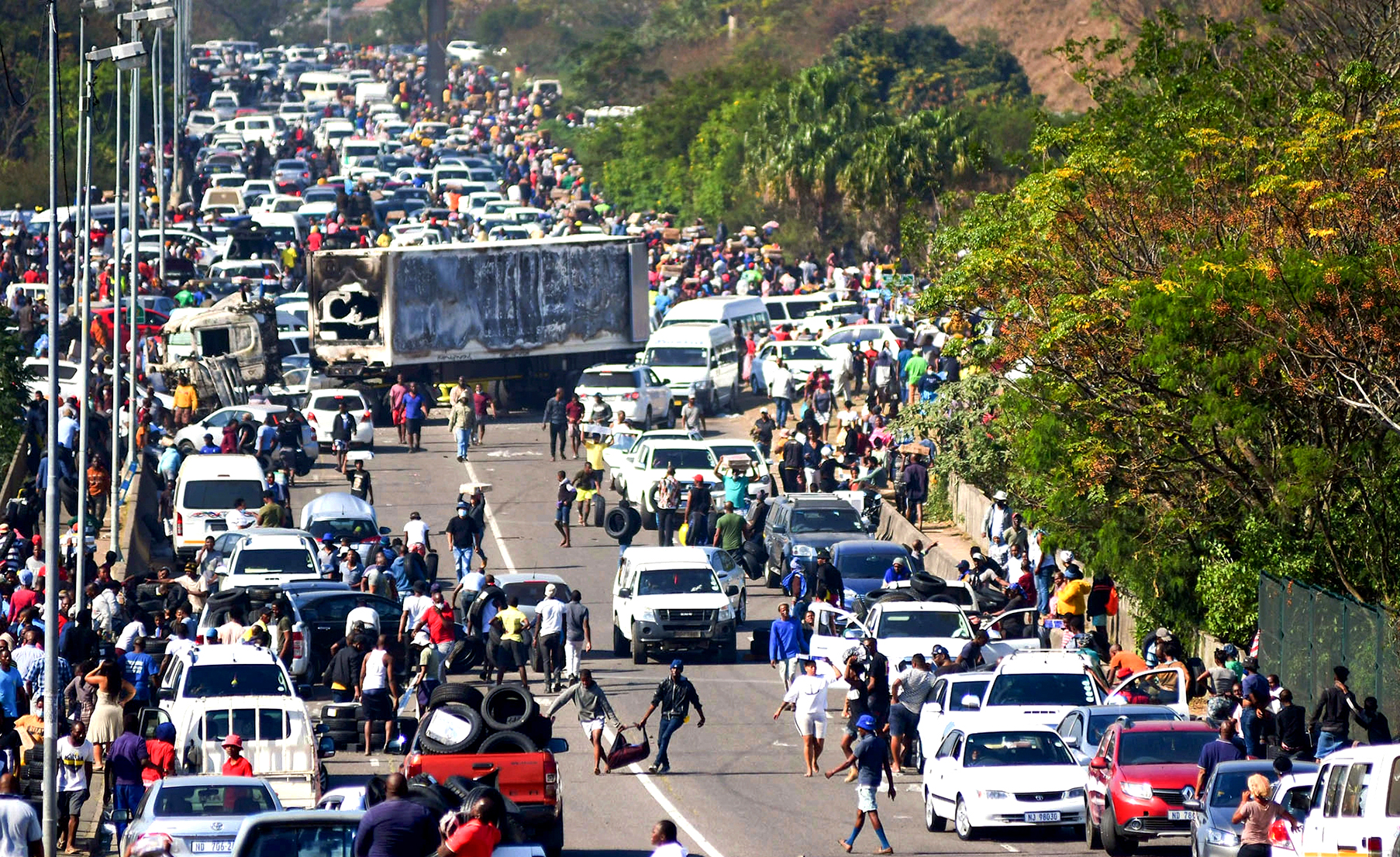
A panel led by Sandy Africa noted the state's shortcomings in anticipating and responding to the July 2021 unrest in South Africa, which President Cyril Ramaphosa described as an attempted insurrection. The Sandy Africa panel report explicitly stated that preparedness for the outbreak and the subsequent response were "damning," despite what it deemed "obvious to most." The report noted "poorly rolled-out programmes of service delivery and unacceptable living conditions, the state of the economy and the persistent levels of poverty served to provide the ripe environment to light the tinderbox that was the incarceration of former President Zuma that led to many poor and desperate people joining in the looting, alongside those more calculating in their objectives and motivation." The panel also observed that "there had been several acts of major public disorder and violence in the lead-up to former President Zuma’s incarceration, with firearms being discharged publicly, among others." Despite these precursors, the report concluded that "none of the intelligence structures of the state was able to predict or forewarn that the outbreak of looting, violence and destruction would take place in the form and the manner that it did." This current analysis warns of a seemingly lackadaisical attitude from the state, described as "sleepwalking through this crisis" until a deadline was set for undocumented people to leave the country.
Lessons from the July 2021 Unrest
The July 2021 unrest in South Africa occurred amidst a Covid-19-induced economic squeeze, with the immediate grievance being the imminent jailing of former president Jacob Zuma for contempt of the Constitutional Court. An official inquiry, led by Sandy Africa, was subsequently conducted to investigate the destruction that followed. The Sandy Africa panel report noted prior indicators of instability, stating that "there had been several acts of major public disorder and violence in the lead-up to former President Zuma’s incarceration, with firearms being discharged publicly, among others."
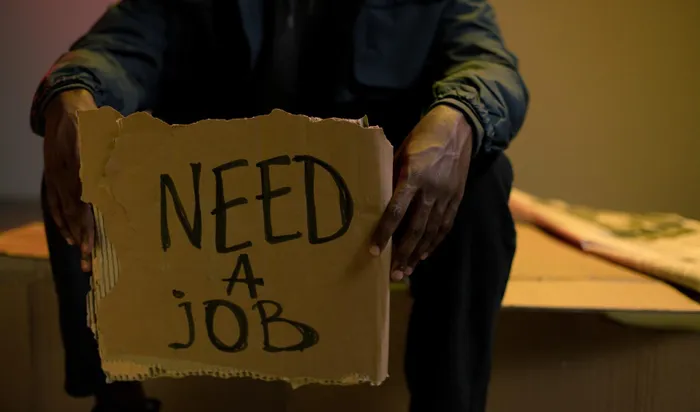
The report identified underlying societal issues as significant factors, asserting that "poorly rolled-out programmes of service delivery and unacceptable living conditions, the state of the economy and the persistent levels of poverty served to provide the ripe environment to light the tinderbox that was the incarceration of former President Zuma that led to many poor and desperate people joining in the looting, alongside those more calculating in their objectives and motivation." Despite these conditions and preceding acts of public disorder, the inquiry found a critical intelligence failure. The Sandy Africa panel report stated that "in spite of this, none of the intelligence structures of the state was able to predict or forewarn that the outbreak of looting, violence and destruction would take place in the form and the manner that it did." In 2021, the report concluded, the tinderboxes were poverty, hunger, and inequality, all exacerbated by the pandemic.
Current Climate and Government Actions
The South African government has undertaken several initiatives aimed at addressing public concerns, including enhancing Home Affairs systems. These measures also involve conducting raids on businesses suspected of employing undocumented individuals and accelerating deportation processes.
These actions occur against a backdrop where approximately 3.5 million foreign nationals, both legal and undocumented, reside within the country. Public discourse, however, sometimes includes figures suggesting up to 30 million foreign nationals, a number significantly higher than official estimates.
Ideological Roots and Future Peril
South Africa's foundational ideologies, including the African National Congress's (ANC) non-racialism, the Pan Africanist Congress's (PAC) Pan-Africanism, and the philosophy of black consciousness, shaped the nation's identity. These ideologies originated from a period of significant social and political transformation, aiming to articulate principles for a post-apartheid society. The ANC's non-racialism advocated for a society where race would not be a distinguishing factor, promoting equality among all citizens. Conversely, the PAC's Pan-Africanism focused on the unity and self-determination of African people, emphasizing indigenous leadership and an African-centric approach to governance. Black consciousness, distinct yet related, fostered psychological liberation and pride among Black South Africans, encouraging self-reliance and resistance against oppression. These varying ideological currents contributed to the complex political landscape during the nation's formation.