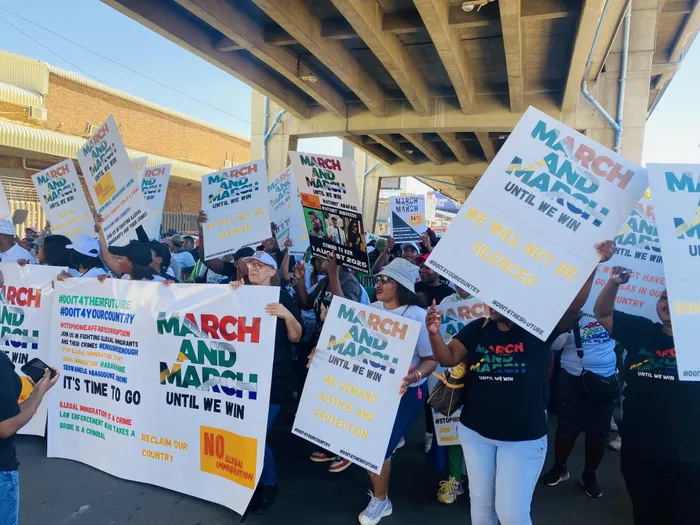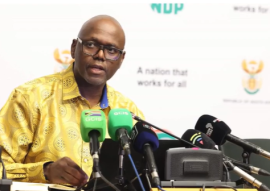
President Cyril Ramaphosa expects law enforcement to act against violent protesters, according to presidential spokesperson Vincent Magwenya, as demonstrations against undocumented immigrants have spread across several major South African cities. Mr. Magwenya stated, "The matter was discussed yesterday between President Chapo and President Ramaphosa and they both agreed that…South Africans are not xenophobic." He added that President Ramaphosa emphasized South Africa is a welcoming country with open, friendly, and warm people, noting a rejection of any characterization of the nation or its people as xenophobic. Mr. Magwenya noted that immigration is a pressure point globally and stressed the importance of respecting everyone's rights and protesting peacefully.
Presidential Stance on Protests
President Cyril Ramaphosa discussed the ongoing immigration protests with Mozambican President Daniel Chapo during Mr. Chapo's recent working visit to South Africa. During their discussions, the leaders addressed the nature of the protests, with President Ramaphosa and President Chapo agreeing that South Africans are not xenophobic, but rather that the demonstrations represent isolated incidents or "pockets of protest." Presidential spokesperson Vincent Magwenya stated that President Ramaphosa expects law enforcement to "play its role to prevent any acts of violence against any individual" during these demonstrations. Magwenya further conveyed the South African government's rejection of any notion characterizing the nation or its people as xenophobic. The presidential spokesperson emphasized the importance of maintaining peace and respecting individual rights amidst the protests, reinforcing the government's commitment to upholding the rule of law.
Global Immigration Pressures
Immigration is a global challenge, presenting a pressure point in many nations, not solely within South Africa, according to Vincent Magwenya, spokesperson for President Cyril Ramaphosa. Magwenya noted that various factors contribute to migration flows worldwide. Among these causes, he cited ongoing conflicts, political instability, and instances of misgovernance as significant drivers compelling individuals to leave their home countries. He emphasized the broad nature of these pressures, indicating that they are not unique to the South African context. This perspective shows the understanding that the challenges South Africa faces are part of a larger, international phenomenon, requiring a full approach rather than isolated national responses. The global nature of these issues notes the need for international cooperation to manage migration effectively and humanely.
Collaborative Solutions for Migration
President Cyril Ramaphosa and Mozambican President Daniel Chapo agreed that South Africans are not xenophobic, but rather that the ongoing protests represent isolated incidents. The two leaders, meeting during Mr. Chapo's working visit to South Africa, discussed the broader issue of migration across the continent. They concurred that African nations must collaborate to address the root causes and challenges driving migration. This agreement shows a shared understanding between the two heads of state regarding both the nature of the current protests and the necessity of regional cooperation to manage migration effectively. Their discussion noted a commitment to finding collaborative solutions for the complex dynamics of population movement within Africa, recognizing that a unified approach is essential for long-term stability and development. The leaders' shared vision for continental collaboration aims to foster conditions that reduce involuntary migration and promote orderly movement of people.