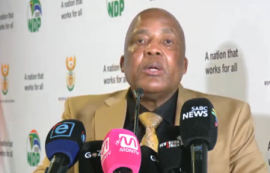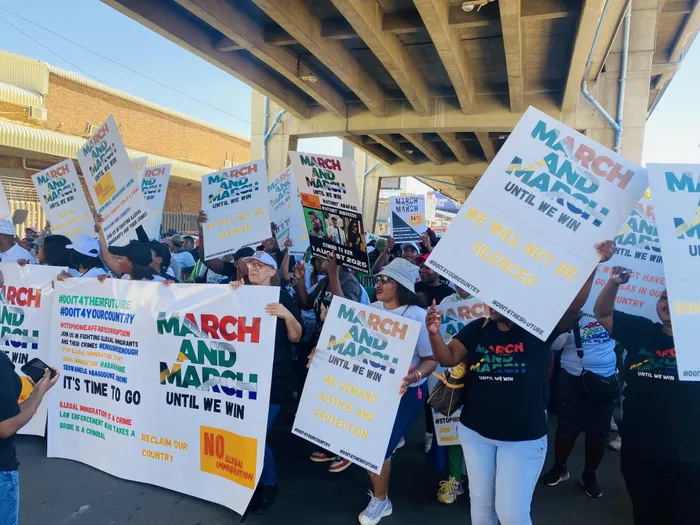
Anti-illegal immigration protests in South Africa have continued to highlight inconsistencies in the government's approach to immigration, with rallies occurring last week in Pretoria and Johannesburg. These demonstrations have brought renewed scrutiny to the South African government's often-contradictory stance on the country's immigration challenges. Presidential spokesperson Vincent Magwenya stated on Wednesday that "South Africans are not xenophobic. What we have are pockets of protest which are within our legal framework." This assertion came as protesters demanded tougher action against illegal immigration, while South Africa last month pledged to crack down on individuals perpetrating xenophobic attacks. In a related development that further complicates the narrative, two Home Affairs officials were arrested in Secunda, adding to at least 111 other Home Affairs officials implicated in corruption uncovered by the Special Investigative Unit (SIU). These arrests show the systemic issues within the immigration system that critics argue contribute to the current crisis.
Government's Mixed Signals
Presidential spokesperson Vincent Magwenya affirmed the government's commitment to protecting the rights of all individuals, noting that immigration is a global pressure point affecting many nations. Magwenya showed the importance of protecting the rights of all individuals, asserting that immigration is a global pressure point that is affecting many nations worldwide, not just South Africa. Despite this official stance, Dr. Shadi Maganoe, a senior lecturer at Wits University, characterized the government's approach as inconsistent, marked by slow and reactive implementation of policies. Maganoe's analysis suggests a disconnect between the government's stated intentions and its practical actions on the ground, pointing to a pattern where policy pronouncements do not consistently translate into effective enforcement or timely interventions. Earlier, Ronald Lamola, the Minister of International Relations, moved to distance South Africa from anti-migrant rhetoric that has emerged during recent protests, emphasizing the government's official position against xenophobia. Minister Lamola's statement aimed to reassure international partners and foreign nationals that the government does not condone the discriminatory sentiments expressed by some during these public demonstrations.
The government indicated it would be closely monitoring developments following the recent demonstrations, acknowledging the sensitivity and potential for escalation. In this context, additional protests were scheduled, with organizers planning rallies for May 4 and May 8, signaling a continued public mobilization around the issue. This series of events shows the ongoing public discourse surrounding immigration policies and their enforcement within the country, noting the persistent tension between public sentiment and government policy. The government's promise to watch developments closely suggests an awareness of the volatile nature of the situation and the need for a carefully considered response, especially given the potential for further public unrest and the complexities of managing both domestic concerns and international perceptions.
Diplomatic Fallout and Repatriation Efforts
The immigration situation has also taken on significant diplomatic dimensions. President Cyril Ramaphosa paid a visit to Zimbabwean President Emmerson Mnangagwa at his private farm on Sunday to discuss bilateral interests. The ongoing immigration situation in South Africa was a central topic of discussion between the two leaders, according to reports, reflecting the regional impact of the crisis. Ramaphosa and Mnangagwa also agreed to collaborate on addressing the underlying issues contributing to the current migration levels seen across the African continent, acknowledging that cross-border movements are often driven by complex socio-economic factors. This agreement points to a recognition that a purely domestic approach to immigration is insufficient and that regional cooperation is essential for sustainable solutions, particularly in addressing root causes such as economic disparities and political instability in source countries.
In a related development, at least 130 Nigerian citizens residing in South Africa have formally requested their government to facilitate their repatriation, indicating a growing sense of insecurity among some foreign nationals. Nigeria's Foreign Minister, Bianca Odumegwu-Ojukwu, confirmed that these individuals were the first to apply to a new scheme initiated by the Nigerian government to repatriate its citizens. "They were the first to apply to a new scheme to repatriate citizens launched by Nigeria's government," Odumegwu-Ojukwu stated, noting the proactive steps being taken by Nigeria to protect its citizens abroad and respond to their concerns about safety and well-being in South Africa.
Nigeria had previously summoned South Africa’s High Commissioner in Abuja to address concerns regarding the situation, showing the diplomatic gravity of the events. This diplomatic action by Nigeria signaled its serious concerns about the safety of its citizens and the broader implications for bilateral relations between the two prominent African nations. Nigeria’s diplomatic missions within South Africa are actively working with local authorities to mitigate risks faced by Nigerian nationals, providing support and ensuring their safety amidst the heightened tensions. This direct engagement between the two nations' diplomatic bodies illustrates the serious implications of the anti-immigrant sentiment for bilateral relations, as countries like Nigeria seek to protect their citizens and ensure their rights are upheld in South Africa.
Corruption and Scapegoating
Corruption within South Africa's Department of Home Affairs has been identified as a critical factor exacerbating the immigration crisis. This corruption has been linked to high-profile cases involving figures such as Shepherd Bushiri and Timothy Omotoso, where permits were allegedly secured unlawfully, noting significant vulnerabilities within the system. The Special Investigative Unit (SIU) has noted the severity of these issues through its ongoing investigations. Selby Makgotho, an SIU spokesperson, stated, "Some applications were made and approved on WhatsApp, which notes the seriousness of the issue." This revelation points to a deeply entrenched and informal system of illicit activities that undermines the integrity of immigration processes, suggesting a profound breakdown in oversight and accountability. The SIU's interim report further revealed an estimated R18 million in corruption within the Department of Home Affairs, indicating systemic vulnerabilities that allow for such widespread illicit practices and contribute to public distrust in the fairness and legality of immigration procedures. These findings suggest that the problem is not isolated but rather indicative of broader structural failures within the department, impacting both the efficiency and legitimacy of its operations.
Campaigners advocating for migrant rights contend that foreign nationals in South Africa have consistently been scapegoated for the country's economic challenges. This narrative, they argue, diverts attention from underlying domestic issues by attributing economic woes to the presence of migrants. They assert that this blame-shifting prevents a proper examination of internal governance failures, high unemployment rates, and socio-economic disparities that are independent of immigration. The alleged corruption within immigration processes further complicates the situation, potentially undermining public trust in the system and fueling anti-immigrant sentiment. The perception that permits can be bought or fraudulently obtained can provoke anger among citizens who feel that legal processes are being circumvented, thus intensifying calls for stricter immigration controls and contributing to an environment where foreign nationals are viewed with suspicion. The SIU's ongoing investigations are expected to shed more light on the extent of these illicit activities and their broader impact, potentially revealing the full scope of how corruption contributes to public dissatisfaction and anti-immigrant sentiment.
Expert and International Concerns
Concerns over South Africa's international standing have emerged as Ghana and other African nations have reported that their nationals have faced violence and discrimination within the country. These reports from various African nations show the potential diplomatic fallout from the ongoing anti-immigrant sentiment and actions, creating a challenging environment for South Africa's foreign relations. Dr. Shadi Maganoe, a senior lecturer at Wits University, indicated that these violent protests could harm South Africa’s relationships with other countries, potentially damaging its reputation as a leader on the continent and undermining its diplomatic efforts. The reports of violence and discrimination against foreign nationals are not merely domestic issues but have repercussions for South Africa's foreign policy and its role in regional bodies, impacting its ability to foster cooperation and stability in Southern Africa. The international community, particularly neighboring African states, is closely monitoring the situation, and the way South Africa addresses these challenges will undoubtedly influence its future diplomatic engagements and economic partnerships. The government faces the complex task of addressing legitimate concerns about illegal immigration while simultaneously safeguarding the rights of all individuals and upholding its international commitments, a balancing act key for maintaining its standing on the African continent and globally.