Nearly 100 representatives from various sectors including government, Chapter 9 institutions, civil society, academia, migrant-led organisations, faith communities, media, youth organisations, and international and development partners recently convened for a dialogue in South Africa. This broad assembly of stakeholders gathered to address pressing issues of social cohesion and the proliferation of hate speech within the nation. The gathering aimed to unequivocally reject hate speech while reaffirming the foundational principles of South Africa's democracy. Participants showed the necessity of building the nation on dignity, inclusion, and a steadfast respect for human rights, asserting that these values are key for a stable and just society. The diverse representation at the dialogue noted the widespread concern across South African society regarding these critical issues.
Dialogue's Purpose and Participants
The dialogue was convened by the United Nations Educational, Scientific and Cultural Organization (UNESCO) through its Social Media for Peace (SM4P) initiative. UNESCO collaborated with the Social Media for Peace South Africa (SM4PSA) Coalition and the South African Human Rights Commission (SAHRC) to bring together stakeholders for the discussion. This joint effort by prominent national and international bodies emphasized the gravity of the issues at hand. Participants in the dialogue recognized that genuine challenges faced in South Africa cannot be resolved by scapegoating migrants or other vulnerable communities. Instead, the focus was placed on addressing systemic issues and fostering an environment of mutual respect. The convening organizations noted the importance of collective action in addressing the spread of hate speech within the nation, emphasizing that a united front is essential to counter divisive narratives. The discussions focused on practical strategies and collaborative efforts to promote a more inclusive national discourse.
Context of Rising Tensions
The #NoToHate Dialogue on Countering Hate Speech and Strengthening Social Cohesion convened on June 29, 2026, marking a key moment in ongoing efforts to address social tensions. During the dialogue, participants were presented with a draft #NoToHate Declaration on Democratic Solidarity Against Xenophobia, Afrophobia and Racism, signaling a concerted push towards a unified stance on these issues. This declaration is intended to serve as a guiding document for future actions and policy recommendations. The dialogue itself forms part of the broader Social Media for Peace (SM4P) project, which is a global initiative. This international effort to combat hate speech is supported by the European Union, providing a framework for local interventions such as the recent South African gathering. The initiative aims to foster democratic solidarity and strengthen social cohesion in contexts where such divisions are prevalent, drawing on international best practices and resources to support local efforts. The global scope of the SM4P project shows the universal challenge posed by hate speech and the need for coordinated responses.
Voices Against Xenophobia
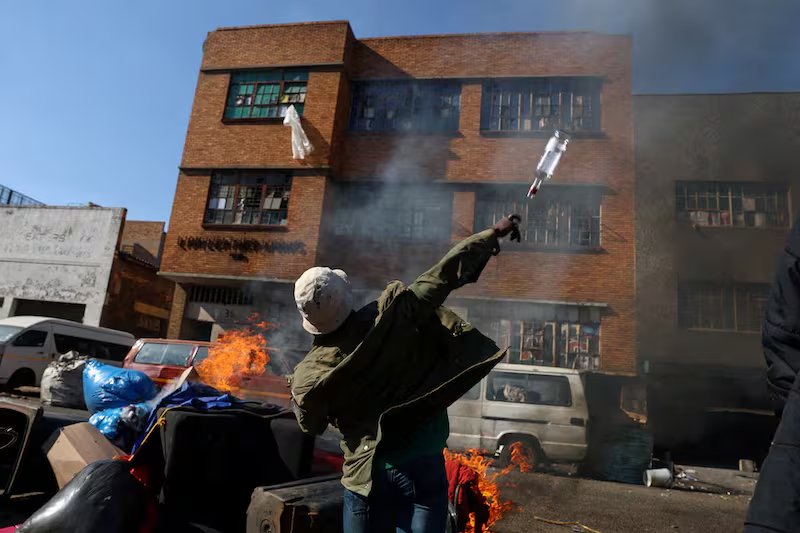
The dialogue took place on June 29, 2026, just one day prior to a planned nationwide shutdown targeting undocumented migrants scheduled for June 30, 2026. This immediate context showed the urgency of the discussions surrounding hate speech and social cohesion in the country, noting the real-world implications of divisive rhetoric. The timing served as a stark reminder of the potential for social unrest and the need for immediate, constructive engagement.
The Social Media for Peace South Africa Coalition, a key convener of the dialogue, operates as a UNESCO-supported multi-stakeholder platform. This coalition brings together 11 distinct organizations, uniting their efforts to address issues of hate speech and promote social harmony within South Africa. The coalition's structure allows for a full approach, leveraging the diverse expertise and reach of its member organizations. Their collaborative work is key in developing and implementing strategies that resonate with various communities across the nation. The participation of such a wide array of stakeholders in the dialogue reflects a collective commitment to upholding human rights and fostering a culture of peace in South Africa.