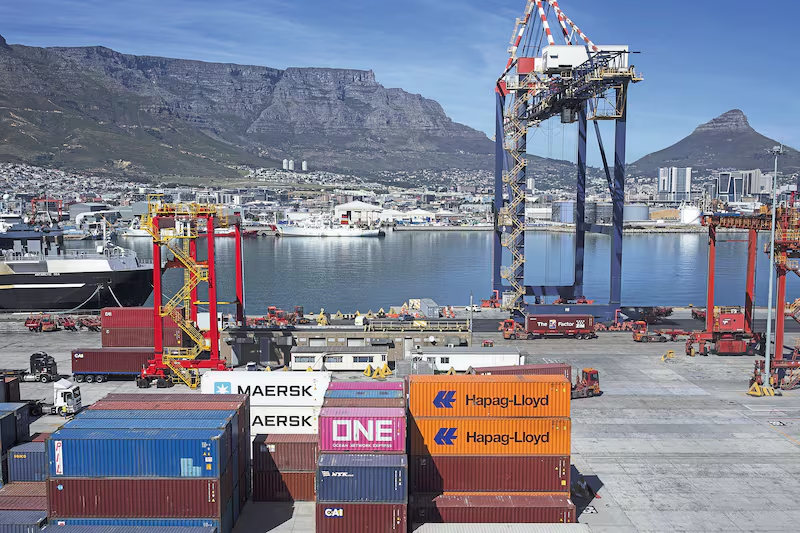
South Africa's supply chain infrastructure faces significant challenges, noted by recent reports on port inefficiencies and dormant regulatory bodies. In June, the World Bank and S&P Global’s Container Port Performance Index ranked Cape Town last among 400 ports globally, with Durban also performing poorly. These rankings paint a stark picture of the operational hurdles confronting the nation's maritime trade. An independent assessment of South Africa’s procurement system, published by the Treasury in 2024, revealed that the interim Supply Chain Management (SCM) council, established in 2018, has been inactive since its inception, contributing to the professionalization gap in the sector. This prolonged inactivity shows a critical lack of oversight and strategic direction in a vital economic area.
Global Rankings and Local Costs
Inefficiencies in the supply chain sector have translated into significant financial losses for South African businesses. Deciduous fruit exporters, for instance, reported more than R4 billion in lost revenue and increased operational costs during the 2025/26 season alone. These substantial figures show the direct economic impact of systemic issues within the country's logistics and procurement frameworks. The performance challenges experienced by key sectors highlight the urgent need for enhanced professionalization across the entire supply chain to mitigate such substantial financial setbacks and ensure economic stability. The continued erosion of competitiveness due to these inefficiencies poses a serious threat to South Africa's export capabilities and overall economic growth.
A Framework Waiting to Be Activated
A national project team, commissioned by the National Treasury and the German development agency GIZ, developed a competency framework and technical standards in 2020. This initiative aimed at professionalizing supply chain management (SCM) across South Africa, providing a blueprint for standardized practices and skill development. Four years later, the Treasury’s Strategic Plan 2025-2030 outlines the establishment of the Supply Chain Management Council of South Africa (SCMCSA) as a statutory body and the implementation of a professionalization framework for SCM. These are listed as core deliverables expected to be met by 2028, indicating a commitment to formalizing and standardizing practices within the sector. The plan explicitly identifies these measures as key for addressing the current deficiencies and fostering a more strong and efficient supply chain ecosystem.
International Precedents for Success
International examples illustrate successful approaches to professionalizing supply chains. Canada, for instance, launched a structured national competency framework in 2022 to guide its supply chain sector, providing clear pathways for skill development and career progression. The People That Deliver framework has also become a reference standard for establishing formal supply chain management career pathways in public health. This framework has been adopted by various countries, including Ivory Coast, Ethiopia, Ghana, Kenya, and Nigeria, demonstrating its adaptability and effectiveness in diverse contexts. Additionally, the Chartered Institute of Procurement and Supply (CIPS) framework has been widely embraced as a national reference for the procurement profession. Governments from the United Arab Emirates (UAE) and Australia to Egypt, Hong Kong, and New Zealand have integrated the CIPS framework into their national standards, signifying a global recognition of its value in elevating procurement practices. These international models offer valuable lessons and proven strategies for South Africa to emulate in its own professionalization efforts.
The Path Forward for Regulation
The minister of finance and the National Treasury should leverage the phased commencement of the Public Procurement Act and its forthcoming regulations. This presents an opportunity to formally establish the Supply Chain Management Council of South Africa (SCMCSA) as a statutory regulator, providing the much-needed institutional foundation for oversight and governance. Additionally, the state-commissioned competency framework, which the government has already invested in, should be adopted and implemented without further delay. Public reporting against the 2028 deadline outlined in the Treasury’s strategic plan is also recommended to ensure accountability and maintain momentum towards these critical objectives. These steps aim to formalize and professionalize supply chain management across South Africa, transforming it into a more efficient, transparent, and globally competitive system.