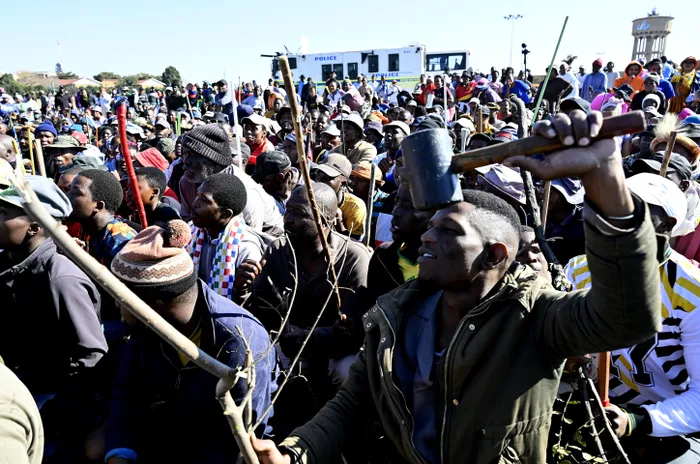
Scores of hostel dwellers, including izindunas and amabutho, participated in a protest on Monday in Soweto, demanding that undocumented foreign nationals leave South Africa. The demonstration, which began at Jabulani Amphitheatre, concluded at Protea Police Station. Protesters called for the departure of those without proper documentation, asserting their presence was detrimental to the community. The march noted ongoing tensions regarding the presence of foreign nationals in the area, showing a deep-seated dissatisfaction among some residents.
Protesters' Grievances and Demands
The protest took place ahead of a self-imposed June 30 deadline for foreign nationals to leave the country, a date set by the community members themselves for the departure of those without legal status. Nkosikhona "Phakelumthakathi" Ndabandaba, a key figure among the protesters, called for the government to ensure the safety of both marchers and ordinary South Africans, emphasizing the need for order during the demonstration. Ndabandaba stated, "We encourage all the shops to open, and we just went to Jabulani Mall, and everyone was happy to see us," suggesting a desire for the protest to be perceived as non-disruptive to legitimate businesses. He urged politicians to cease actions that lead to destruction, adding, "The politicians must stop sending people to dig roads and burn libraries and schools and malls and police stations and attack the police." This statement reflected a concern about politically motivated unrest and damage to infrastructure.
Ndabandaba emphasized the potential scale of the crowd, remarking, "They must stop that nonsense, as you can see more than 10,000 people here. They could have done something as the number of the police is too small to contain them." This comment served as a warning regarding the collective power of the protesters and the potential for a larger, less controlled situation if their grievances were not addressed. Throughout the demonstration, protesters wielded traditional weapons, including shields and sticks, a common practice in such cultural gatherings, which also served as a visual representation of their resolve. The presence of these items indicated a readiness to assert their demands.
Resident Concerns on Economy and Crime
Residents voiced significant dissatisfaction with what they described as an immigration crisis, linking it to various economic and social issues within their communities. This widespread sentiment underpinned their call for action. They asserted that the presence of foreign nationals, particularly those without documentation, contributed to high unemployment rates among South African citizens, a persistent and pressing concern for local populations. Protesters argued that foreign-owned businesses often operated outside established regulations, creating unfair competition for local entrepreneurs and impacting the local economy through perceived illicit practices. This economic strain was a central point of their grievances.
Concerns were also raised regarding public safety and crime. Residents claimed that an influx of undocumented individuals was associated with an increase in criminal activities, including drug trafficking and petty crime, further exacerbating community tensions. They emphasized a perceived burden on local infrastructure and social services, suggesting that resources intended for citizens were being strained by the growing population, particularly in critical areas like housing, healthcare, and education. The protesters' grievances showed a belief that the government had failed to adequately manage immigration, leading to detrimental consequences for host communities in Soweto. This sentiment drove their demands for decisive action to address the presence of foreign nationals ahead of their self-imposed deadline, noting their desire for the government to enforce immigration laws more stringently.
Police Presence and Official Statements
Despite the large number of participants and the display of traditional weapons, the protests were described as peaceful. Major General Fred Kekana, Deputy Provincial Commissioner for the Police in Gauteng, addressed journalists, confirming the police presence and outlining their operational approach to managing the demonstration. Kekana stated, "I’m here on the ground, and as far as I can tell, the situation, as you can see, is under control. The people are marching, and of course, it’s their right to march," acknowledging the constitutional right to protest while assuring the public of police control. He emphasized the police's ongoing commitment to community safety beyond the immediate protest, indicating a broader strategy for maintaining order. Kekana added, "Our operations are ongoing. We are also controlled by the situation. And even if after tomorrow, we are not going to stop operating and ensuring that the community is safe." His remarks noted the police's role in managing the demonstration while assuring continued security measures in the area, aiming to prevent any escalation of violence or unrest following the march.