The Soweto uprising began on June 16, 1976, in Soweto, South Africa, as student marchers protested government policies. This key moment in South African history started as a peaceful student march against the enforcement of Afrikaans as a medium of instruction in schools. However, the situation quickly escalated when police opened fire on the students, leading to a violent confrontation that would forever alter the course of the anti-apartheid struggle. The events of that day, particularly the tragic loss of young lives, galvanized both national and international opposition to the apartheid regime.
Capturing a Moment of Terror
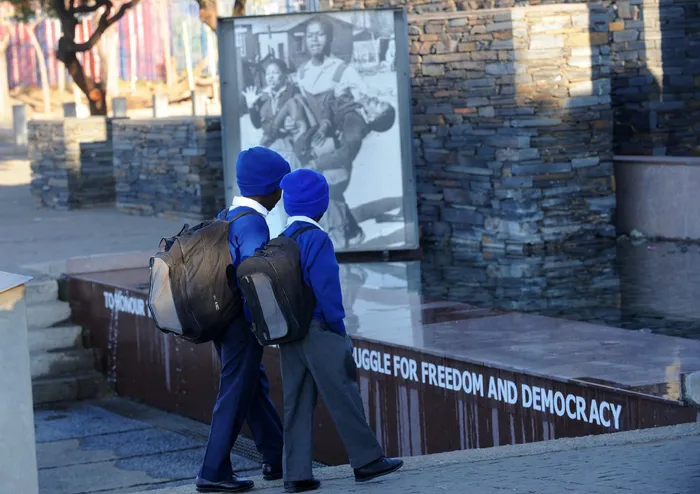
The iconic photograph, taken by Sam Nzima, captured the searing moment 12-year-old Hector Pieterson, fatally shot, was carried by Mbuyisa Makhubu, with his sister Antoinette Sithole running in terror alongside them. This single image, a stark depiction of brutality and innocence lost, quickly became a powerful symbol of the Soweto uprising. Antoinette Sithole, who was 16 years old during the Soweto uprising, reflected on the profound impact of the image, stating, "When I look at that picture, I cannot remove myself from what happened that day… The photo itself did not only change our lives as such, but it was a turning point for all South Africans; it did not matter the colour [of their skin]." She added that it took her years to realize the photograph's power. "In actual fact, it took me years to realise that the photo was powerful," Sithole said. The raw emotion and undeniable truth captured within the frame resonated deeply with people across the globe, bringing the harsh realities of apartheid into countless homes.
The iconic image circulated globally by June 17, 1976, just one day after it was taken, appearing prominently in publications like Time Magazine and distributed widely across Reuters syndication. Sithole noted that the picture was shown worldwide "for them to see how people suffered during the apartheid era." She observed that many people were shocked by the events depicted. "Most of the people could not believe what was really happening; they were shocked and surprised," Sithole stated. The photograph's impact extended to international actions, with companies sanctioning South Africa. "I remember that some companies sanctioned South Africa, and the first company to leave was Kodak; others followed suit," Sithole recounted. This immediate and widespread dissemination ensured that the world could not ignore the atrocities taking place in Soweto. She believes the photograph was essential for addressing issues in South Africa and prompting action. "The photograph made an impact addressing problems in SA and they took action," she said, showing its role as a catalyst for change.
Following the image's publication, photographer Sam Nzima faced harassment from police, a testament to the regime's fear of the truth being exposed. Despite the suffering and personal risks involved in documenting such a moment, Antoinette Sithole believes it was "for a good cause." She maintains that photographs are vital for understanding historical realities. "We may be telling stories, but for people to understand better, we need photos to emphasise the reality," Sithole remarked, questioning, "Who knows [if] we would still be oppressed." The image served as irrefutable proof, a visual testimony that transcended language barriers. However, Sithole also expressed concern about the current pace of progress in South Africa, noting challenges like youth unemployment. "But things have been moving at a snail's pace," she said, adding, "Look at what is happening to our children. They go to school, but struggle to get jobs." Sithole emphasized the importance of history, stating, "My concern is that history is important for us not to forget where we are coming from and where we are heading." Her words highlight a continuing struggle for the ideals that the uprising sought to achieve.
Global Outcry and Sanctions
The uprising began as a peaceful student march in Soweto, protesting the enforcement of Afrikaans as a medium of instruction in schools. This government policy, seen as a direct assault on African languages and cultural identity, spurred students to demonstrate against the educational system. The students, many of them children, were met with brutal force, transforming a peaceful protest into a tragic massacre. The images and reports of the police firing on unarmed students ignited outrage both within South Africa and across the international community.
The impact of the events, especially amplified by the Hector Pieterson photograph, resonated internationally with unprecedented force. Nelson Mandela, even from within the confines of his prison cell, kept a copy of the photograph, acknowledging its profound significance and its power to inspire resistance. Its power transcended geographical boundaries, becoming a universal symbol of the struggle against oppression and apartheid. The photograph served as a powerful indictment of the apartheid government, exposing its brutality to a global audience that could no longer look away.
In response to the brutality and the widespread images, international pressure mounted on the South African government. Kodak was the first company to sanction South Africa following the uprising, initiating a wave of corporate withdrawals and economic measures aimed at isolating the apartheid regime. This economic pressure, coupled with cultural and sports boycotts, played a key role in weakening the regime and ultimately contributing to its downfall. The photograph, therefore, was not merely a record of an event but a catalyst for sustained international activism.
Discussions around the upcoming 50th anniversary of the Soweto uprising highlight the enduring legacy of the photograph and the events it depicted. This milestone prompts reflection on the historical context and the ongoing relevance of the struggle for equality in South Africa. The photograph continues to serve as a powerful reminder of the sacrifices made and the battles fought for freedom and justice.
The Photographer's Sacrifice
Sam Nzima, a dedicated photographer for The World newspaper, documented the harrowing event that captured Hector Pieterson's final moments. His quick thinking and bravery under extreme duress were key to preserving this historical evidence. To protect his work from the authorities, Nzima ingeniously hid his film roll inside his sock, shielding it from officers who were confiscating cameras and film from other journalists and bystanders. This act of defiance ensured that the truth of what transpired on June 16, 1976, would reach the world.
Following the incident and the image's publication, Nzima faced significant pressure and harassment from police. The apartheid regime, desperate to suppress the narrative, targeted those who dared to expose its atrocities. Nzima eventually fled Johannesburg, seeking refuge in Mpumalanga to escape the constant surveillance and threats. His actions led to severe repercussions, as he endured 19 months of house arrest, a clear attempt by the state to silence him and deter others. Nzima eventually resigned from his newspaper, a decision influenced by the ongoing harassment and the perilous situation for journalists covering such events, noting the immense personal cost of his journalistic integrity.
Nzima later reflected on the profound impact of his photograph, stating, "I realised that the picture changed South Africa and Apartheid because the world felt that this was enough." His determination to preserve and share the image played a critical role in exposing the brutality of the apartheid regime to an international audience, turning a local tragedy into a global rallying cry. He found solace in the eventual transformation of his country, remarking, "After so many years, people are free in South Africa and that has really given me consolation." Nzima's courage and dedication ensured that Hector Pieterson's death would not be in vain, and his image would forever symbolize the fight for freedom.
Echoes in Contemporary South Africa
Antoinette Sithole, who was 16 years old during the Soweto uprising, continues to reflect on the photograph's ongoing relevance and the journey South Africa has taken since those tumultuous days. The iconic image, which captured her running alongside Mbuyisa Makhubu carrying a dying Hector Pieterson, circulated widely, appearing in Time Magazine and across Reuters syndication, embedding itself into the global consciousness. Mbuyisa Makhubu, the young man bravely carrying Pieterson, was later forced into exile following the events, his life forever altered by his role in that historic moment. His disappearance and fate remain a poignant part of the uprising's legacy.
Sithole expresses frustration with the pace of progress in educational and economic reforms in South Africa since 1994, the year the country achieved democracy. "But things have been moving at a snail's pace," she stated, adding, "Look at what is happening to our children. They go to school, but struggle to get jobs. Our children have become demotivated as a result." Her concerns highlight the persistent challenges faced by the nation, even decades after the end of apartheid. She noted current challenges faced by South African youth, including gender-based violence (GBV), high rates of unemployment, and the devastating impact of the drug Nyaope. These issues show the ongoing need for social and economic justice, echoing the demands of the 1976 students.
Sithole emphasized that young people "must take their placards to Parliament and other public spaces. They must drive the change they want to see." She urged them to act "as a way to honour those who died," connecting contemporary activism with the sacrifices of the past. Sithole maintains that history is key "for us not to forget where we are coming from and where we are heading," stressing the importance of understanding the past to navigate the future. The enduring power of the Hector Pieterson photograph, therefore, lies not only in its historical significance but also in its continued ability to inspire reflection, demand accountability, and ignite new movements for change in South Africa.