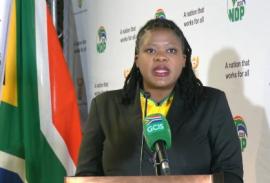
The Presidential Youth Employment Intervention (PYEI) created 155,161 new earning opportunities for young South Africans in the fourth quarter of the 2025/26 financial year. This significant achievement was announced by Deputy Minister in The Presidency Nonceba Mhlauli during a media briefing in Pretoria. The PYEI, launched in 2020 by President Cyril Ramaphosa, serves as South Africa's primary strategy to combat its significant youth unemployment crisis.
Deputy Minister in The Presidency Nonceba Mhlauli stated, "The PYEI is South Africa's most full flagship strategy designed to address the chronic youth unemployment crisis." Mhlauli added that the initiative acts as a multi-sector action plan aimed at transitioning young people from "learning to earning." The Deputy Minister further explained that the PYEI coordinates, accelerates, and enhances national efforts across various government departments, the private sector, and civil society, rather than replacing existing systems. This collaborative approach is central to its effectiveness in tackling the complex challenge of youth unemployment.
PYEI Opportunity Breakdown and Digital Platforms
The PYEI leverages digital platforms to connect young people with opportunities. More than 5.9 million young people are currently registered on the SA Youth platform, a central hub for accessing various interventions. Additionally, over 5.36 million young people are registered on the Employment Services of South Africa (ESSA) system, further broadening the reach of available support. Since its launch in 2020, the Presidential Youth Employment Intervention (PYEI) has facilitated access to more than 2.5 million temporary earning opportunities through SA Youth. An additional 422,667 opportunities have been facilitated through ESSA, demonstrating the extensive impact of these digital infrastructures. Data indicates a strong focus on gender inclusivity, with over 70% of opportunities accessed via SA Youth being taken up by young women.
During the quarter, 18,310 young individuals were placed into workplace experience opportunities through the Youth Employment Service (YES). This program is key for providing practical skills and exposure to the working environment. The Sector Education and Training Authority (SETA) placements programme further facilitated 5,005 work-integrated learning opportunities for TVET learners and graduates, bridging the gap between theoretical education and industry demands. The National Youth Development Agency (NYDA) provided 6,085 financial and non-financial enterprise opportunities to young entrepreneurs, fostering a spirit of self-reliance and business creation among the youth. These diverse avenues show the multi-faceted approach of the PYEI in addressing different needs within the youth employment landscape.
Phase 4 of the revitalised National Youth Service (NYS) recruited an additional 5,272 young people, bringing the total number of paid service opportunities created through the NYS programme to 138,056 since its inception. This program offers valuable public service experience and income. Looking ahead, Phase 5 of the NYS is slated to recruit a further 100,000 young individuals, indicating a continued commitment to expanding service-based opportunities. The consistent growth in these numbers notes the ongoing efforts to provide tangible pathways for youth engagement and employment.
Outcomes-Based Financing Success and Expansion Plans
The report detailing these extensive employment opportunities coincides with the 50th anniversary of the 1976 youth uprising, a poignant reminder of the historical significance of youth empowerment in South Africa. A key financial mechanism supporting these initiatives is the Jobs Boost Outcomes Fund Pilot, a R300 million outcomes-based financing program. This innovative funding model links payments to verified results, ensuring efficiency and impact. As of March 30, 2026, the pilot had successfully enrolled 9,174 young people, surpassing its enrolment target by 10% and demonstrating its capacity to attract participants. The initiative further secured 7,044 job placements, exceeding its original target by 54%, a clear indicator of its effectiveness in connecting youth with employment.
The pilot program meticulously verified 5,211 jobs sustained for three months, providing evidence of short-term employment stability. 3,795 jobs had been sustained for six months as verification processes remain ongoing, indicating a promising level of longer-term retention. The Jobs Boost Outcomes Fund Pilot demonstrated the effectiveness of outcomes-based financing in supporting disadvantaged youth, noting that young individuals from Quintile 1 schools achieved higher retention rates in their placements. This finding is particularly significant as it notes the fund's ability to reach and effectively support the most vulnerable segments of the youth population. Building on this success, the fund is currently being prepared for expansion to R1 billion, aiming to deliver 20,000 high-quality job placements, significantly scaling its impact.
In KwaZulu-Natal, HPSA Southern Africa has implemented a targeted program, enrolling 1,800 young people in an initiative focused on providing agricultural and animal health services. This sector-specific approach addresses critical needs while creating employment. Of these 1,800 participants, 678 are already generating income, collectively recording R1.4 million in sales, showcasing the potential for sustainable self-employment and economic contribution at a local level.
Future Focus and Strengthening Partnerships
Deputy Minister in The Presidency Nonceba Mhlauli showed the government's ongoing commitment during the media briefing in Pretoria. Ms. Mhlauli reiterated that the Presidential Youth Employment Intervention (PYEI), launched in 2020 by President Cyril Ramaphosa, serves as South Africa's most full flagship strategy to address youth unemployment. "The PYEI acts as a multi-sector action plan aimed at transitioning young people from 'learning to earning'," Ms. Mhlauli said, emphasizing the holistic nature of the program. She added that the initiative coordinates and enhances national efforts across government, the private sector, and civil society, rather than replacing existing systems, thereby fostering a collaborative ecosystem for youth development.
Ms. Mhlauli linked the current progress report to a significant historical event, noting, "Today’s progress report comes at a seminal moment as we commemorate the strides made by the youth of 1976 exactly 50 years ago." This connection notes the enduring struggle for youth advancement and the government's commitment to building on past efforts. She urged young people to register to vote, stating, "By registering to vote, young people affirm their voice, strengthen our democracy and contribute to building a South Africa that reflects their aspirations, hopes and dreams." The Deputy Minister also noted the success of outcomes-based financing, stating, "Most importantly, it proved that outcomes-based financing successfully supports the most disadvantaged, with youth from Quintile 1 schools achieving higher retention rates." She confirmed plans to scale this fund to R1 billion for 20,000 job placements, demonstrating a strategic investment in proven models. In KwaZulu-Natal, HPSA Southern Africa's program has 678 young people generating income, recording R1.4 million in collective sales. Ms. Mhlauli observed, "This proves how targeted innovation can build sustainable self-employment where formal jobs are scarce." Government remains focused on expanding quality work opportunities and strengthening partnerships to support young people in the 2026/27 financial year, ensuring continued progress and impact.