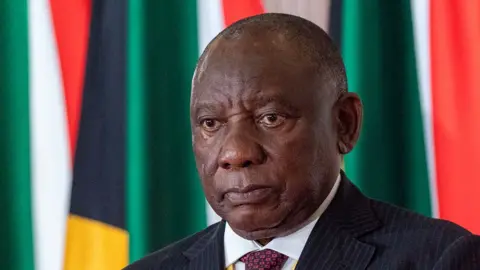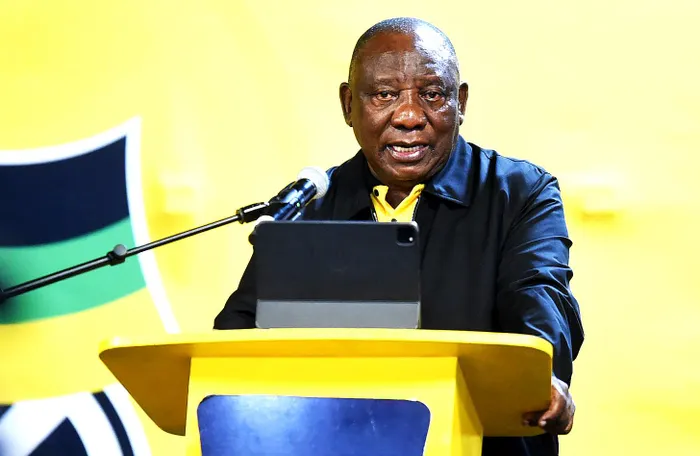
President Cyril Ramaphosa has filed an application in the Western Cape High Court seeking to have the Section 89 independent panel report on the Phala Phala scandal declared unlawful and set aside. The report by the Section 89 panel found that Ramaphosa may have committed serious violations of the Constitution and the law, alongside serious misconduct concerning the Phala Phala scandal. This legal challenge aims to nullify the findings of the independent panel, thereby impacting any potential impeachment proceedings that could arise from the report.
Legal Arguments Against Panel
President Cyril Ramaphosa contends that the independent panel, chaired by former Chief Justice Sandile Ngcobo, relied on "hearsay" in its findings and operated beyond its prescribed mandate. Ramaphosa argues that the process and conclusions reached by the panel are irrational and contrary to its established purpose. In his court papers, Ramaphosa states the panel misunderstood its mandate, asserting it was tasked with assessing whether sufficient evidence of serious misconduct existed, rather than making prima facie findings. He emphasizes that the panel’s role was preliminary, intended only to determine if there was a case to answer, not to make definitive judgments on guilt or innocence.
Ramaphosa further argues that the panel erred by relying on 'hearsay' and untested allegations submitted by former State Security Agency head Arthur Fraser. He notes that these allegations, upon which the panel based significant parts of its report, were not subjected to proper verification or cross-examination. The panel, according to Ramaphosa, wrongly relied on an audio recording whose provenance and accuracy had not been established, treating it as fact without verifying its lawful acquisition. He asserts that the panel's acceptance of such evidence without rigorous scrutiny demonstrates a fundamental flaw in its methodology and a failure to adhere to basic principles of fairness and due process. Ramaphosa maintains that the panel exceeded its powers by misunderstanding its preliminary mandate and effectively acting as a trial court. He claims that by making definitive findings based on unverified information, the panel usurped the role of a judicial body, which was beyond its scope. Additionally, Ramaphosa states the panel made adverse findings on issues outside the scope of the original four charges he was given to answer, which he claims led to procedural unfairness and an expansion of its inquiry beyond what was permissible.
Context of the Report
A Constitutional Court ruling invalidated Parliament's December 2022 decision to block the independent panel's report on President Cyril Ramaphosa. This significant legal intervention showed the importance of parliamentary oversight and the necessity of addressing the report's findings. The court's decision mandated further parliamentary action regarding the report's findings, effectively overturning the initial attempt to suppress the document. Following this ruling, National Assembly Speaker Thoko Didiza was compelled to establish a 31-member impeachment committee. This committee's mandate is to process the report and consider its implications for President Ramaphosa, including whether to initiate impeachment proceedings based on the panel's conclusions. The establishment of this committee is a direct consequence of the Constitutional Court's judgment, ensuring that the report's findings are formally addressed within the parliamentary framework.
Focus on Intent and Scope
President Cyril Ramaphosa claims the independent panel neglected to evaluate the core issue of his malicious intent or bad faith regarding the Phala Phala matter. Ramaphosa states that any finding of serious misconduct against him must be confined to deliberate misconduct, implying that the panel's focus deviated from this essential criterion. He argues that the panel failed to distinguish between inadvertent actions and those driven by a deliberate intent to violate the Constitution or the law. His court application contends that the panel's approach overlooked the necessity of establishing intent for such serious violations, thereby rendering its findings incomplete and legally unsound. Ramaphosa asserts that without proving a malicious intent or bad faith on his part, the findings of serious misconduct cannot stand, as the threshold for such an accusation requires a deliberate act.