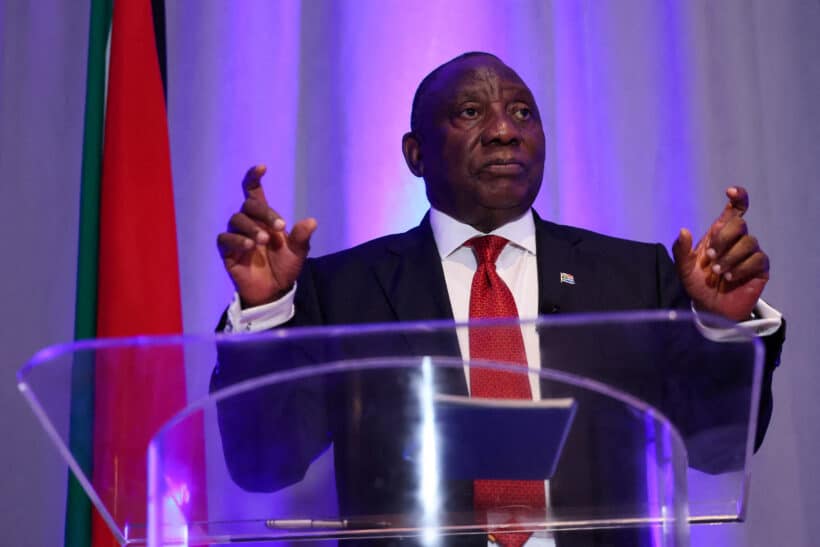
President Cyril Ramaphosa's Water Crisis Plan, released yesterday to address South Africa’s water supply crisis, has been criticized for containing no new proposals. The plan, which critics assert contains nothing new, was introduced without an allocated budget, and faces scrutiny over its potential effectiveness. Critics argue the absence of new strategies and a clear financial framework raises significant questions about the government's approach to the ongoing water challenges. The lack of a specific budget allocation for the proposed measures further compounds concerns about their implementation and impact.
Recycled Initiatives and Existing Structures
President Ramaphosa's water plan includes measures that are already underway or legally permissible under current frameworks. The Water Services Amendment Bill, for instance, was introduced last year and is presently under consideration by the Portfolio Committee on Water & Sanitation. This indicates that legislative efforts related to water management predate the recent announcement, suggesting the plan merely reiterates existing legislative processes. The bill's progression through the parliamentary committee notes ongoing efforts that are not novel to the President's latest pronouncement.
The National Water Resource Infrastructure Agency, mentioned in the president's plan, is not a new entity but an existing body that is currently in the process of being operationalized. Its inclusion in the plan as a key component has been noted as a re-statement of current governmental initiatives rather than a fresh proposal. Public-private partnerships, another component noted in the plan, are already facilitated by existing legislation. These partnerships have been a recognized mechanism for infrastructure development and service delivery, even before the release of the new water strategy, meaning the plan introduces no new legal or operational frameworks for their establishment. The emphasis on these existing structures has led to accusations that the plan lacks innovative solutions.
Deteriorating Water Loss and Service Metrics
President Cyril Ramaphosa's new water document outlines targets for water losses that exceed previous government benchmarks. The plan now aims for a national average of 39% clean drinking water loss, a significant increase from the prior benchmark of 25%. This adjustment reflects a worsening trend in the country's water management, as the government is effectively targeting a higher rate of wasted clean drinking water. The previous benchmark of 25% was already a concern, and the new target of 39% shows the severe challenges faced in preventing water wastage across the country.
Data indicates that the performance of municipal water service providers across South Africa is largely inadequate. Approximately 74% of these providers are categorized as scoring either "poor" or "critical" in assessments related to drinking water quality and wastewater management. This widespread underperformance notes systemic issues within local government water services, pointing to a severe deficiency in the delivery of essential water services to communities. The critical state of nearly three-quarters of municipal water services providers shows the urgent need for effective intervention, which critics argue is not adequately addressed by the current plan.
Despite interventions, many municipalities governed by the African National Congress (ANC) have faced severe operational challenges. Several of these ANC-run municipalities have already been placed under Section 139 administration due to their inability to provide essential services effectively, yet they continue to experience significant dysfunction and service delivery failures. This ongoing struggle in administratively supported municipalities suggests deeper, unresolved issues within local government structures that impact water service provision.
Opposition's Scathing Critique
President Cyril Ramaphosa had promised an urgent new plan in February to address widespread dry taps, a promise the Democratic Alliance (DA) claims has not been fulfilled with his latest proposals. The DA, South Africa's main opposition party, asserts it has consistently advocated for an executable and realistic strategy for water security, and claims to have been fighting for such a plan. The party also stated its commitment to protecting and safeguarding the constitutional right to water for all citizens, emphasizing the fundamental importance of reliable water access.
Critics, including the DA, argue that Ramaphosa's plan lacks concrete proposals for addressing critical skills shortages and vacancies in municipalities, particularly regarding the deployment of skilled technicians and engineers. There is no new plan outlined to get skilled technicians and engineers into municipalities to overcome these persistent skills shortages and vacancies. This omission is seen as a significant flaw, as the lack of qualified personnel is a major contributor to the dysfunction of water infrastructure and services. In contrast to the national decline, the DA-run City of Cape Town has reportedly managed to reduce its water losses to 24%, demonstrating what the opposition considers an effective approach to water management and a successful case study in mitigating water wastage.