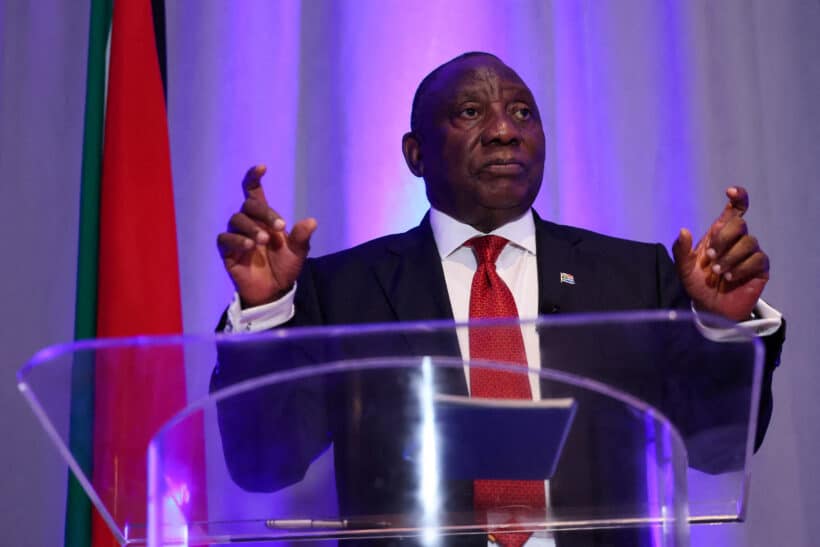
South Africa's opposition reacted angrily on Friday after a court suspended parliamentary impeachment proceedings against President Cyril Ramaphosa. The court's decision halted the legislative process initiated against the president, drawing immediate condemnation from various opposition parties. This development impacts the ongoing political landscape in South Africa regarding accountability at the highest office, raising questions about the pace and ultimate resolution of serious allegations.
Legal Hurdles and Accusations
President Cyril Ramaphosa faces accusations of concealing the theft of $580,000 in undeclared foreign currency from both police and tax authorities. These allegations form the core of the controversy surrounding the president. The potential impeachment proceedings against him were initiated following a significant constitutional court ruling in May. That ruling had specifically paved the way for the establishment of an impeachment committee to investigate the allegations against the president, marking a critical step towards parliamentary scrutiny. The recent court decision to suspend these parliamentary proceedings has drawn criticism from opposition parties who argue it obstructs accountability and delays justice.
President's Defense and Presidency Response
President Cyril Ramaphosa has consistently denied any wrongdoing regarding the allegations, maintaining his innocence throughout the unfolding legal and political saga. Following the court's decision, the presidency issued a statement asserting that President Ramaphosa respects the independence of the judiciary, a cornerstone of South Africa's democratic system. The statement further indicated that the president would continue to cooperate with authorities as the legal processes unfold, reiterating his commitment to due process. This stance aims to reassure the public of his adherence to legal procedures despite the ongoing challenges.
Opposition Outrage and Delays
The High Court is scheduled to hear President Cyril Ramaphosa's bid to overturn an independent report, which forms the basis of the impeachment proceedings, in September. This legal challenge has effectively put the parliamentary process on hold, creating a significant pause in the legislative efforts to address the allegations. This delay has drawn sharp criticism from opposition parties who view it as a deliberate tactic to delay accountability and avoid immediate parliamentary scrutiny. The independent report, central to the impeachment process, has been a key document in the opposition's push for action against the president.
Opposition leaders have expressed concern that the court's decision and the subsequent legal challenges could push the resolution of the impeachment matter well into 2024. Critics argue that this extended timeline allows President Ramaphosa to avoid parliamentary scrutiny ahead of key political events expected next year, potentially influencing public perception and electoral outcomes. The ongoing legal battles are seen by some as an attempt to postpone a definitive outcome on the allegations against the president, prolonging uncertainty and political tension. The opposition maintains that these delays undermine the principles of good governance and transparency.
Quotes on Postponing the Inevitable
The allegations against President Cyril Ramaphosa stem from the theft of $580,000 from his Phala Phala farm. This incident triggered the impeachment proceedings that have now been suspended. Separately, prosecutors dropped all charges related to the incident in 2024, a development that has been noted amidst the ongoing parliamentary and legal disputes. This decision by prosecutors adds another layer of complexity to the overall situation, as the legal and parliamentary tracks appear to be diverging in their immediate outcomes. Despite the prosecutorial decision, the parliamentary impeachment process, though currently suspended, remains a point of contention for opposition parties seeking accountability.