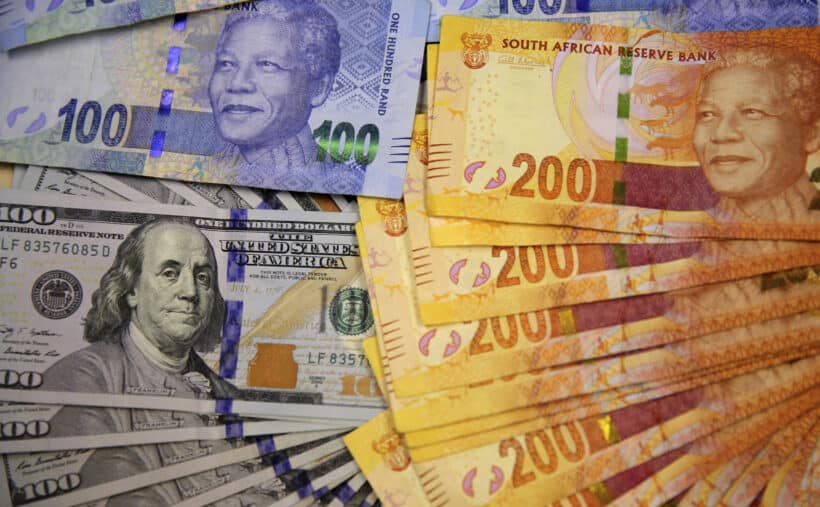
The South African rand weakened against the U.S. Dollar in afternoon trade on Thursday, as the greenback gained strength globally. This movement in the currency market reflects a broader responsiveness to international developments. The rand traded at 16.4150 to the dollar at 1419 GMT, illustrating the specific level of depreciation observed during the trading session. The U.S. Dollar, often seen as a safe-haven currency during times of global uncertainty, was up nearly 0.2% against a basket of currencies during the same period, indicating a widespread strengthening against other major world currencies. This general appreciation of the dollar placed additional pressure on emerging market currencies like the rand.
Geopolitical Flashpoint Details
The recent weakening of the rand is set against a backdrop of escalating tensions in the Middle East. The United States launched two significant waves of airstrikes on Wednesday, following its decision to reimpose a naval blockade on Iranian ports. This assertive action by the U.S. Marked a critical point in the ongoing geopolitical standoff. In response, Iran demonstrated its military capabilities and resolve by firing missiles and drones at U.S. Military bases located in neighboring countries. These retaliatory strikes showed the volatile nature of the conflict. Iran also announced the closure of shipping through the Strait of Hormuz, a critical global oil transit choke point. The potential disruption to maritime traffic in this vital waterway immediately sent ripples through international markets. The escalation has raised concerns about broader regional stability and its potential economic impact, particularly on global energy supplies and trade routes.
Additionally, Iran has instructed Yemen’s Houthi movement to prepare to close the Red Sea oil route. This directive from Tehran is contingent on whether the United States targets Iranian power infrastructure. The Red Sea is another vital waterway for international energy shipments, and its closure would significantly disrupt global trade flows, impacting shipping lanes that connect Europe and Asia. The direct involvement of the Houthi movement, a non-state actor with significant influence in Yemen, could further broaden the scope of the conflict, introducing additional layers of complexity and unpredictability to the regional security landscape.
Market Impact and Concerns
The rand's weakening against the U.S. Dollar followed a week-long escalation in tensions, marked by an exchange of fire between Iran and the United States. This period of heightened geopolitical risk contributed to a broader shift in market sentiment, leading investors to seek safer assets. The direct exchange of hostilities between the two nations created an environment of uncertainty that typically prompts a flight to quality, benefiting currencies like the U.S. Dollar.
Global oil prices reacted sharply to the escalating situation, rising by more than 1%. This increase in oil prices often puts pressure on emerging market currencies like the rand, as South Africa is a net importer of crude oil. Higher energy costs can fuel inflation within the country, eroding purchasing power and increasing the cost of goods. They can significantly impact the country's balance of payments by increasing import bills, further dampening investor confidence in the local currency and potentially leading to capital outflows.
South Africa’s benchmark 2035 government bond also showed weakness, reflecting the market's response to the increased risk. Bond yields typically rise when investors demand a higher return for holding government debt, often reflecting increased perceived risk or uncertainty in the economic outlook. This movement suggests that the geopolitical developments are influencing broader South African financial markets beyond just the currency, as fixed income investors adjust their portfolios in response to global events. The interconnectedness of global markets means that regional conflicts, particularly those involving major oil-producing or transit regions, can quickly ripple through international financial systems, affecting assets far removed from the immediate conflict zone.
Analyst Perspective
The escalation of tensions has again pushed up oil prices, reviving concerns about global inflation and potential disruptions to energy supplies. This renewed focus on energy security and price stability has a direct bearing on economic forecasts worldwide. The rand was down approximately 0.5% from its previous close against the U.S. Dollar amid these developments, indicating a noticeable depreciation in a single trading session. In fixed income markets, the yield on South Africa’s benchmark 2035 government bond rose 3 basis points, reaching 8.42%, signaling increased investor caution and a higher cost of borrowing for the government. Conversely, the Johannesburg Stock Exchange's Top-40 index remained steady, indicating a mixed market reaction to the geopolitical situation, with some sectors potentially benefiting from higher commodity prices while others face headwinds. This divergence notes the complex interplay of factors influencing different segments of the financial market during periods of international instability.