South Africa's electric vehicle (EV) market gained momentum in 2025, primarily driven by hybrid and plug-in hybrid models, according to TransUnion’s Q4 2025 Mobility Insights Report. The report indicated that the EV market gained significant momentum in 2025, with growth primarily driven by hybrids and plug-in hybrids. Fully electric vehicles, however, remained a niche market, concentrated within premium segments. TransUnion's Q4 2025 Mobility Insights Report specifically stated, "Growth was driven primarily by hybrids and plug-in hybrids now dominating the mix; fully electric vehicles remained niche, concentrated in premium segments." This surge in interest and adoption signals a significant shift in consumer preferences and industry focus within the South African automotive landscape.
Despite this growth, the TransUnion report noted that South Africa lagged behind global and regional counterparts in EV penetration and policy certainty. The report noted this disparity occurred even as infrastructure expanded and industry participants, including OEMs and Chinese entrants, prepared for a gradual shift towards electrification. TransUnion’s report concluded, "South Africa lagged global and regional peers in penetration and policy certainty, even as infrastructure expanded and industry participants — OEMs and Chinese entrants alike — prepared for a gradual shift to electrification." This suggests a critical need for more defined governmental strategies to fully harness the potential of electric mobility and align with international trends.
Momentum and Market Share
Electric vehicle (EV) sales in South Africa reached approximately 16,700 units in 2025, marking a nearly nineteen-fold increase from the 2021 volume. This substantial growth was primarily fueled by hybrid and plug-in hybrid models, which dominated the mix, according to market analysis. The TransUnion report confirmed that growth in EV sales was driven primarily by hybrids and plug-in hybrids, with fully electric vehicles remaining niche and concentrated in premium segments. Fully electric vehicles, however, remained a niche market segment, predominantly concentrated within the premium vehicle categories, indicating room for broader market penetration in the future.
Interest in EVs has been significantly influenced by periods of fluctuating fuel prices. These price shifts have prompted consumers to consider alternative vehicle technologies, contributing to the rising adoption of electric and hybrid models. This correlation shows the economic drivers behind the nascent EV market in South Africa. Looking ahead, projections suggest that the EV fleet in South Africa could expand substantially. By 2030, the number of electric vehicles on the roads is anticipated to reach between 35,000 and 45,000 units. This growth would translate to EVs comprising 10% to 15% of new passenger vehicle sales within the same timeframe, signifying a considerable increase in market share and a move towards mainstream adoption.
Policy and Affordability Gaps
Electric vehicles (EVs) currently constitute 4% of new passenger vehicle sales in South Africa, a figure that, while growing, still notes the significant potential for expansion. The government's incentives are primarily designed to attract EV production within South Africa, though support for the market remains incomplete, according to Joubert Roux, co-founder and chair of CHARGE. Roux stated that the current policy framework does not fully address market affordability of EVs or the widespread rollout of charging infrastructure. This gap in policy creates a challenging environment for both consumers and infrastructure developers. A recent study noted the significant cost disparity for commercial electric vehicles, finding that the upfront cost of a battery electric truck is two to three times higher than that of a comparable diesel truck. This substantial price difference presents a major barrier to the adoption of commercial EVs, despite their long-term operational cost benefits.
Charging Infrastructure Development
The current policy framework in South Africa does not fully address the market affordability of electric vehicles (EVs) or the widespread rollout of charging infrastructure, according to Joubert Roux, co-founder and chair of CHARGE. Roux indicated that the state should consider reducing import duties, providing tax incentives, or offering rebates to stimulate the market. These measures, he argued, are key for making EVs more accessible to a wider segment of the population and accelerating market growth. "You cannot incentivise production on one hand while constraining adoption through high import duties and limited infrastructure support. The opportunity now is to align policy across the full value chain so that demand, infrastructure, and industrial development move together," Roux stated. He added that countries like the US and many in Europe have recognized charging infrastructure as strategic national infrastructure, emphasizing the need for a similar strategic approach in South Africa. This recognition by leading global economies shows the fundamental role of strong charging networks in facilitating the transition to electric mobility.
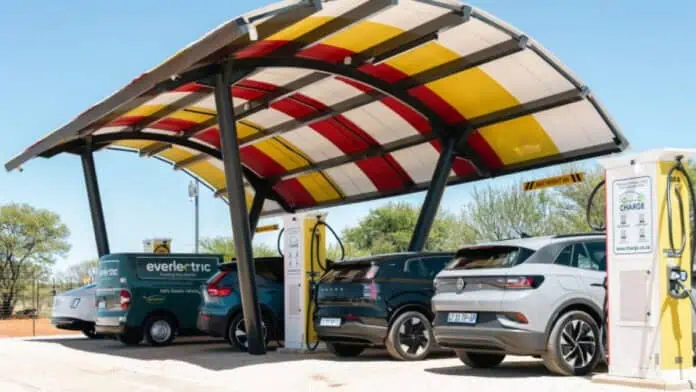
CHARGE is concentrating its efforts on establishing EV charging stations along high-traffic national corridors, beginning with essential logistics routes such as the N3. "We are not building speculative urban charging; we are developing a national backbone network, starting with key logistics routes like the N3," Roux explained. This strategic focus ensures that charging infrastructure is placed where it is most needed, supporting both commercial and passenger vehicle travel. The company is forging partnerships with fleet operators and aggregators to ensure consistent and predictable utilization from electric delivery and long-haul vehicles. "Through partnerships with fleet operators and aggregators, we are able to secure consistent, predictable utilisation from electric delivery and long-haul vehicles operating on fixed routes. This creates an immediate commercial base for each site, independent of early passenger EV adoption," Roux noted. CHARGE's site in Wolmaransstad has been operational for over a year, demonstrating a proof of concept for their approach to infrastructure development. "The next phase along the N3 builds on that with infrastructure designed to support both passenger vehicles and electric freight," Roux said, further stating, "In effect, freight demand underwrites the early network, while passenger adoption scales on top of it, allowing the market to develop in a structured and investable way." Roux also noted that "consumers are unlikely to adopt EVs at scale until they can see and trust the network." This shows the psychological barrier that a lack of visible and reliable charging infrastructure poses to potential EV buyers. He acknowledged that the government recognizes the importance of electric mobility, but "where there is still work to be done is in translating that intent into implementation certainty, particularly around infrastructure deployment, regulatory clarity, and timelines. For infrastructure investors, clarity and predictability are as important as policy direction." This call for clear, predictable policy frameworks is essential for attracting the necessary investment to build out a full national charging network.